
Tableware Packaging Quotation Requirements: Buyer Q&A
Give the factory a packaging specification that connects the sellable unit, protective system, artwork, carton, labeling, test plan, order quantity, and shipping route.
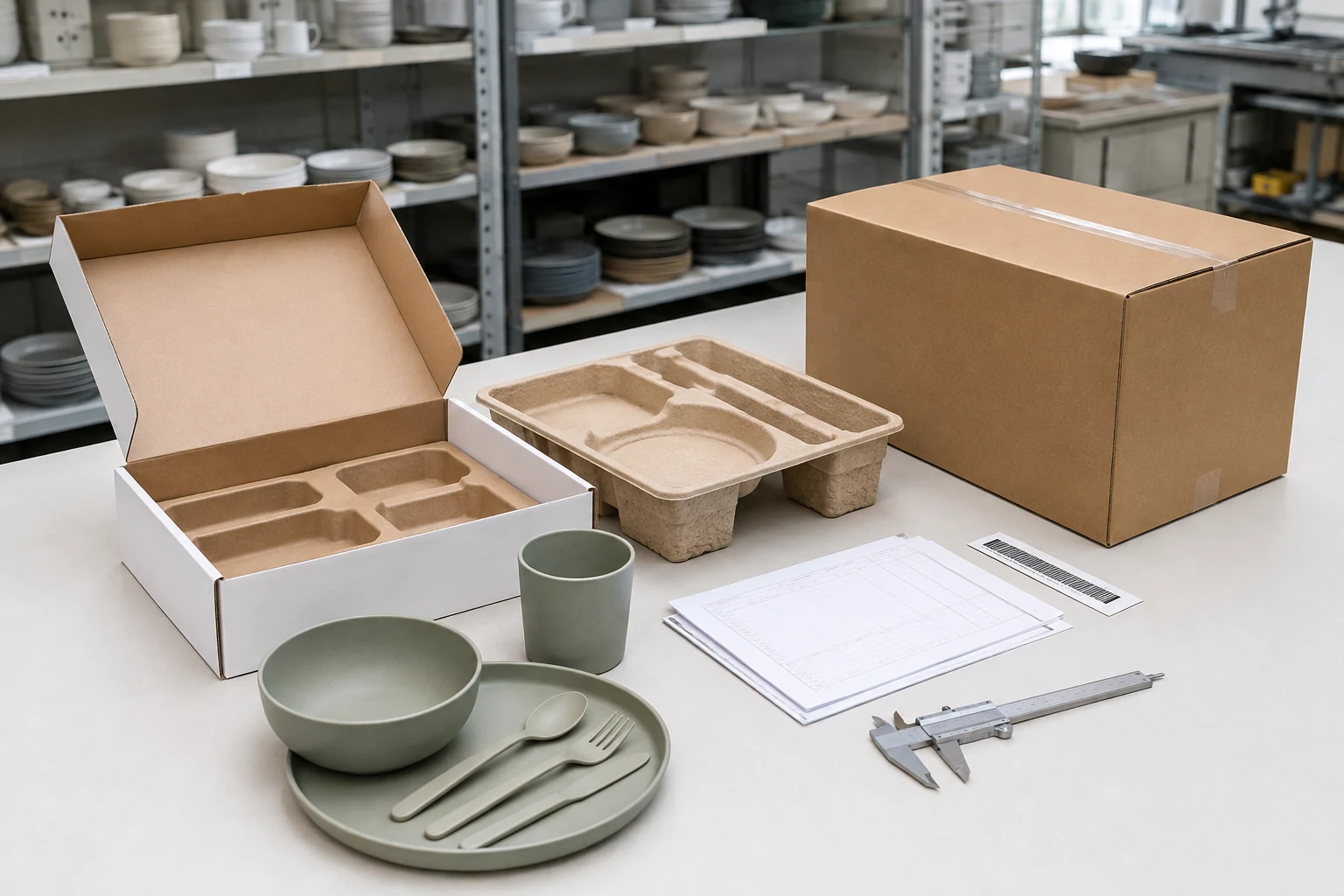
tableware packaging quotation requirements are the exact inputs a factory needs to price the sellable unit and its shipping protection without hiding assumptions. Buyers should specify the product set, unit-pack format, protective components, artwork and labels, master-carton target, order quantity, market, handling risks, test expectations, and delivery route before treating a packaging price as comparable.
A useful quote separates one-time work such as structural samples, artwork setup, printing plates, cutting dies, or test preparation from recurring material and packing costs. It also states what remains provisional, because a price based on an unconfirmed carton size or a generic retail box can change after the product and pack are physically fitted.
This Q&A focuses on custom silicone, wheat-straw composite, plastic, and mixed tableware programs. The correct packaging is product- and channel-specific, so buyers should validate final dimensions, protection, markings, legal content, retailer rules, and shipment performance for the intended market rather than copy another product’s pack.
Quick Answer: Send One Controlled Packaging Brief
Give the supplier a dated brief showing exactly what the customer receives, how every piece is oriented and protected, which retail format and artwork are required, how many sellable units enter each master carton, and where the shipment will travel. Add target quantities, barcode and labeling responsibility, required samples or tests, sustainability constraints, and the approval schedule.
Ask the quote to show pack material, dimensions, printing method, included components, setup charges, unit packing labor, carton assumptions, estimated gross weight, volume, minimum order quantities, lead time, tooling ownership, and exclusions. If a value is unknown, mark it as an open decision and request a priced option instead of letting each supplier invent a different baseline.
Define the Sellable Tableware Unit Before Pricing Packaging
The first question is what constitutes one sellable unit. A single bowl, a plate-and-cutlery kit, a four-place dinnerware set, and a baby-feeding gift set require different pack structures, labor, protection, carton utilization, and barcode logic. State every included product, accessory, spare, insert, instruction, and promotional item with quantity per pack.
Identify the exact product revision used for packaging work. Provide dimensions, weight, material, hardness where relevant, surface finish, decoration, nesting behavior, removable parts, lids, utensils, and any areas vulnerable to deformation, scratching, odor pickup, dust, or pressure marks. Preliminary CAD dimensions can support an estimate, but a physical production-intent sample is normally needed before final fit and carton confirmation.
Describe the pack sequence rather than naming only a format. Show which part sits first, how pieces nest, whether lids remain assembled, where cutlery is retained, which surfaces must not touch, and how the consumer opens and removes the set. A simple sketch or numbered photograph can prevent a supplier from pricing a faster arrangement that does not match the intended unboxing experience.
Clarify whether the unit pack is also the retail display, an e-commerce shipment, an inner pack, or protection inside a larger presentation box. A color box designed for a shelf faces different print and appearance requirements from a transit-only inner carton. If one SKU serves several channels, request separate configurations or identify the shared components and channel-specific additions.
State the sales-unit dimensions or dimensional limits imposed by the shelf, fulfillment system, mailer, display tray, or outer case. Packaging engineers can propose a compact structure, but they cannot protect a fixed retail footprint that has never been disclosed. When space is negotiable, provide priorities such as lowest freight volume, premium presentation, plastic-free construction, or fastest assembly.
Buyers can send the current product and packaging brief for a factory quotation review. Include reference packs only as design intent, and identify which details are mandatory versus examples so the quote does not reproduce unnecessary cost.
A pack list must match the commercial SKU
Packaging quantities should reconcile with the purchase order and assortment plan. If colors, sizes, language versions, or component combinations vary, state the mix per unit, inner pack, and master carton and explain whether mixed cartons are allowed.
The custom solutions page provides context for private-label packaging support alongside product customization. The actual quotation still depends on the approved SKU configuration and deliverables supplied for the project.
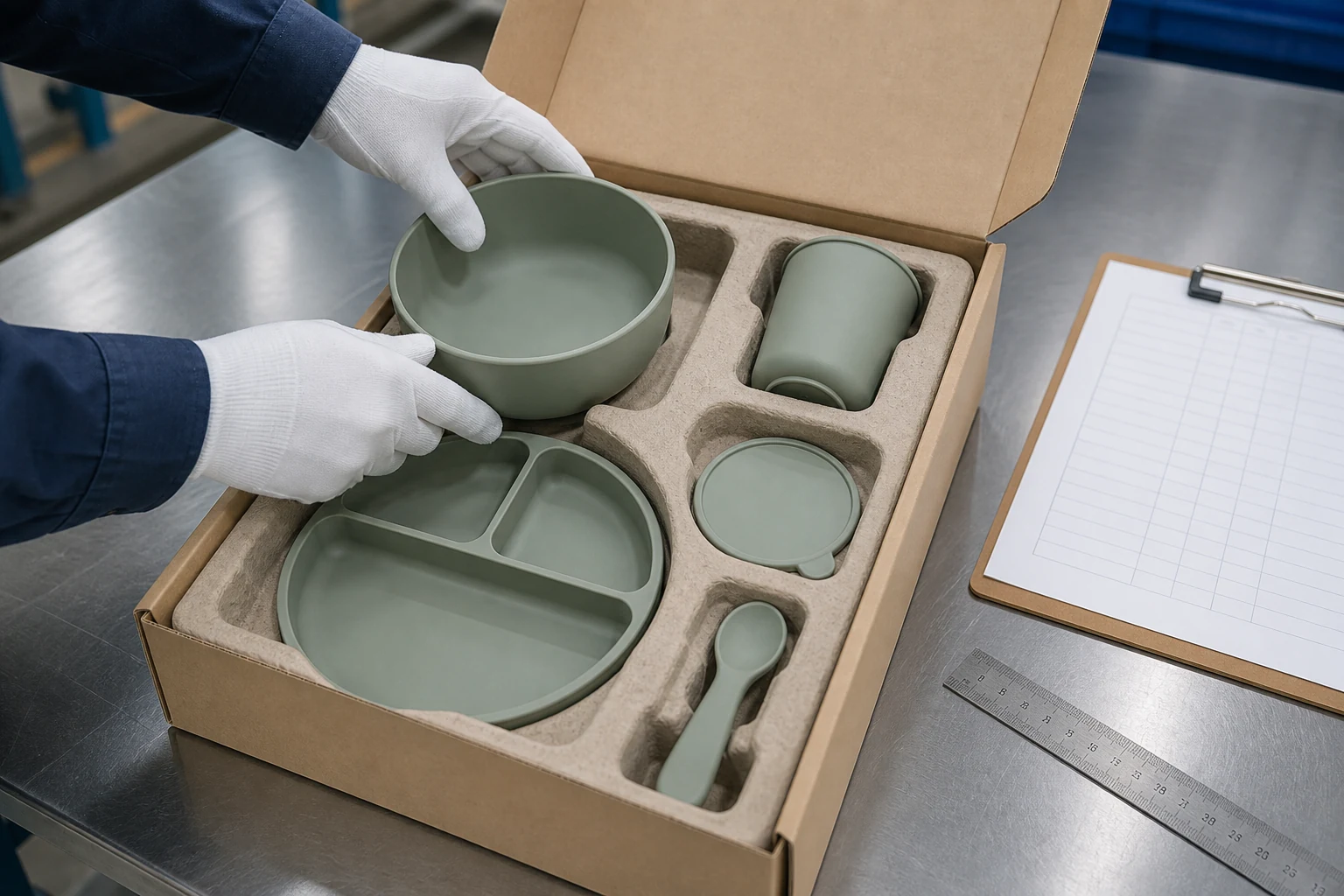
Describe Retail Format, Materials, and Protective Components
Name the preferred retail format only after defining its job. Folding cartons, corrugated mailers, sleeves, belly bands, molded pulp, paperboard trays, dividers, tissue, bags, labels, and combinations offer different appearance, protection, assembly, storage, and recycling profiles. Ask suppliers to identify material grade, flute or board construction, finish, closure, and included inserts rather than quote “box packaging” as one line.
Protection requirements follow the product’s failure modes. Rigid plates may need edge and surface separation, brittle composite parts may need impact control, silicone pieces may need shape support or dust protection, and decorated surfaces may require barriers against rubbing. List the damage that is unacceptable and the handling route expected before asking the factory to optimize material.
Explain any restrictions on plastic bags, foam, laminated board, coatings, windows, magnets, staples, adhesives, inks, or mixed materials. Sustainability language such as recyclable, plastic-free, compostable, or reduced material needs a defined market, disposal system, evidence expectation, and acceptable trade-off. A supplier cannot responsibly price an undefined environmental claim.
Provide appearance targets for board color, print coverage, spot colors, varnish, matte or gloss finish, embossing, debossing, foil, windows, handles, tear strips, seals, or tamper evidence. Premium finishes often add minimum quantities, process steps, tooling, proofing, spoilage, and lead time. Quote them as explicit options when the merchandising decision is not final.
Specify whether inserts are structural, presentational, or both. A tray that positions a feeding set for a window may require tighter fit and cleaner visible edges than a hidden transit divider. Ask how the insert is assembled, whether it can be packed flat, and whether its dimensions rely on the final product sample.
Packaging may influence product condition. Tight bands can distort soft silicone, unvented bags can retain odors, rough board can abrade printing, and unsupported stacks can creep under load. Require a packed-sample review under realistic time and handling conditions before approving mass packing.
Quote the material system, not a marketing label
Terms such as kraft, eco, premium, food grade, or export quality do not define thickness, strength, coating, recycled content, printability, or performance. Record measurable construction and the evidence needed for any claim that will appear on the pack.
When a protective component is optional, price the baseline and risk-reduction option separately. Procurement can then compare the added cost with expected damage exposure and channel expectations instead of removing protection blindly.
Lock Artwork, Barcodes, Languages, and Approval Responsibilities
Artwork scope changes the quote even when the box structure stays constant. State whether the buyer provides print-ready files, asks the factory to place supplied elements on a dieline, or requires original layout work. Identify the number of SKUs, colors, languages, variants, and proof cycles included.
Provide brand assets in controlled formats and versions. Logos, Pantone or other color references, product images, icons, claims, instructions, warnings, legal names, addresses, importer details, origin statements, recycling marks, and certification marks should have owners and approval status. Factories should not invent regulated content or apply marks whose authorization has not been established.
Define barcode type, encoded data, human-readable text, size, quiet zone, color contrast, orientation, and placement. The buyer or designated data owner should supply and verify the number, while the packaging process protects print quality and scannability. If serialization, lot coding, date coding, or variable labels are required, describe the data source and application point.
Language versions affect plates, print runs, inventory, changeovers, and carton assortment. A universal multilingual pack may reduce versions but add text density and review effort, while market-specific packs can improve clarity but fragment quantities. Ask for both scenarios if the destination mix is uncertain.
Set the proofing sequence: structural blank, digital layout, color proof, printed sample, barcode check, packed sample, and final signed reference as appropriate. State who approves dimensions, content, translation, color, barcode data, and product claims. A general email saying artwork looks good should not obscure which file and proof were released.
Artwork changes after plate, die, or material commitment can create scrap and schedule impact. Require version identifiers on the dieline and proof, and make the effective SKU or order clear. The approval calendar should include buyer review time, not only factory preparation time.
Tableware packaging quotation requirements include data ownership
A factory can execute approved packaging, but the buyer normally controls brand truth, market claims, barcode allocation, and destination-specific content. Assigning each field to an owner prevents a low quote from depending on unpriced regulatory or creative work.
The earlier guide to global versus regional specifications explains why market differences should remain visible. Apply the same discipline to packaging artwork and labeling versions.

Provide Master-Carton, Pallet, and Shipping Assumptions
A packaging quotation should identify how many sellable units enter an inner carton and master carton. State whether the count is fixed by retail replenishment, warehouse handling, weight limits, or pallet pattern, and whether mixed SKUs are permitted. Without that hierarchy, unit packaging prices cannot be converted into credible carton, freight, or loading estimates.
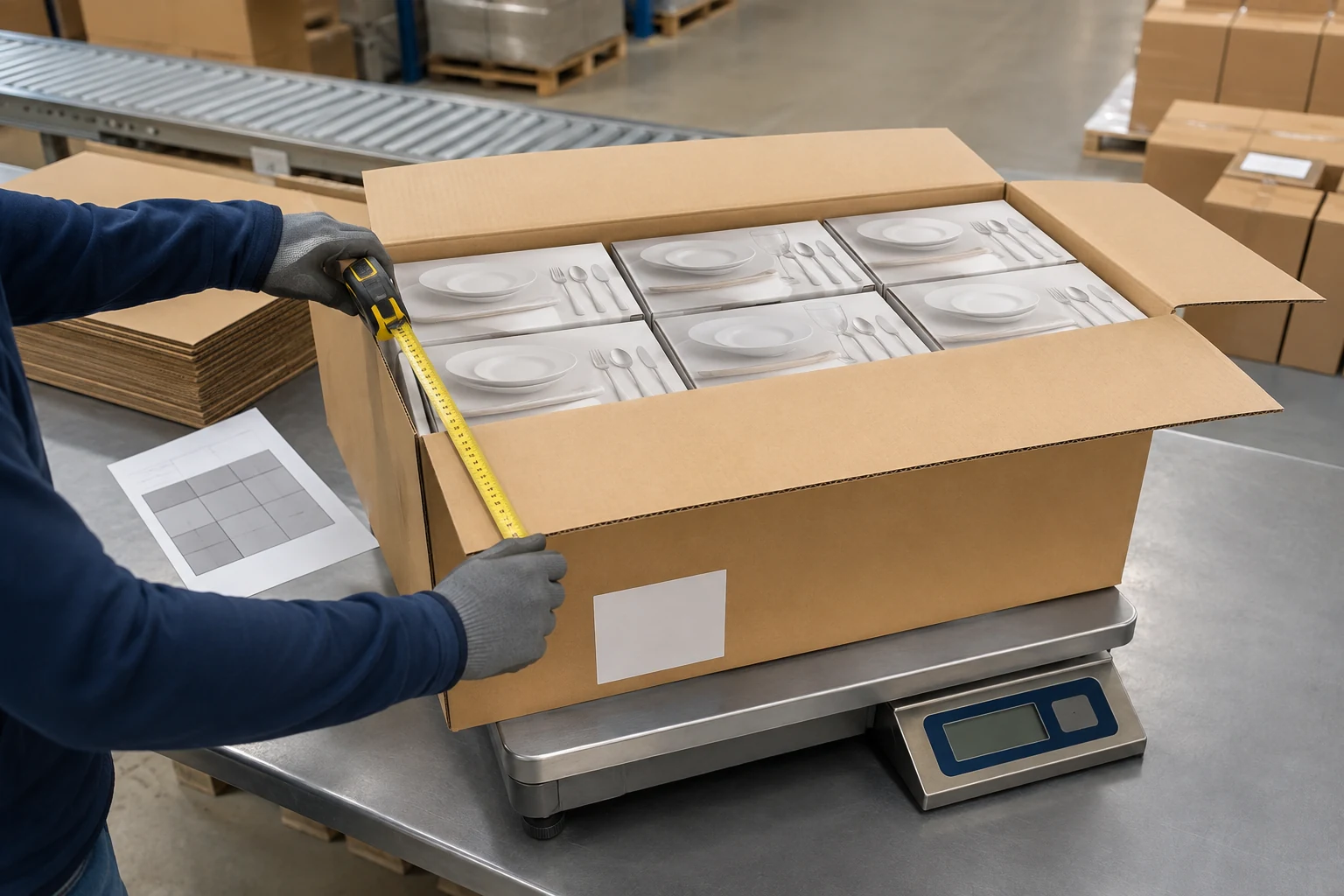
Ask for proposed internal and external carton dimensions, board construction, closure method, gross and net weight, and any dividers, pads, corner supports, straps, or labels. Dimensions should be based on packed products and actual board allowances rather than adding nominal product measurements. A few millimeters repeated across a case can change pallet fit or freight volume.
Set lifting and handling limits for the destination. A carton that is efficient by volume may be too heavy for manual handling or retailer policy, while a lighter case may consume more board and warehouse touches. Request alternatives when carton count, weight, and cube pull in different directions.
Explain the transport route and unitization plan. Ocean freight, air freight, parcel networks, mixed-container loading, palletized distribution, and direct-to-consumer fulfillment expose packages to different compression, vibration, impact, humidity, and handling sequences. The quote should name the assumed route instead of using “export carton” as a complete specification.
If pallets are used, provide pallet dimensions, height and weight limits, overhang rules, stackability, slip sheets, corner protection, stretch wrap, labels, and any heat-treatment or material requirements under the applicable shipment plan. If floor loading is expected, state container type and handling constraints. Both approaches need a usable loading calculation, not only units per carton.
The carton optimization guide for ocean freight explains why product protection and cube must be modeled together. Use the final packed sample and confirmed carton specification before relying on a container-quantity estimate.
Freight cost depends on measured packed reality
Ask suppliers to label estimates clearly until cartons are sampled and weighed. Quotation tables should distinguish product weight, packaging weight, net weight, gross weight, carton cube, pallet cube, and the basis for any dimensional-weight calculation.
A compact pack is commercially useful only if it survives its distribution route and remains practical to assemble and inspect. Record which assumption drives the proposed carton count so later changes can be recalculated rather than guessed.
State Quantities, MOQ Logic, Tooling, and Packing Labor
Packaging suppliers price around material yields, print setup, converting runs, and minimum order quantities. Give the tableware factory order quantity by SKU and language version, expected reorder pattern, acceptable packaging overrun, and whether leftover stock may be held. A total product quantity does not reveal the economics when it is divided among many printed versions.
Separate the minimum quantity for the product from the minimum quantity for each packaging component. Printed boxes, sleeves, labels, molded inserts, manuals, and master cartons may have different economical runs. Ask what happens when packaging MOQ exceeds the product order and who owns, stores, audits, and eventually disposes of the balance.
List one-time charges individually. Structural design, dielines, cutting dies, printing plates, embossing or foil tooling, color matching, prototypes, courier samples, photography, translation, and performance tests should not disappear into a recurring unit price. Confirm ownership, reuse conditions, revision charges, and whether tooling remains valid for later orders.
Packing labor depends on the approved sequence. Folding boxes, inserting dividers, bagging parts, applying labels, scanning barcodes, adding manuals, assembling gift sets, sealing tamper features, checking assortment, and palletizing all consume time. Ask the quote to describe included operations so a lower price does not simply omit a required step.
Clarify inspection and rework assumptions. If every barcode must be scanned, every kit count verified, every decorated face protected, or cartons weighed against a tolerance, those controls affect labor and equipment. The same is true for repacking after buyer or third-party inspection.
When several decisions remain open, request a packaging option matrix with the unresolved variables highlighted. Comparing a plain transit pack, a retail-ready configuration, and a premium presentation route can preserve momentum without pretending that one provisional number is final.
A comparable quote exposes recurring and nonrecurring cost
The buyer should be able to see material cost, printing and converting, packing labor, quality checks, master cartons, palletization, tooling, sampling, testing, and waste assumptions. This structure makes later design changes easier to price and approve.
The factory capability page describes support through production, inspection, private-label packaging, and shipment preparation. The quotation brief connects those stages to the actual pack the buyer intends to purchase.
Set Packed-Sample, Test, and Release Gates Before the Order
Packaging approval should begin with a structural sample using the production-intent product. Check fit, movement, pressure points, surface contact, opening, closure, component retention, consumer access, and the pack’s ability to return to its intended shape after storage. A visually attractive empty box does not prove the complete packed system.
Define performance evidence from the distribution risk, not from a generic demand for a test report. Drop, vibration, compression, stacking, conditioning, leakage, scuff, barcode, seal, or retailer protocol checks may be relevant depending on product and channel. State sample configuration, test sequence, acceptance criteria, and responsibility for failures before testing.
Confirm whether tests apply to the retail pack, shipping carton, palletized load, or complete distribution unit. A passed component test cannot automatically support a different carton count, board grade, insert, closure, or pallet pattern. Retesting or engineering review may be needed after a material or dimensional change.
Approve artwork and structure as linked but distinct gates. Structural dimensions can change the dieline, while late graphic changes can delay printing after the structure is stable. Release production only when the identified dieline, artwork revision, packed sample, carton configuration, and open deviations are reconciled.
Keep a signed packaging specification with the purchase order. It should show materials, dimensions, tolerances, print, finish, pack sequence, counts, labels, tests, sample identity, inspection points, and effective revision. Production teams then have a measurable basis for incoming packaging checks and final packing release.
The comparison of drop, compression, and vibration tests explains the different hazards those methods represent. Use it to frame questions, then agree the exact test standard and acceptance criteria for the actual packed product.
Approval closes assumptions before mass packing
Every open item should have an owner, due date, price effect, and hold point. Packaging material should not enter mass production while barcode data, market text, pack fit, carton count, or performance requirements remain ambiguously approved.
After release, any change to the product, component count, artwork, label, board, insert, pack sequence, carton, pallet, or route should trigger impact review. Preserve the original approval and record the new effective order so old and new packaging cannot be mixed unknowingly.
Tableware Packaging Quotation Requirements by Cost Driver
This comparison separates the details that buyers often combine into one packaging line. Each input changes a different part of cost, lead time, protection, or logistics, so it should remain visible in the quotation.
| Buyer input | What the supplier must calculate | Typical cost effect | Risk if omitted |
|---|---|---|---|
| Sellable-unit pack list | Component count, orientation, nesting, accessories, and assembly sequence | Materials and packing labor | Missing pieces or a quote for the wrong SKU |
| Retail format and construction | Board, bag, tray, sleeve, insert, finish, and closure | Material, converting, MOQ, and setup | Uncomparable generic box prices |
| Artwork and language versions | Dielines, plates, proofs, SKU splits, and changeovers | Setup, printing, spoilage, and inventory | Late revisions or unused printed stock |
| Barcode and variable data | Print zone, application, verification, and data handling | Label stock, equipment, and inspection | Unscannable or incorrectly identified units |
| Master-carton plan | Units per case, dimensions, board, gross weight, and closure | Carton material, labor, and freight cube | Unexpected landed cost or handling problems |
| Order quantity by version | Run size, yield, overrun, storage, and reorder basis | Unit rate and excess-material exposure | Packaging MOQ exceeds sellable demand |
| Distribution route and tests | Hazards, conditioning, sample configuration, and acceptance | Engineering, prototypes, tests, and protection | Damage evidence does not match the real route |
| Approval and change timing | Proof sequence, hold points, release, and obsolete-stock control | Lead time, rework, and scrap | Production uses an unapproved revision |
B2B Buyer Tableware Packaging Quote Checklist
Complete these eight checks before comparing supplier quotations. Each answer should point to a dated brief, drawing, artwork file, sample, calculation, or named owner.
| Check | Question | Why It Matters |
|---|---|---|
| SKU | Does the brief list every product, accessory, insert, instruction, and quantity in one sellable unit? | Prevents the factory from pricing a simpler or different pack. |
| Structure | Are retail format, materials, board or insert construction, finish, closure, and protection defined? | Makes material and converting prices comparable. |
| Artwork | Are file ownership, languages, colors, claims, proofs, and approval responsibilities clear? | Controls setup cost, revisions, and printed-stock risk. |
| Identification | Are barcode data, variable codes, labels, placement, and verification responsibility assigned? | Protects scanning, traceability, and destination handling. |
| Carton | Are units per carton, dimensions, gross weight, board, closure, pallet, and route assumptions stated? | Connects unit packing with freight and warehouse constraints. |
| Quantity | Is quantity separated by SKU and language, with MOQ, overrun, storage, and reorder treatment? | Reveals excess packaging exposure and true unit economics. |
| Evidence | Are packed-sample checks, distribution hazards, test method, and acceptance criteria defined? | Ensures protection claims apply to the actual packed system. |
| Release | Does the purchase order identify approved structure, artwork, sample, specification, and effective revision? | Stops mass packing from starting on unresolved assumptions. |
Official References for Packaging Identification and Evidence
These official sources clarify general identification, marking, and testing principles. They do not approve a Naike Group package, define every destination rule, or replace the buyer’s retailer, carrier, legal, and product-specific requirements.
The GS1 customer-service explanation of GTINs says a GTIN uniquely identifies a predefined trade item and that the brand owner is normally responsible for allocation. For quotation purposes, this means the buyer should control the assigned identifier and packaging level while the supplier prices printing, placement, and verification; the page does not validate a particular barcode artwork or retail listing.
The International Safe Transit Association test-procedure overview groups protocols by distribution context and testing objective. It supports selecting evidence around the actual packed product and route rather than asking vaguely for a drop test, but it does not make every ISTA procedure appropriate or prove acceptance without the specified sample, method, laboratory, and results.
The official U.S. Customs and Border Protection help page on requirements for importing specific goods tells importers to consider country-of-origin marking and notes that requirements depend on the commodity and other agencies. Buyers can use it as a starting point when assigning packaging content, while obtaining product- and transaction-specific advice because this quotation guide cannot determine the legally correct marking for every shipment.
Practical disclaimer: packaging, labeling, environmental claims, barcodes, retailer rules, dangerous-goods status, origin marking, and transport tests vary by product, jurisdiction, channel, carrier, and contract. Confirm current requirements with qualified legal, compliance, logistics, retailer, and packaging professionals, and approve the production-intent packed system before shipment.
Build a Seven-Part RFQ Attachment Instead of an Email Thread
Part one is the SKU and pack bill. List the product revision, material, size, weight, finish, color, included pieces, accessories, spares, instructions, and quantity per sellable unit. Add photographs or a pack-sequence sketch with each mandatory orientation and contact restriction.
Part two is the structural target. State retail format, channel, dimensional limits, board or flexible material expectations, inserts, closures, finish, display features, sustainability constraints, protection risks, and any acceptable alternatives. Mark estimates that require a physical-fit sample.
Part three is the artwork and identification register. Identify each language and market version, file owner, dieline, logo, colors, claims, warnings, importer details, origin text, barcode type and data, variable codes, labels, proof stages, and named approvers.
Part four is the shipping hierarchy. Show units per inner and master carton, preferred weight limit, measured carton target, closure, board, labels, pallet or floor-loading plan, route, destination, stacking, handling, and dimensional-weight basis. Require the supplier to return actual proposed figures in the quote.
Part five is the commercial schedule. Break quantity down by SKU and version, packaging MOQ, allowed overrun, leftover-stock treatment, structural and print tooling, samples, proofs, testing, recurring unit material, labor, inspection, master cartons, palletization, and lead times.
Part six is the evidence plan. Define which structural blank, printed proof, packed sample, barcode check, conditioning, distribution test, or retailer approval must occur, who pays, how many iterations are included, and what measurable criteria release the next stage.
Part seven is the assumption and exception sheet. Require each supplier to list substituted materials, provisional dimensions, excluded work, buyer-supplied data, unavailable evidence, expected waste, validity period, payment trigger, and every input that could change the price. A quotation becomes comparable when these exceptions are visible beside the total.
Tableware Packaging Quotation FAQ for B2B Buyers
Can a factory quote packaging from product dimensions alone?
It can often provide a budget estimate, but final fit, labor, carton count, gross weight, and protection normally require the exact set configuration and a production-intent sample. The quote should identify which values remain provisional.
Who should provide the barcode for a private-label pack?
The brand owner or designated data owner should control the authorized barcode number and packaging level. The factory can price placement, printing, label application, and agreed verification without inventing the identifier.
Why does packaging MOQ differ from the tableware MOQ?
Printed and converted packaging has its own material yields, setup economics, and supplier run sizes. One product order split across several artworks or languages can create a much smaller quantity per packaging version.
Should freight be included in the packaging quotation?
At minimum, the quote should state proposed carton dimensions, units per carton, gross weight, cube, and pallet assumptions so freight can be estimated consistently. Freight prices and responsibilities should follow the agreed Incoterm, route, and validity period.
When is packaging pricing considered final?
It is most defensible after the production-intent product, approved structure, artwork revision, pack sequence, carton count, measured dimensions and weight, evidence plan, quantities, and commercial responsibilities are confirmed. Later changes should trigger documented impact and repricing.
Turn Packaging Assumptions into Quoted Line Items
Complete tableware packaging quotation requirements make suppliers price the same sellable unit, presentation, protection, identification, carton hierarchy, quantity split, and evidence plan. The buyer can then see whether a difference comes from engineering, material, labor, setup, logistics, or an omitted task instead of comparing totals built on different packs.
Use the quotation as a controlled pre-production model: approve the input brief, challenge every provisional value, test the packed system, and release the matching specification and artwork. That sequence converts packaging from a late decorative purchase into a measurable part of product quality, landed cost, and shipment readiness.
Send a Packaging Quote Brief
Share the product revision, pack list, target retail format, artwork status, barcode and label needs, quantities by SKU, master-carton limits, shipping route, test expectations, and required delivery date. The Naike Group manufacturing team can identify missing inputs and return a clearer packaging quotation path.
Request a Custom Quote
Share your product, quantity, target market and customization needs. Our factory team will reply with the next practical step.
Continue Your Sourcing Research
The six newest factory-side articles are updated automatically by publication date.

Wheat Straw vs Bagasse Tableware: Buyer Comparison
A B2B decision guide comparing reusable wheat-straw polypropylene composite tableware with molded bagasse fiber formats across use, evidence, operations and end of life.

Can Wheat Straw Tableware Be Recycled? Buyer Q&A
A practical buyer answer on whether reusable wheat-straw composite tableware can enter PP recycling streams, which evidence matters, and how to qualify market claims.

Global SKU vs Regional SKU: Tableware Decision Guide
A buyer decision framework for choosing one global tableware SKU or controlled regional variants across compliance, packaging, logistics, inventory and change control.

Australia Food Packaging Evidence: Buyer Guide
A practical evidence guide for Australian food-packaging buyers covering intended use, migration risk, supplier assurance, testing, hygiene, release and change control.

EU PPWR Tableware Packaging vs Conventional Packs
A buyer comparison of PPWR-ready and conventional tableware packaging across product protection, material choices, empty space, evidence, labeling and release timing.

Prop 65 Tableware Requirements: Buyer Q&A
A practical buyer Q&A for defining California Proposition 65 exposure scenarios, evidence, warning decisions, supplier records and release controls for tableware.