Debossed vs Embossed Logo: Printed Tableware Guide
Choose a tableware branding route by use zone, material, design detail, lifecycle, order flexibility, evidence needs, and the buyer decision it must support.
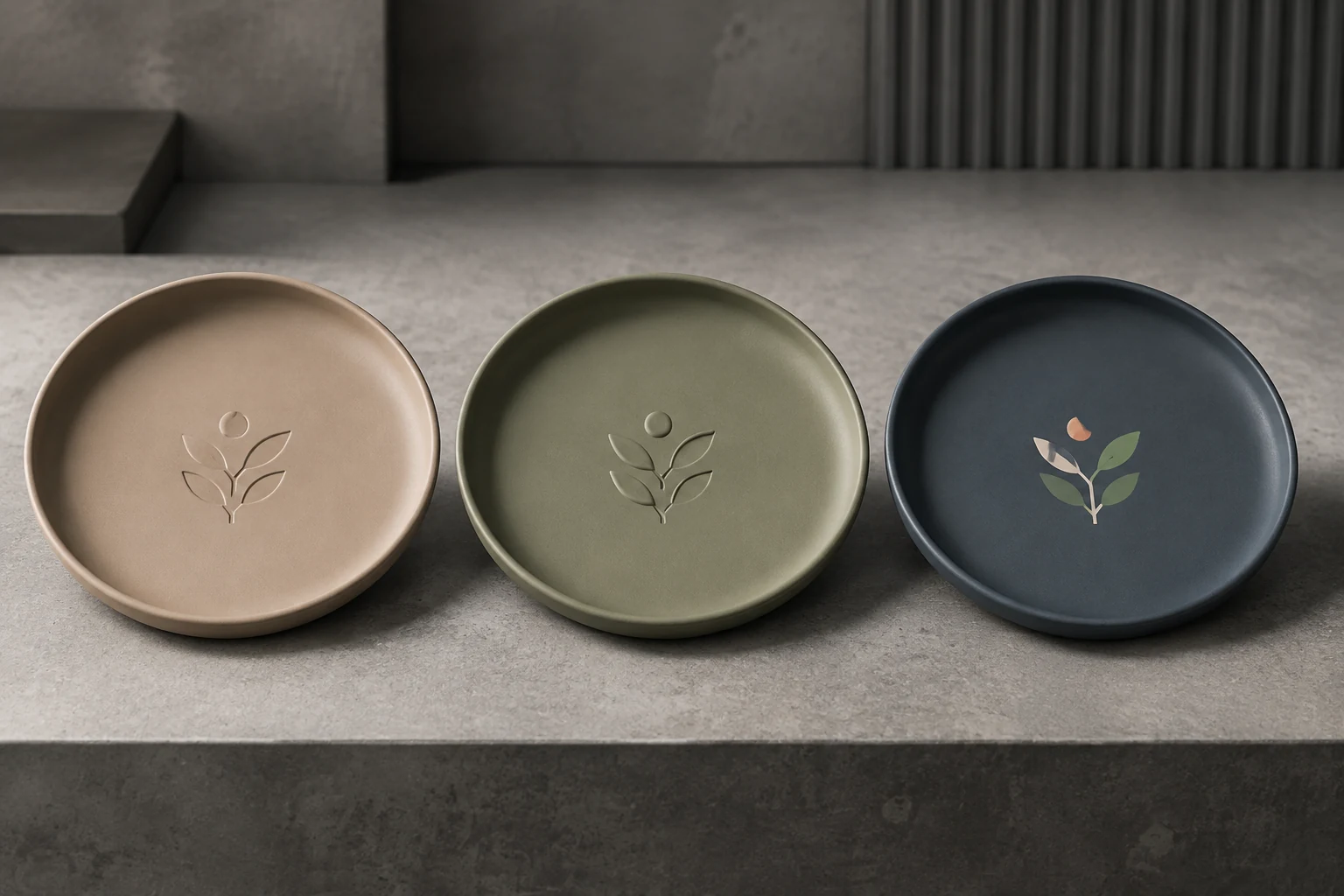
The buyer decision is not whether one logo method is universally best. In a debossed vs embossed logo comparison, debossing is often best for restrained recessed identity, embossing for tactile raised visibility, and printing for color or fine graphic detail; the right choice depends on product material, contact zone, cleaning, tooling, artwork, quantity, and approval evidence.
Molded logos become part of the product geometry and normally require a controlled mold surface or replaceable insert. Printed logos are added after molding through a selected ink, transfer, pad, screen, or other decoration route, so they can offer more graphic flexibility but introduce adhesion, cure, wear, and use-zone questions.
Procurement should compare the complete project route rather than the logo unit price. A method that looks inexpensive can create tool changes, scrap, setup, testing, color-control, packaging, or repeat-order risk when artwork and intended use are not defined.
Buyer Answer: Which Tableware Logo Method Fits Best?
Choose debossing when a subtle, durable mark can be recessed into an appropriate non-critical surface; choose embossing when tactile prominence and shadow contrast matter; choose printing when the brand needs multiple colors, fine lines, variable content, or artwork changes without cutting new mold geometry. None is automatically suitable for every food-contact or cleaning scenario.
The procurement implication is to approve one method against the actual material, logo size, location, product color, surface texture, use conditions, cleaning route, target market, packaging, and repeat-order plan. Buyers should request a method-specific sample and documented acceptance criteria before production authorization.
Define the Brand Job and the Product Zone First
A logo can identify a brand, create premium tactility, carry decorative color, distinguish variants, support orientation, or satisfy private-label packaging requirements. These jobs do not demand the same production method. A quiet mark on the underside of a plate has different priorities from a high-visibility logo on an outer bowl wall or a multicolor motif on a promotional set.
Placement divides the product into functional and visual zones. Eating surfaces, rims, sealing areas, suction bases, stacking contacts, grip zones, underside recesses, and packaging-facing panels experience different contact, wear, cleaning, and inspection conditions. The buyer should mark the proposed zone on a controlled drawing rather than relying on a floating artwork file.
Intended users and markets matter before decoration is selected. Adult dinnerware, children’s feeding products, hospitality pieces, outdoor sets, and promotional items may require different risk reviews and evidence. The factory can organize project information, but buyers remain responsible for identifying applicable market obligations and obtaining qualified advice.
Material changes the visual and process result. Silicone can flex and carry textured or raised molded features, while wheat-straw composite surfaces may show natural variation and can interact differently with fine printing, color contrast, and surface preparation. A method approved on one resin, hardness, pigment, or texture should not be assumed identical on another.
Cleaning and lifecycle expectations must be specific. Hand washing, repeated dishwasher exposure, soaking, abrasion, oils, heat, sterilization, outdoor use, and commercial handling can create different failure modes. The buyer should name realistic cycles and acceptance criteria rather than asking whether a logo is simply permanent.
Start the RFQ with a logo decision brief. Include artwork, dimensions, location, product material and color, required visual effect, contact zone, intended markets, cleaning conditions, target quantity, variants, launch timing, and expected reorder life. Buyers can send a logo customization brief for factory review before fixing the preferred route.
The debossed vs embossed logo decision starts with context
A factory can compare methods responsibly only when the logo job and exposure are visible. Otherwise, a recommendation may optimize appearance while ignoring tool change, cleaning, evidence, or repeat-order needs.
The custom solutions pathway provides general context for private-label development. Exact decoration feasibility, evidence, cost, and timing remain project-specific.
Compare How Debossed and Embossed Marks Are Created
A debossed logo is recessed below the surrounding product surface. Its visible effect comes from depth, edge definition, lighting, shadow, material color, and surface texture rather than added pigment. On a suitable location, it can communicate restrained branding without introducing a separate decoration layer.
An embossed logo rises above the surrounding surface. The raised geometry catches light and can create stronger tactile and visual presence, especially on plain colors. It can also affect grip, stacking, cleaning access, pressure points, and abrasion when the projection or location is poorly chosen.
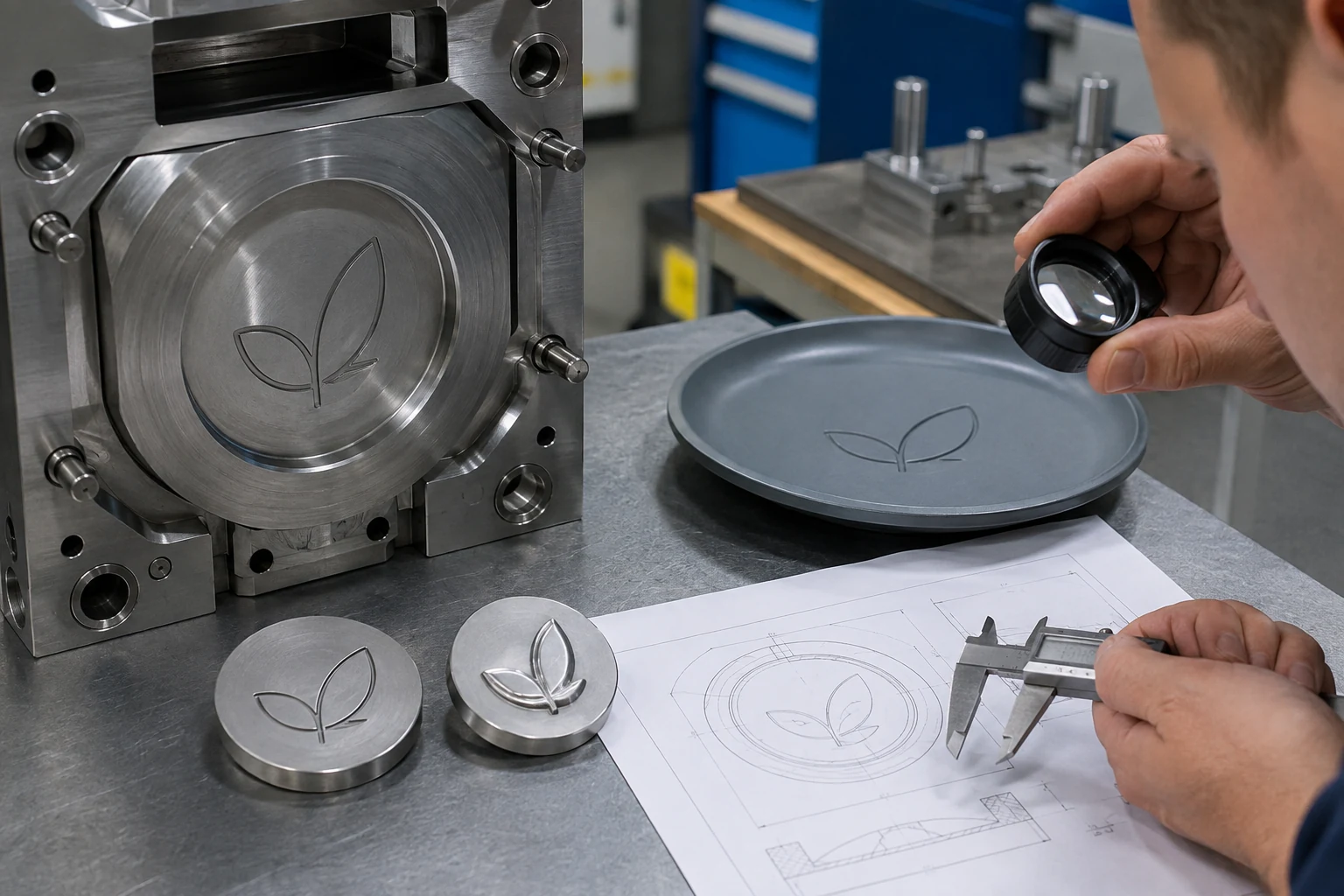
Both methods need manufacturable artwork. Extremely thin strokes, tight counters, sharp internal corners, tiny gaps, and complex lettering may not reproduce cleanly at the proposed size and material. The engineering review should set minimum feature width, depth or height, draft, radii, spacing, and edge transitions without redesigning the buyer’s brand silently.
The geometry normally enters the mold cavity, core, insert, engraving, or related tool surface. A replaceable logo insert can improve brand-change flexibility, but it adds parting, fit, finish, maintenance, and witness-line questions. Direct engraving may look cleaner in some applications but can make later artwork changes more expensive.
Orientation must account for the molded part and final user view. A logo can be mirrored, rotated, distorted over curvature, interrupted by texture, or placed where gates and parting features reduce quality. The approval drawing should show readable direction, centerline, local curvature, critical distances, and the mold-side interpretation.
Molded does not mean zero risk. Flash, incomplete fill, trapped air, wear, polishing, insert mismatch, material variation, and process drift can reduce readability. Inspection should define acceptable edge, surface, depth or height, position, and cosmetic zones for the actual product.
Molded branding trades color freedom for geometric integration
Debossing and embossing can be attractive for long-running designs because the mark is formed with the part. Their commercial value is strongest when the artwork is stable and the mold strategy anticipates future brand or SKU changes.
The custom mold and tooling overview can frame tool-development questions. It does not replace a controlled logo insert drawing, sample plan, maintenance agreement, or change process.
Compare Printed Logos as a Separate Decoration Process
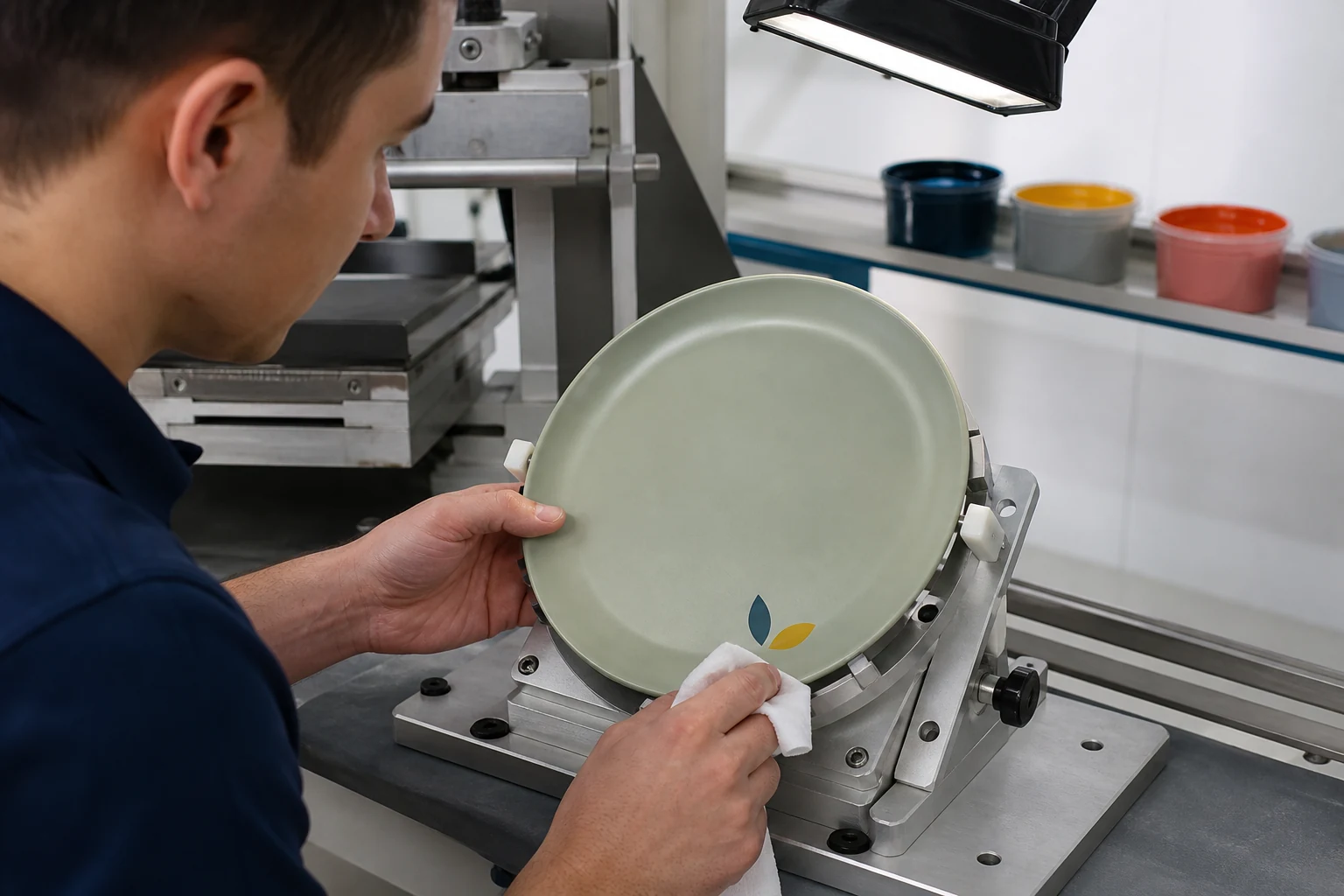
A printed logo is applied after the main part is formed, using a project-selected decoration method. Pad printing can reach some curved areas, screen printing can suit selected flatter zones, and transfer or other processes may support different detail and color effects. The viable route depends on substrate, geometry, surface energy, artwork, ink system, cure, handling, and intended use.
Printing offers artwork flexibility that molded marks cannot match easily. Fine lines, multiple colors, gradients or larger graphic fields may be possible depending on the process, and artwork can sometimes change without modifying the product mold. That flexibility can benefit campaigns, licensed assortments, regional versions, or smaller brand variations.
The trade-off is an added material and process layer. Surface preparation, fixture location, ink mixing, transfer quality, cure conditions, adhesion, registration, opacity, color difference, rub resistance, and contamination control become production variables. Each variable needs a defined method and record if it can affect acceptance.
Product geometry limits the printable area. Deep curves, flexible walls, ribs, textures, parting lines, recessed zones, and handling points can make registration or transfer unstable. The factory should identify a realistic decoration window before the buyer scales or positions final artwork.
Printed color should be approved on the actual product material and color. A Pantone reference or digital file describes intent but does not by itself predict opacity, substrate influence, gloss, metamerism, cure appearance, or viewing conditions. Use a controlled sample, measurement method where appropriate, and agreed visual conditions.
Durability claims require a named exposure and pass criterion. Adhesion after cure, dry and wet rubbing, washing, heat, oils, detergents, abrasion, flexing, stacking, and packaging contact may matter. Buyers should use the custom development pathway to frame a printed-logo sample and test-scope review for the actual use scenario.
Printed tableware logo approval must cover process and use
An approved graphic image is not enough. The approval should identify substrate, product color, surface preparation, ink or decoration system, cure, location, dimensions, visual standard, and required durability evidence.
For flexible products, the custom silicone product overview gives category context. Product-specific decoration compatibility still requires sampling and controlled evaluation.
Compare Appearance, Detail, and Brand Perception
Debossing creates contrast mainly through shadow and the interruption of a surface. It tends to look restrained on matte or softly textured products, but shallow geometry can disappear on low-contrast colors or under diffuse retail lighting. Deeper marks may improve visibility while increasing cleaning and molding concerns.
Embossing creates stronger tactile presence because the mark projects above the product. It can feel premium or functional when scale and edge transitions are controlled, yet oversized height can look heavy and interfere with stacking or hand comfort. The sample review should evaluate both direct viewing and normal use angles.
Printing can deliver the strongest immediate color contrast and the most faithful reproduction of some complex graphics. Small text, thin lines, multiple colors, and regional artwork can be easier to distinguish when the chosen process has adequate resolution and registration. The buyer should still simplify details that cannot remain stable at production speed.
Surface color changes every method. A molded logo uses the product color unless a secondary operation is added, while a printed color may be influenced by substrate shade and opacity. Natural-fiber visual variation can soften consistent color comparison, so wheat-straw composite projects should approve an acceptable visual range on real parts.
Brand perception also depends on placement discipline. A technically sharp mark can look inconsistent if its distance from an edge changes, its orientation follows a distorted surface, or it competes with texture and molding features. Location tolerances and view direction belong in the approval drawing.
Use representative viewing conditions during approval. Compare samples under agreed illumination, distance, angle, product orientation, and packaging presentation, then preserve the signed reference. A studio photograph alone may hide shallow relief, glare, texture, or color behavior that buyers will see in normal handling.
Fine detail has different limits in geometry and ink
Molded detail is limited by toolmaking, material flow, release, surface, and cleanability, while printed detail is limited by artwork preparation, plate or screen, transfer, substrate, registration, and cure. Ask the factory to show the limiting feature rather than merely saying the artwork is possible.
A production-ready logo file should identify master artwork, permitted simplification, minimum size, clear space, colors, and approval owner. Every derivative file should remain traceable to that master.
Compare Durability, Cleaning, and Failure Modes
A molded logo has no separate ink layer to detach, but its geometry can still wear, polish, flash, trap residue, or lose definition as the tool changes. Recessed marks may be protected from direct rubbing yet harder to clean when too narrow or deep. Raised marks may receive more abrasion during stacking, washing, and handling.
Printed logos depend on adhesion and cure as well as the integrity of the underlying product. Common concerns include incomplete transfer, pinholes, poor opacity, edge breakup, smearing, color shift, scratching, rub-off, loss after washing, and set-off against packaging or adjacent products. The relevant failures depend on process and exposure rather than the word printed alone.
Durability testing should reproduce the intended lifecycle with measurable acceptance. Buyers may need an initial adhesion check, defined wash cycles, wet and dry rubbing, detergent exposure, heat, flexing, abrasion, oil contact, stacking, or package-contact evaluation. The plan should name sample conditioning, method, cycle count, rating scale, and decision authority.
Do not equate a pass on one test with universal permanence. A logo can survive hand washing and fail repeated dishwasher exposure, or retain color while losing edge definition after abrasion. Claims should remain limited to the actual sample, material, method, conditions, and criteria evaluated.
Molded marks can offer simpler repeatability when tool condition is controlled, but they are not automatically visually identical. Cavity differences, insert condition, process settings, flash trimming, material color, and surface wear can change the result. Printed marks add more control variables but can support artwork changes without altering core product geometry.
Inspection needs separate criteria for molded and printed routes. Molded checks may cover depth or height, fill, flash, edge, location, texture, and tool damage, while printed checks may cover color, registration, coverage, adhesion, cure, rub resistance, and contamination. The factory capability overview provides general process context, but each logo needs its own acceptance plan.
Durability evidence should match the buyer claim
If marketing intends to claim dishwasher durability, repeated reuse, or suitability for a defined contact environment, the evidence plan should be set before sampling. Qualified compliance and testing specialists should confirm the appropriate scope.
A buyer can discuss logo durability evidence with the manufacturing team while final market and legal interpretations remain with qualified advisers. The project brief should identify the claim, exposure, sample stage, and approval owner.
Compare Tooling Cost, Order Flexibility, and Repeat Orders
Molded logos shift cost and commitment toward tooling. Direct engraving, EDM, replaceable inserts, polishing, trials, and later correction can affect initial cost and timing. Once approved, the mark may form during the normal molding cycle without a separate printing setup, although inspection and tool maintenance remain necessary.
Printed logos shift effort toward recurring decoration. Plates, pads, screens, fixtures, inks, setup, cure, handling, inspection, and scrap may affect each order. A lower tooling commitment can be valuable for artwork variation, but unit and setup economics depend on process, color count, quantity, geometry, and change frequency.
Variant strategy often determines the better route. One stable logo used over a long program may justify a molded solution, while multiple customer brands or seasonal campaigns may benefit from printing or a replaceable insert. Buyers should model the expected number of artworks, colors, SKUs, production runs, and revisions rather than only the first order.
Minimum practical quantity can differ by method. Printing may require setup, ink preparation, fixture alignment, cure and cleanup that make very small batches inefficient, while dedicated molded geometry can require upfront tool work even if the first quantity is modest. Ask for the commercial basis and repricing triggers for each scenario.
Change control is critical for repeat orders. Molded changes require tool and insert revision control, while printing requires controlled artwork, plates or screens, color recipes, fixtures, and approved samples. Obsolete versions should be removed from production access so a repeat order cannot use the wrong brand file.
Quotations should separate one-time and recurring costs. List engineering, tooling or insert, artwork preparation, print tooling, sample, testing, setup, unit decoration, scrap allowance, maintenance, and revision charges. This gives procurement a usable total-cost comparison instead of a misleading price per logo.
Best-fit economics depend on artwork stability
Stable high-volume programs can absorb a controlled molded-logo investment differently from short campaigns with frequent artwork changes. Neither route wins without a volume and revision scenario.
For wheat-straw composite projects, the custom wheat-straw product overview can frame material discussions. Exact logo appearance and process evidence remain subject to project sampling.
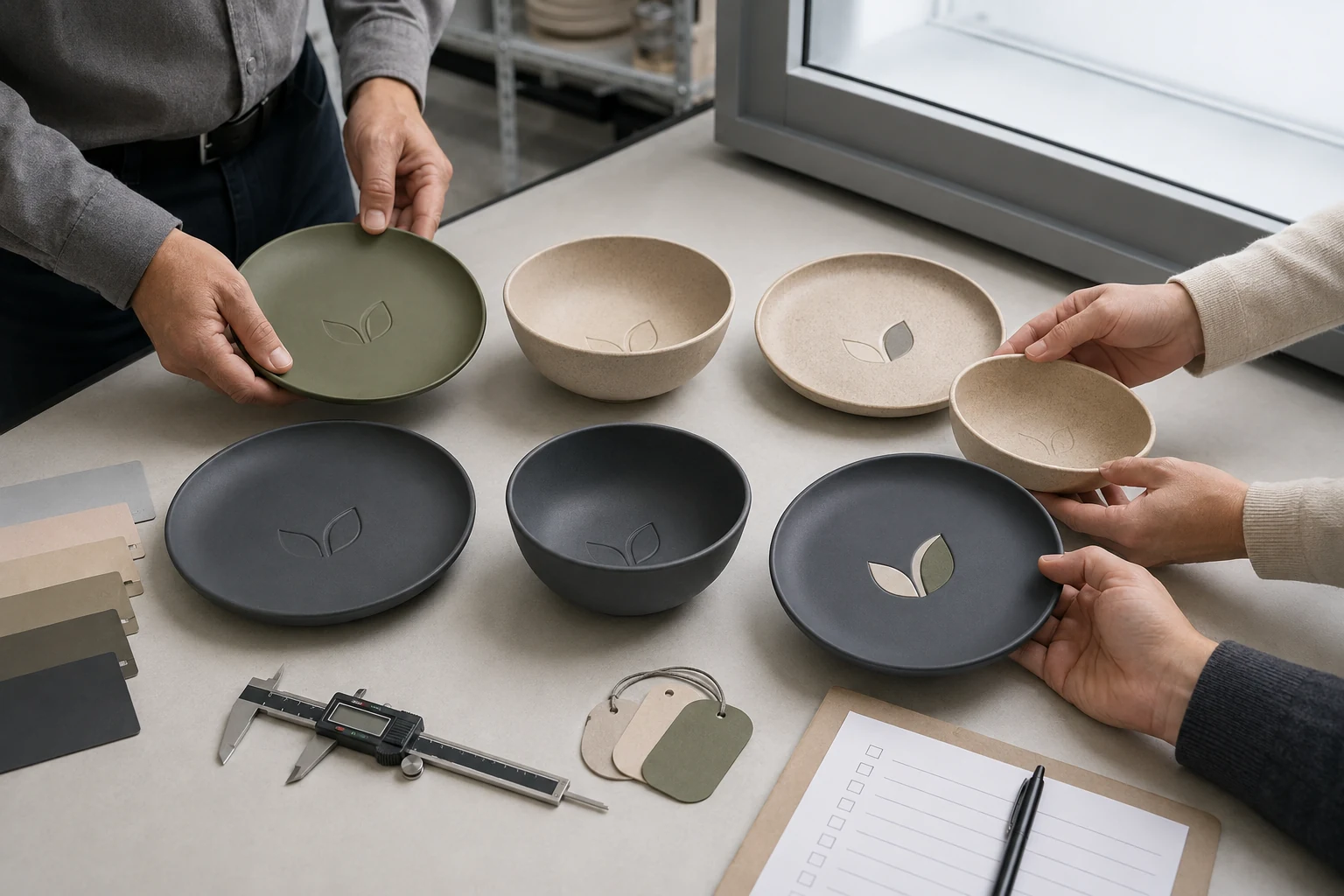
Debossed vs Embossed Logo vs Print: Decision Matrix
Use this matrix to compare the three routes against the same buyer criteria. The preferred option is the one that produces the required brand effect with controlled manufacturing, evidence, and repeat-order risk.
| Decision criterion | Debossed | Embossed | Printed |
|---|---|---|---|
| Visual effect | Subtle recessed shadow | Raised tactile presence | Color and graphic contrast |
| Detail route | Tool geometry and material flow | Tool geometry and release | Artwork, transfer and registration |
| Color | Usually product color | Usually product color | One or more applied colors |
| Artwork change | Tool or insert revision | Tool or insert revision | Print tooling or file revision |
| Main durability risk | Wear, flash or residue in recess | Abrasion or interference at projection | Adhesion, cure, rub and wash loss |
| Recurring process | Formed during molding | Formed during molding | Separate decoration and cure |
| Best-fit scenario | Stable understated identity | Stable tactile brand cue | Changing or color-critical graphics |
B2B Buyer Tableware Logo Checklist
Complete these checks before artwork release or sample approval. A missing answer should become a documented assumption or action rather than an informal production decision.
| Check | Question | Why It Matters |
|---|---|---|
| Brand job | Must the mark be subtle, tactile, colored, detailed, or variable? | Defines the value the method must deliver. |
| Use zone | Is the location a food, cleaning, stacking, grip, or sealing zone? | Exposes functional and evidence risks. |
| Material | Are substrate, hardness, texture and color fixed? | Controls molding and print behavior. |
| Artwork | Are size, strokes, spacing, colors and permitted simplification approved? | Prevents unapproved brand changes. |
| Tooling | Does the route require engraving, an insert, plate, pad, screen, or fixture? | Makes one-time scope visible. |
| Durability | Which real exposures, cycles, methods and limits define acceptance? | Keeps claims tied to evidence. |
| Variants | How many brands, colors, SKUs and revisions are expected? | Shapes total cost and flexibility. |
| Release | Who approves appearance, dimensions, testing and repeat-order standards? | Creates a controlled production gate. |
Official Context for Food-Contact Decoration Questions
Official sources help buyers frame material and intended-use questions when decoration may be relevant to a food-contact article. They do not certify a particular ink, molded logo, tableware design, factory, or finished product.
The U.S. FDA consumer overview of food packaging and contact substances explains that food-contact substances can include components applied to relevant surfaces and that authorization is tied to intended use. Buyers should have qualified specialists determine how a specific decoration, location, material, and use scenario is treated for the finished product.
The European Commission food-contact-materials overview explains that tableware and kitchenware can fall within the food-contact-material framework and highlights migration, safety, quality, taste, smell, and appearance concerns. A general page is not evidence that one logo process complies with current requirements in every EU market.
The FDA research page on printing-ink substances used on exterior food packaging discusses potential migration pathways for some printing-ink components in that research context. It should not be converted into a universal pass or fail rule for tableware, but it reinforces why process chemistry, placement, intended use, and evidence scope must be reviewed specifically.
Practical disclaimer: this comparison is manufacturing and procurement guidance, not legal, regulatory, testing, chemical-safety, intellectual-property, marketing-claims, or product-suitability advice. Buyers should confirm current requirements, authorized substances, evidence scope, artwork rights, and finished-product suitability with qualified professionals for each material, market, user, location, and use condition.
Select the Logo Route by Buyer Scenario
Scenario one is a stable premium tableware line that needs discreet identity on an underside or protected outer zone. Debossing may fit when the material and geometry reproduce clean edges and the recess does not create unacceptable cleaning or molding effects. Approve depth, stroke, position, texture, and visibility on the actual product color.
Scenario two is a plain-color product that needs a tactile brand cue visible without added ink. Embossing may fit when projection, draft, radii, wear, stacking, and hand contact remain acceptable. Test the mark in normal handling rather than judging only a close-up photograph.
Scenario three is a multicolor promotional or licensed assortment with changing artwork. Printing may fit because files and print tooling can be changed without recutting the core product geometry, subject to process feasibility. Model setup, color count, registration, cure, durability, scrap, and version-control costs across the expected campaigns.
Scenario four is a long-running OEM program that serves several customer brands from one product platform. Compare replaceable molded inserts with separate print tooling and fixtures. The best route may differ by annual volume, artwork frequency, visible witness lines, required detail, and how quickly obsolete branding must be removed from production.
Scenario five is flexible silicone baby feeding ware with repeated cleaning expectations. Review surface movement, print adhesion, molded feature comfort, cleaning access, contact zone, age-related requirements, and intended claims before choosing. Do not transfer a decoration approval from a rigid product to a flexible one without project evidence.
Scenario six is naturally variable wheat-straw composite tableware. Evaluate how fiber appearance, base color, texture, and production variation influence molded shadow or printed opacity. The approval standard should show an acceptable range rather than a single ideal studio image.
Scenario seven is a retailer program with regional labels and fast artwork changes. Printing may support version flexibility, while a molded brand may remain stable and variable market information moves to packaging. Separate permanent product identity from content that may change because of language, market, legal, or campaign needs.
For any scenario, ask the supplier to quote the same controlled brief. Compare method, tooling, recurring setup, sample stages, testing, unit cost, scrap, lead time, maintenance, artwork revision, evidence deliverables, and exclusions. The cheapest first sample is not necessarily the lowest-risk repeat-order system.
Tableware Logo Method FAQ for B2B Buyers
Is a debossed logo always more durable than printing?
A debossed mark has no separate ink layer, but its readability and cleanliness can still change through wear, flash, polishing, material variation, and geometry. Durability should be defined against the actual use and acceptance criteria rather than assumed from the method name.
Can an embossed logo make a tableware product uncomfortable?
It can if height, edge, location, hardness, or user contact is poorly controlled. Review normal grip, lip and eating zones, stacking, cleaning, and pressure points on production-representative samples.
Which option is best for a multicolor logo?
Printing usually provides more practical color and fine-detail flexibility, subject to substrate, process, registration, cure, use-zone, durability, and evidence requirements. A buyer should compare the actual artwork and lifecycle rather than assume every print method can reproduce it.
Can the factory add a molded logo to an existing mold?
Possibly, through direct tool modification or an engineered insert, but feasibility depends on tool construction, available steel, location, surface, cooling or heating, ejection, and future revision needs. Any modification requires controlled drawings, approval, trials, and updated tool records.
What should the buyer approve before mass production?
Approve method, product material and color, artwork revision, scale, location, orientation, relief or print parameters, visual standard, tolerances, durability scope, sample status, packaging interaction, and responsible signoff. Repeat-order controls should reference the same approved basis.
Choose the Brand System, Not Just the Sample Look
A disciplined debossed vs embossed logo decision compares brand effect, product zone, material, detail, tool strategy, durability, evidence, variants, and repeat-order control. Debossing favors subtle integrated identity, embossing favors tactile prominence, and printing favors color and artwork flexibility, but each advantage carries different controls.
Procurement should approve the whole branding system: controlled artwork, manufacturing route, sample, acceptance criteria, evidence, version control, maintenance, and change process. That system matters after the attractive first sample, when orders repeat across cavities, colors, operators, and seasons.
Select the method that meets the intended buyer scenario with the fewest unresolved dependencies. Keep alternate routes visible, but release only the method whose technical and commercial basis has been reviewed for the actual project.
Request a Tableware Logo Factory Review
Share the product, material, use zone, artwork, size, colors, intended markets, cleaning conditions, quantity scenarios, variants, durability expectations, and launch timing. Our manufacturing team can compare molded and printed routes and identify the samples, tooling, evidence, and approvals needed for quotation.
Request a Custom Quote
Share your product, quantity, target market and customization needs. Our factory team will reply with the next practical step.
Continue Your Sourcing Research
The six newest factory-side articles are updated automatically by publication date.
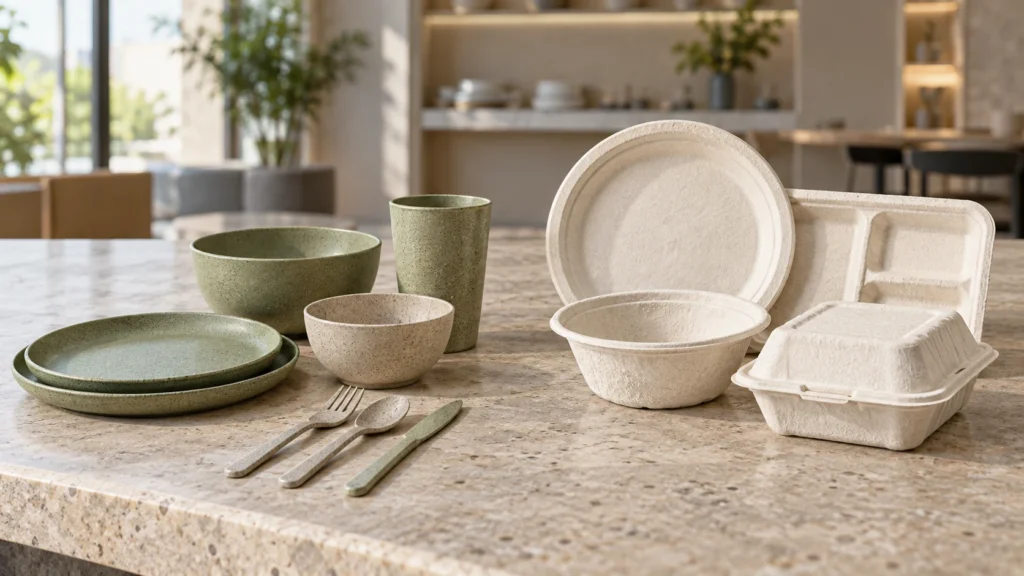
Wheat Straw vs Bagasse Tableware: Buyer Comparison
A B2B decision guide comparing reusable wheat-straw polypropylene composite tableware with molded bagasse fiber formats across use, evidence, operations and end of life.
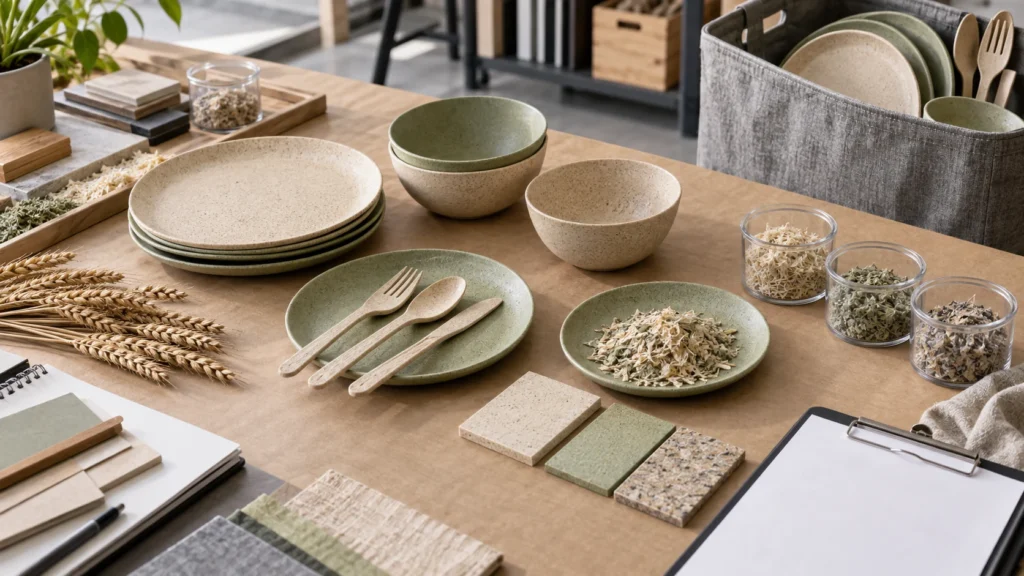
Can Wheat Straw Tableware Be Recycled? Buyer Q&A
A practical buyer answer on whether reusable wheat-straw composite tableware can enter PP recycling streams, which evidence matters, and how to qualify market claims.

Global SKU vs Regional SKU: Tableware Decision Guide
A buyer decision framework for choosing one global tableware SKU or controlled regional variants across compliance, packaging, logistics, inventory and change control.

Australia Food Packaging Evidence: Buyer Guide
A practical evidence guide for Australian food-packaging buyers covering intended use, migration risk, supplier assurance, testing, hygiene, release and change control.

EU PPWR Tableware Packaging vs Conventional Packs
A buyer comparison of PPWR-ready and conventional tableware packaging across product protection, material choices, empty space, evidence, labeling and release timing.

Prop 65 Tableware Requirements: Buyer Q&A
A practical buyer Q&A for defining California Proposition 65 exposure scenarios, evidence, warning decisions, supplier records and release controls for tableware.