
Retail Box vs Sleeve Packaging vs Belly Band
Choose the lightest packaging format that still satisfies product protection, merchandising, information, fulfillment, assembly, and landed-cost requirements.
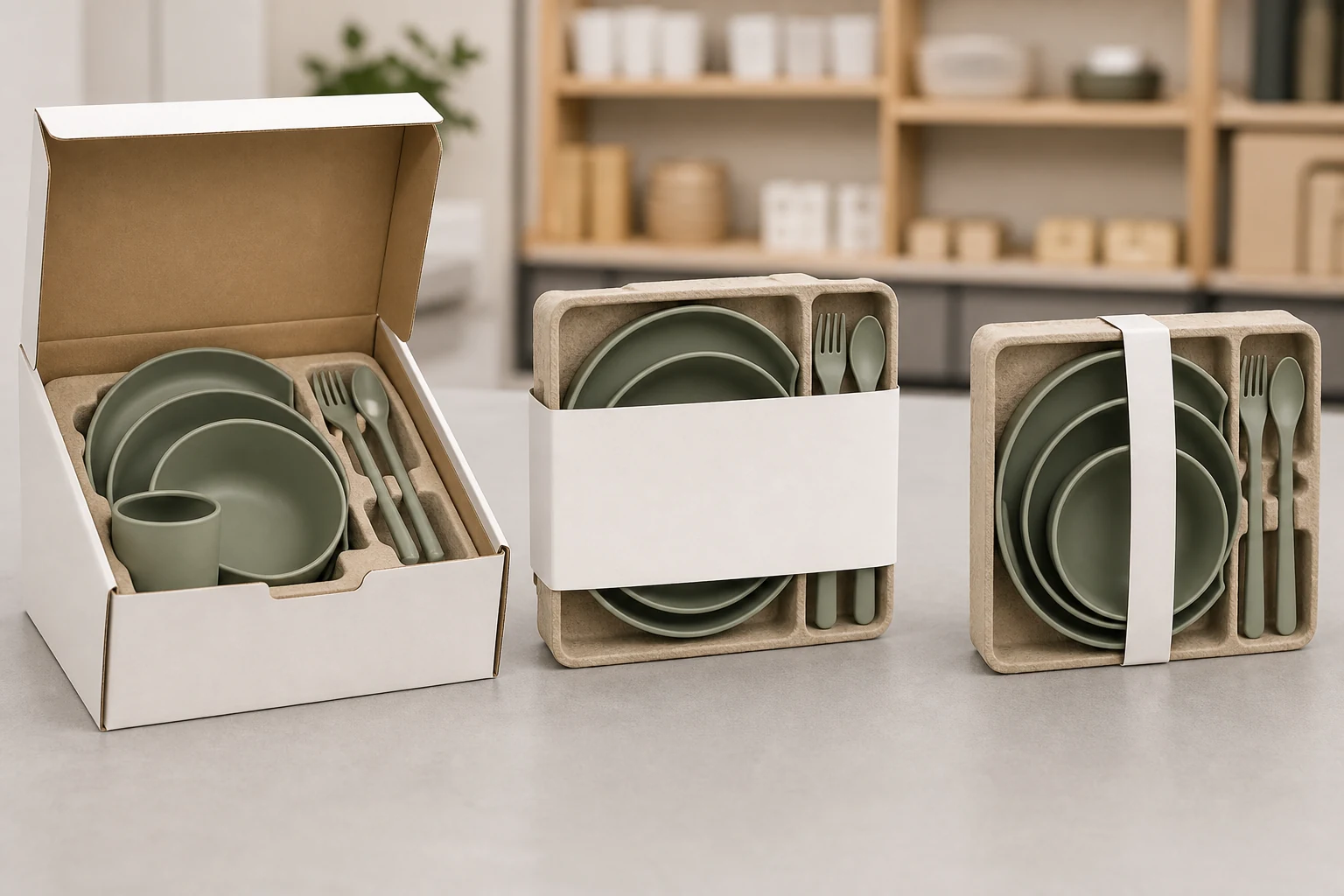
retail box vs sleeve packaging is not a universal winner decision. A full box usually gives the strongest enclosure, print area, stacking control, and premium presentation; a sleeve reduces board while preserving a branded face; a belly band uses the least material and maximizes product visibility, but normally provides the least protection and information space.
Choose among them by scoring the actual product’s fragility, hygiene exposure, nesting, decoration, theft risk, shelf presentation, e-commerce route, required copy, packing labor, carton efficiency, and target price. The best-fit format is the lowest total-cost system that still protects the approved tableware and satisfies the destination channel.
This comparison applies to private-label silicone, wheat-straw composite, plastic, and mixed tableware sets. Final structure, claims, dimensions, labels, and performance must be confirmed on production-intent packed samples for the intended market and distribution route.
Buyer Answer: Match Enclosure to the Product and Channel
Use a retail box when the pack must enclose loose components, carry substantial information, stack predictably, hide the product, or present a higher-value gift set. Use a sleeve when an inner tray, nested product, or existing container supplies structure and the brand needs moderate graphics with lower board use.
Use a belly band when the product is robust, clean presentation can remain open, only concise information is needed, and retail handling will not dislodge parts. For omnichannel programs, compare one shared structure with channel-specific protection against separate retail and e-commerce packs.
Start with the Packaging Job, Not the Board Shape
Packaging performs several jobs at once: it contains the SKU, protects surfaces and components, communicates information, supports merchandising, enables scanning, controls handling, and fits the shipping hierarchy. Rank these jobs before selecting a format. A buyer who begins with “we want a sleeve” may discover later that the product still needs a tray, bag, seal, or shipping box that changes the apparent saving.
Product architecture matters. Nested bowls can create their own compact structure, while loose lids, spoons, cups, or plates may shift without retention. Soft silicone can tolerate impact yet deform under tight pressure, and rigid composite pieces may need edge or surface separation even when they look durable on a shelf.
Decide how much of the product should remain visible. Visibility can make material, color, size, texture, and set contents obvious, but it exposes the product to dust, handling, label damage, part removal, and inconsistent shelf presentation. A closed box controls the view, while sleeves and bands ask the product itself to remain orderly.
Map the consumer and warehouse opening sequence. A pack that looks minimal can create extra tape, stickers, ties, or manual adjustments that slow assembly and frustrate removal. Count every component and hand motion in the approved packing method.
Identify mandatory communication before allocating graphics. Product identity, quantity, use instructions, warnings, material statements, origin information, barcode, importer details, language versions, recycling guidance, and retailer content can exceed the available panel area. Small bands may force additional labels or inserts.
Buyers can request a structure review using the actual product set and sales channel. A useful review compares complete systems rather than the board pieces alone.
The hidden components decide the real format
A sleeve plus molded tray and bag may use more materials and labor than a simple folding carton. Conversely, a full box may eliminate several retainers and reduce damage, so compare the complete bill and pack sequence.
The custom solutions page provides context for private-label packaging support. The selected structure still depends on the product, channel, artwork, quantity, and evidence agreed for the order.
When a Full Retail Box Earns Its Extra Material
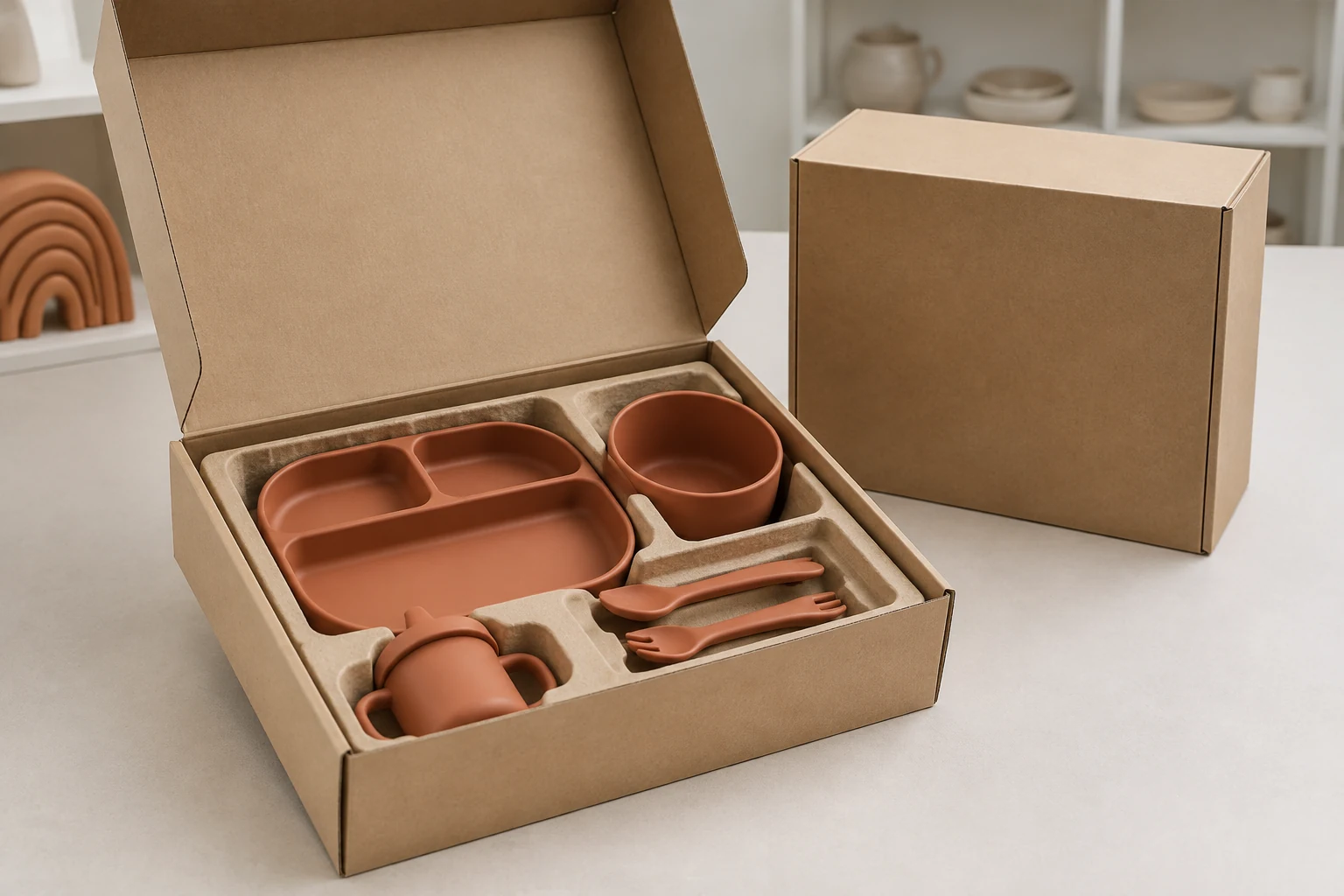
A full folding carton or corrugated retail box encloses the product on most or all sides. That enclosure can retain several components, protect decorated faces, reduce dust exposure, create regular stacking geometry, and give the brand multiple panels for information and storytelling. It is often the most forgiving format for complex sets.
Boxes support different internal systems. Paperboard platforms, molded pulp, corrugated dividers, tissue, bags, or shaped inserts can locate products and control movement. The buyer should determine whether the insert is required for protection, presentation, assembly, or all three.
The controlled exterior helps shelf consistency. Products with variable nesting, flexible silhouettes, or several colors can still present one repeatable block to the retailer. A closed pack also conceals minor visual differences in product orientation that would be obvious under a band.
The trade-off is material and cube. Side walls, top and bottom panels, glue flaps, inserts, and closure features add board, converting, storage, and freight volume. A premium structure can also require dies, plates, proofs, finishing steps, and higher minimum runs.
Packing labor can rise or fall depending on design. A well-engineered crash-lock or simple tuck box may assemble efficiently, while elaborate gift boxes and multiple inserts consume handling time. Ask for a timed packing trial with the complete SKU rather than judging from an empty sample.
A full box is not automatically e-commerce ready. Parcel shipment can expose it to drops, compression, vibration, moisture, labels, and abrasion beyond shelf distribution. It may still need an outer shipper or channel-specific protective design.
Best fit: complex, premium, information-heavy sets
Choose a full box when enclosure prevents component loss, supports required copy, creates dependable stacking, or justifies a premium consumer experience. Its extra cost should solve named risks rather than serve as a default.
Use the earlier packaging test comparison to distinguish transport hazards. Then apply the relevant method to the final product-and-package configuration.
Where a Paper Sleeve Delivers the Best Balance
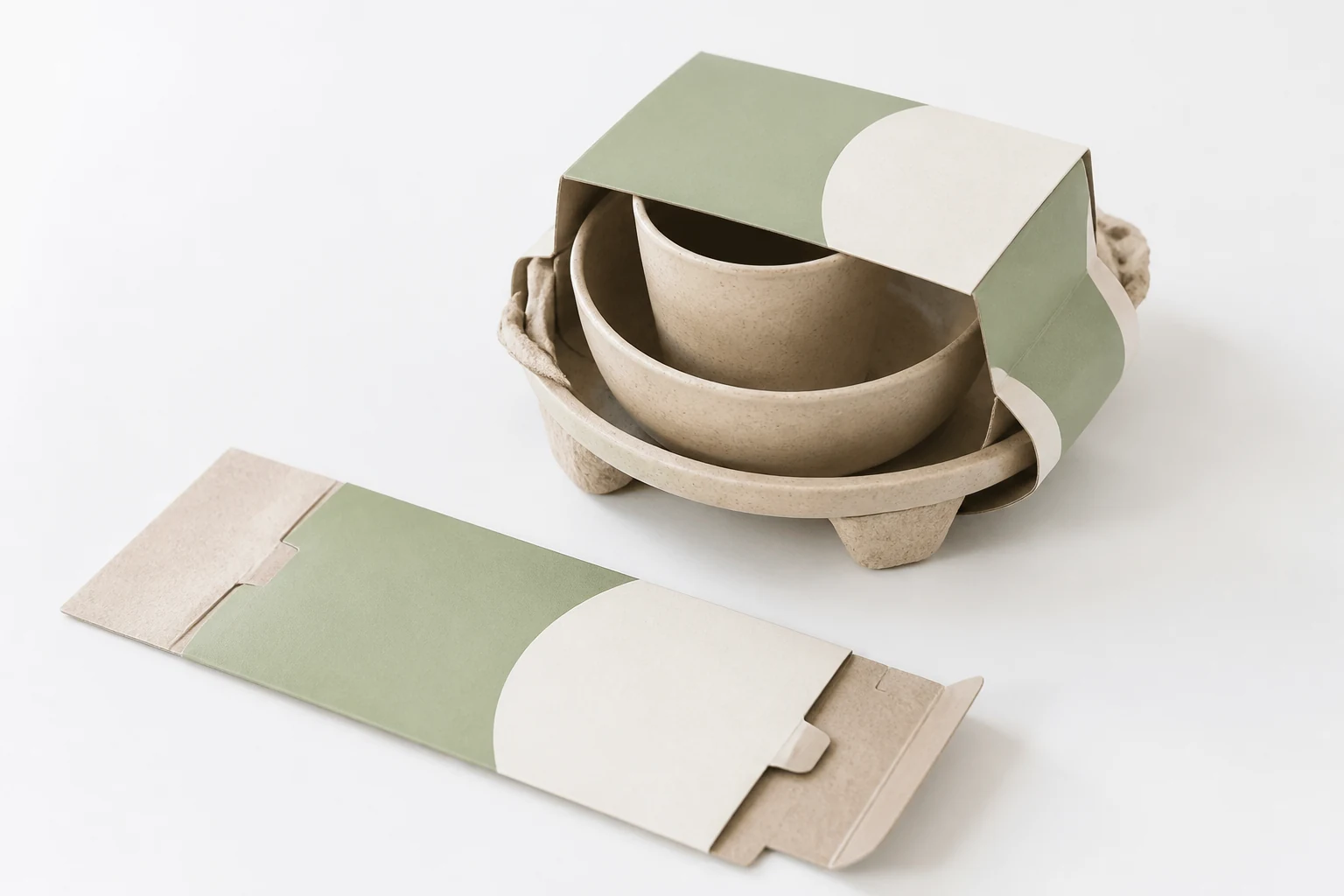
A sleeve wraps around part or most of an already stable product, tray, tub, or inner package. It gives the brand a defined front, back, and side area while leaving ends or surfaces exposed. The structural load often remains with the product or inner support.
Sleeves can reduce board and shipping cube compared with a full box, particularly when products nest tightly. They can also let buyers see or touch color and texture. The saving is real only after counting any tray, bag, seal, end retainer, or label required to keep the unit saleable.
Fit tolerance is critical. A loose sleeve can slide, rotate, or fall away; an overly tight sleeve can bow, tear, scuff printing, or deform soft products. Dimensional variation, humidity, board grain, coatings, and packing method should be tested on production-intent samples.
Open ends change risk. Utensils or lids may escape, product surfaces may collect dust, and barcode panels may become curved or damaged if the sleeve lacks support. End tabs, locks, adhesive dots, or tamper labels can help, but each adds material and labor.
A sleeve offers less artwork area than a full carton, yet often enough for a clear brand panel, product facts, barcode, and concise instructions. Multilingual or regulation-heavy programs may need an insert or extended label. Map every required element on the dieline before approving the concept.
Sleeves can suit retail and multipack programs where an inner tray is already necessary. They also allow related SKUs to share an unprinted structural component while changing the printed sleeve, although each artwork version still has its own run-size economics.
Retail box vs sleeve packaging turns on retained structure
The sleeve wins when product geometry or an inner support already controls shape, movement, and stacking. If the sleeve must compensate with several hidden parts, a simple box may be commercially cleaner.
Ask the factory to price both alternatives with identical product quantity, print coverage, protection, labor, carton count, and test scope. That keeps the comparison focused on structure rather than omitted assumptions.
When a Belly Band Is Enough—and When It Is Not
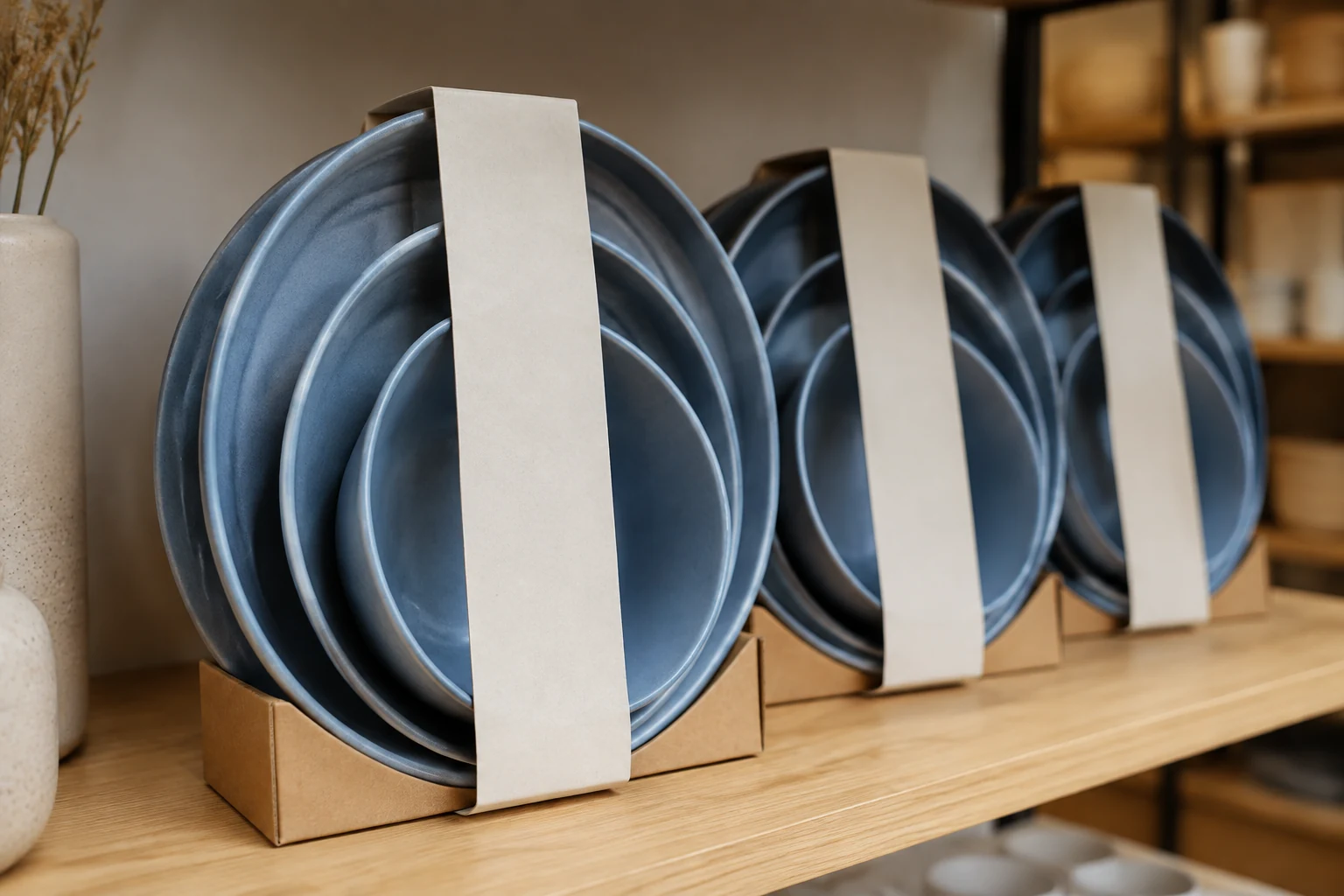
A belly band is a narrow strip wrapped around part of the product or a simple supporting tray. It creates a focused branding and information zone while leaving most of the product visible. Material use and finished pack volume can be low when the product is stable without enclosure.
The format works best for robust nested items, simple sets, and controlled retail environments. Plates, bowls, or trays that hold their own alignment may need only a band to prevent separation and carry essential identity. Loose cutlery, lids, or small accessories require separate retention or a broader structure.
Band width sets the information budget. A narrow face may hold a brand mark and product name, while the reverse carries a barcode and concise facts. Multiple languages, instructions, warnings, claims, and importer details can force a wider band, folded booklet, peel label, or secondary insert.
Retention should be demonstrated, not assumed. The band must resist sliding during packing, carton loading, shelf handling, and customer pickup without crushing the product or damaging print. Locks, adhesive, labels, or shrinkable features affect recyclability, opening, labor, and tamper evidence.
Open presentation exposes more surface. That can strengthen material and color communication, but it increases dust, scuff, handling, and part-removal risk. Retailers may also require a hang feature, standardized footprint, security device, or shelf-ready tray that changes the complete system.
A belly band can be attractive for corporate gifts or low-waste positioning when the distribution route is controlled. Avoid treating minimal material as automatically lower impact; damage, repacking, extra shipping protection, and unsold units belong in the assessment.
Best fit: visible, stable, low-complexity products
Use a band when the product itself carries structure, components cannot escape, required information fits, and the channel accepts open display. Validate the packed set through the actual handling path.
For a distinct project review, buyers can send the product set and proposed merchandising route. The factory can identify whether the band needs a tray, seal, label, or outer protection before quoting.
Compare Total Landed Packaging Cost, Not Board Price
Material area is only one cost driver. The comparison should include board or paper, printing, coatings, windows, inserts, bags, labels, adhesives, structural tooling, print setup, proofs, packing labor, inspection, master cartons, palletization, storage, freight cube, damage, and obsolete stock. A belly band can lose its apparent advantage when several secondary items are added.
Order quantity and artwork splits change economics. A full box may have a higher unit material cost but support an efficient printing run, while multiple sleeve or band versions may fragment volume. Ask for minimum order quantity, economical run, allowed overrun, and leftover-stock treatment by SKU and language.
Structural efficiency affects master cartons. Boxes create regular shapes but may add empty space around the product; sleeves and bands can preserve compact nesting but may need dividers or careful orientation. Compare units per carton, carton dimensions, gross weight, and pallet or container utilization using measured samples.
Labor must follow the actual assembly sequence. Time folding, inserting, bagging, banding, labeling, scanning, sealing, checking, and case packing. Small manual steps repeated across a large order can outweigh modest material differences.
Damage costs should be expressed as scenarios rather than unsupported promises. Compare the expected consequences of scuffing, lost components, crushed corners, sleeve movement, band tearing, and retail returns. The final evidence comes from production-intent samples and an agreed test or handling plan.
Use the morning guide on tableware packaging quotation inputs to align quantities, artwork, carton, route, and evidence assumptions. This comparison then decides the format rather than rebuilding the same RFQ checklist.
A lower-material format can have a higher system cost
Add every hidden support and extra shipper before comparing totals. The right metric is cost per accepted, sellable unit delivered through the intended channel, not cost per printed paper component.
The ocean-freight carton guide provides a separate method for balancing cube and protection. Recalculate it after the retail-pack choice changes outer dimensions or stacking behavior.
Choose by Channel Scenario and Recheck Omnichannel Compromises
A premium retail shelf often rewards controlled graphics, regular stacking, and a deliberate unboxing sequence. A full box is frequently the strongest candidate, especially for gift sets or products with loose accessories. A sleeve can work when enough product visibility is valuable and a tray controls presentation.
Warehouse-club or value retail may prioritize fast stocking, visible product, case efficiency, and large on-pack identification. Sleeves or bands can reduce material, but the retailer’s shelf-ready, barcode, security, and handling rules may dominate. Build the case and retail unit together.
E-commerce introduces parcel hazards and fulfillment labels. A polished retail box may still require an outer mailer, while an open sleeve or band usually needs stronger secondary protection. Compare whether a channel-specific shipper around a shared retail pack is better than a separate e-commerce structure.
Corporate-gift and promotional programs can favor a full presentation box for perceived value or a belly band for a practical low-material story. The right choice depends on personalization, quantities, shipping, gift assembly, and event deadlines. Short runs can make setup and excess stock more important than board area.
Export distribution through importers and regional warehouses benefits from stable carton counts, readable identification, and version control. A shared unprinted support with market-specific sleeves can reduce structural variety, while separate boxes may simplify market-specific compliance. Model the actual SKU split and approval workflow.
Omnichannel products rarely get every benefit from one pack. A single format can reduce inventory and changeovers, but may overpackage retail units or underprotect parcel shipments. Score the compromise against real channel volumes and add only the protection that each route requires.
Select a primary channel before optimizing the shared pack
Name the channel that sets the baseline and quantify the others. When no channel dominates, compare separate packs, modular add-ons, and one universal structure with the same product, artwork, quantities, labor, carton, and damage assumptions.
Approve the format only after a packed-sample review and complete landed-cost comparison. Record the reason the selected option wins and the conditions that would reopen the decision.
Retail Box vs Sleeve Packaging and Belly Band Matrix
No single format wins every criterion. Use this matrix to shortlist a complete packaging system, then confirm the result with the actual product, artwork, packing method, carton, and channel.
| Decision criterion | Full retail box | Paper sleeve | Belly band |
|---|---|---|---|
| Product enclosure | High; most surfaces and components contained | Medium; ends or surfaces may remain open | Low; most of product remains exposed |
| Protection potential | Highest structural and insert flexibility | Moderate when product or tray supplies structure | Lowest without separate support or outer pack |
| Printable information area | Large multi-panel area | Moderate front, back, and side panels | Limited; concise hierarchy required |
| Product visibility | Low unless a window is added | Medium to high depending on coverage | Highest open presentation |
| Material and cube potential | Usually highest, though can replace hidden parts | Often lower if the inner system is already stable | Usually lowest paper area, subject to add-ons |
| Packing complexity | Can be efficient or elaborate depending on inserts | Fit and slide steps require control | Simple only when retention needs no extra seals |
| Best-fit product | Complex set, loose parts, premium or information-heavy SKU | Stable nested product or tray needing balanced branding | Robust simple product with strong visible appeal |
| Channel fit | Retail, gifting, regulated copy, some omnichannel systems | Retail, club, multipack, modular market versions | Controlled retail, promotional, low-complexity display |
B2B Buyer Packaging Format Comparison Checklist
Complete these eight checks with evidence before selecting the paper format. The answer should apply to the entire pack system, not only the visible printed component.
| Check | Question | Why It Matters |
|---|---|---|
| Containment | Can every product, lid, utensil, insert, and instruction remain in position through handling? | Prevents component loss and disordered presentation. |
| Protection | Which surfaces or features need enclosure, separation, support, dust control, or impact protection? | Links structure to actual failure modes. |
| Information | Does the available panel area hold approved languages, barcode, instructions, warnings, and market content? | Avoids late labels, inserts, or artwork redesign. |
| Merchandising | How much product visibility, stacking regularity, hang display, security, and shelf-ready handling are required? | Matches the format to retailer operations. |
| Assembly | What are the complete folding, loading, retaining, labeling, checking, and case-packing steps? | Reveals labor and line-speed differences. |
| Logistics | What are measured pack and carton dimensions, gross weight, cube, pallet pattern, and parcel needs? | Connects retail choice with landed cost. |
| Quantity | How do SKU, color, and language splits affect print MOQ, setup, overrun, and obsolete stock? | Prevents low unit prices from hiding excess inventory. |
| Evidence | Has the production-intent packed system passed agreed fit, handling, barcode, and distribution checks? | Confirms the selected format beyond appearance. |
Authoritative Principles for Claims, Sourcing, and Transit Proof
These sources frame three risks that influence a packaging-format decision: environmental claims, fiber sourcing labels, and distribution testing. They do not certify a particular pack or replace destination-specific legal, retailer, carrier, and technical review.
The U.S. Federal Trade Commission’s summary of environmental marketing guidance explains that marketers should qualify broad claims such as “green” or “eco-friendly” and substantiate objective claims. For buyers comparing a low-material sleeve or band with a box, this means the commercial decision may discuss measured material reduction, but unsupported environmental superiority should not be printed on the pack.
The Forest Stewardship Council’s official FSC label overview distinguishes labels associated with different material inputs and states that use of FSC trademarks is controlled. A quotation should therefore identify the requested board claim, eligible supply and approval route instead of assuming that choosing paperboard automatically authorizes an FSC label.
The International Safe Transit Association test-procedure page distinguishes screening, partial simulation, general simulation, enhanced simulation, and member performance approaches. The buyer implication is to choose evidence for the real product-package combination and distribution route; a test name alone does not prove that a box, sleeve, or band is suitable after its structure changes.
Practical disclaimer: packaging claims, labeling, barcode rules, retailer specifications, material sourcing, recycling systems, transport tests, and product protection vary by market and channel. Confirm the current legal, commercial, and technical requirements for the actual SKU, and validate production-intent packed samples before mass production or shipment.
Run a Three-Sample Packaging Decision Sprint
Step one fixes the product and channel baseline. Use the same production-intent tableware set, included components, artwork content, order quantity, market split, distribution route, and acceptance criteria for all three concepts. This prevents one option from winning because it quietly removes a required task.
Step two builds minimum viable structures. Create a simple full box, sleeve, and belly band that each satisfies the declared information and presentation needs, adding only the tray, seal, bag, label, or outer protection genuinely required. Record every component and material.
Step three measures fit and handling. Pack multiple units using the intended work sequence, observe movement, deformation, scuffing, dust exposure, component retention, opening, repacking, and display stability, and time the repeatable assembly steps.
Step four completes the artwork map. Place all mandatory and commercial content at realistic size, including languages, barcode zones, claims, instructions, origin information, and retailer labels. Eliminate any concept that depends on unreadable or unauthorized content.
Step five calculates the full cost stack. Compare tooling and setup, component materials, print runs, labor, inspection, packaging overrun, carton count, storage, freight cube, secondary shippers, expected damage exposure, and revision risk for the same number of accepted units.
Step six tests the shortlisted system. Use the agreed conditioning, handling, transport, scanning, or retailer protocol on the exact product, pack, closure, carton count, and pallet or parcel configuration. Record limitations and failures rather than converting one pass into a universal guarantee.
Step seven approves the winning configuration and fallback. State why it wins for the primary channel, what compromises it makes elsewhere, which sample and revisions are approved, and which trigger—such as a new parcel route, language, product component, or retailer—requires review.
Retail Box, Sleeve, and Belly Band FAQ for Buyers
Is a paper sleeve always cheaper than a retail box?
No. It often uses less board, but the complete system may need a tray, bag, seal, extra label, slower packing, or stronger outer carton. Compare equal protection, artwork, labor, quantity, and freight assumptions.
Can a belly band protect silicone tableware during shipping?
A band can retain a stable nested product, but it offers little enclosure or impact protection by itself. The actual product, band fit, secondary packaging, carton, and route must be evaluated together.
Which format is best for a premium baby feeding set?
A full box often supports loose-component control, gifting, information, and unboxing, but a well-designed sleeve around a molded-pulp tray can also work. Decide from the required experience, protection, cost, and sales channel.
Can one structure serve retail and e-commerce?
Sometimes. A shared retail unit with a channel-specific parcel shipper can simplify inventory, but it may still overpackage one channel or underprotect another. Compare modular and separate solutions using real volumes.
When should the packaging format be locked?
Lock it after the product revision, pack list, artwork content, production-intent structural sample, carton hierarchy, quantity split, and evidence plan are aligned. Changes after that gate should receive documented cost, schedule, and validation review.
Choose the Format That Removes the Most Expensive Risk
The strongest retail box vs sleeve packaging decision identifies which format controls the program’s dominant risk. That may be component loss, decorated-surface damage, crowded legal copy, poor shelf presentation, slow assembly, excess freight cube, fragmented print quantities, or parcel failure.
A full box earns its premium when enclosure and information solve valuable problems. A sleeve earns its place when existing structure allows board reduction without hidden retainers, while a belly band is credible when a simple stable product and controlled channel make open presentation safe.
Approve the entire packed and shipped system, not the most attractive paper sample. When the product, graphics, labor, carton, route, and evidence share one baseline, procurement can choose a format that stays economical after production begins.
Request a Retail Packaging Factory Review
Share the product set, intended channels, pack dimensions, required copy, artwork versions, quantities, carton limits, handling route, protection concerns, and sustainability goals. The Naike Group manufacturing team can compare a full box, sleeve, and belly band on one controlled basis.
Request a Custom Quote
Share your product, quantity, target market and customization needs. Our factory team will reply with the next practical step.
Continue Your Sourcing Research
The six newest factory-side articles are updated automatically by publication date.
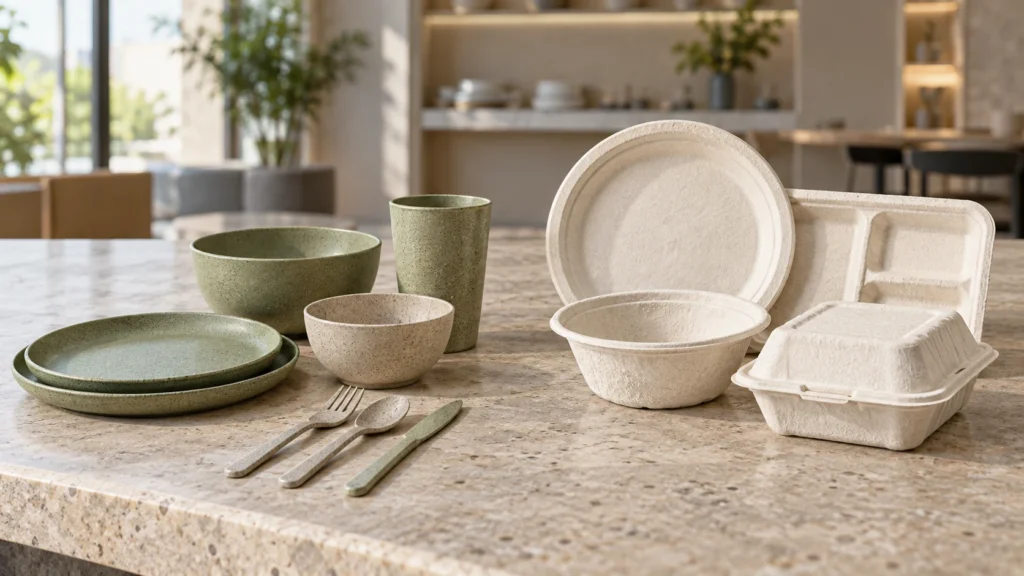
Wheat Straw vs Bagasse Tableware: Buyer Comparison
A B2B decision guide comparing reusable wheat-straw polypropylene composite tableware with molded bagasse fiber formats across use, evidence, operations and end of life.

Can Wheat Straw Tableware Be Recycled? Buyer Q&A
A practical buyer answer on whether reusable wheat-straw composite tableware can enter PP recycling streams, which evidence matters, and how to qualify market claims.

Global SKU vs Regional SKU: Tableware Decision Guide
A buyer decision framework for choosing one global tableware SKU or controlled regional variants across compliance, packaging, logistics, inventory and change control.

Australia Food Packaging Evidence: Buyer Guide
A practical evidence guide for Australian food-packaging buyers covering intended use, migration risk, supplier assurance, testing, hygiene, release and change control.

EU PPWR Tableware Packaging vs Conventional Packs
A buyer comparison of PPWR-ready and conventional tableware packaging across product protection, material choices, empty space, evidence, labeling and release timing.

Prop 65 Tableware Requirements: Buyer Q&A
A practical buyer Q&A for defining California Proposition 65 exposure scenarios, evidence, warning decisions, supplier records and release controls for tableware.