
Naike Group Tooling Revision Control: Buyer Guide
Keep one traceable product definition from buyer brief through approved drawing, tool construction, trial correction, production sample, and controlled bulk release.

Naike Group tooling revision control connects the buyer’s current product requirements with the drawing, mold configuration, trial findings, requested changes, approved sample, and production release. The practical goal is that engineering, tooling, quality, production, packaging, and the buyer can identify the same current baseline and understand every approved departure from it.
Naike Group’s published custom mold pathway describes engineering review, drawing approval, tool construction, trial and revision, and production approval. It also states that trial samples are checked for dimensions, appearance, fit, and function, while requested changes and their tooling impact are documented before further work proceeds.
This article explains how buyers should interpret and participate in that workflow. It does not claim a universal software platform, certification scope, fixed form, or result for every project; the actual records and approval depth depend on the product, material, market, tooling route, risk, and agreed deliverables.
Buyer Answer: Control One Baseline and Every Authorized Change
Give every released drawing, artwork, specification, tool configuration, trial sample, and change request a clear identity and status. Before work proceeds, confirm which revision is current, what changed, why it changed, who assessed the impact, who approved it, and which evidence will prove the revised result.
At production release, reconcile the approved drawing with the production-intent sample, mold and cavity status, material, appearance standard, functional requirements, packaging interfaces, open deviations, and quality checkpoints. Obsolete versions may be retained for traceability, but they should not remain available as uncontrolled instructions at the point of use.
Start Naike Group Tooling Revision Control with a Buyer Baseline
Revision control begins before steel is cut. The buyer’s brief may include a sketch, reference sample, two-dimensional drawing, three-dimensional file, component model, logo artwork, packaging reference, intended material, target market, quantity, and schedule. These inputs need a register because they can arrive from different people at different times and may not agree.
The first engineering task is to distinguish fixed requirements from preferences and unknowns. Product geometry, critical dimensions, mating parts, capacity, use conditions, appearance, functions, and tolerance priorities should be clarified as far as the project stage allows. Unknowns remain visible actions rather than silently becoming factory assumptions.
A controlled baseline identifies the part number or product name, revision, file format, date, owner, status, and relationship to other documents. It should also name the approved material and relevant components or variants. A drawing marked current without a matching material, artwork, or product-set context can still send tooling in the wrong direction.
Naike Group’s published mold and tooling page states that design review covers material, geometry, undercuts, wall thickness, tolerance, parting, and functional risks before tooling. Buyers should use that review to decide which issues require drawing changes, which need trial verification, and which remain commercial choices.
Drawing approval is a release decision rather than an acknowledgment that a file was received. The buyer and factory should agree that the identified revision is suitable for the next defined step, such as mold design or tool construction. Approval can be conditional when the exact open points, owner, deadline, and later evidence are recorded.
Buyers can send the current drawings and reference files for an engineering-baseline review. The response should identify missing decisions and conflicting inputs before revision activity becomes difficult to trace.
The baseline must describe more than geometry
Dimensions alone may not capture surface, color, hardness, fit, closure, suction, capacity, load, decoration, packaging interaction, or intended use. Link those requirements to the drawing or a controlled companion specification so reviewers know the complete acceptance basis.
The custom mold and tooling service page lists drawing approval, trial revisions, and production release as connected stages. That published sequence is the factory-side basis for the control path described here.
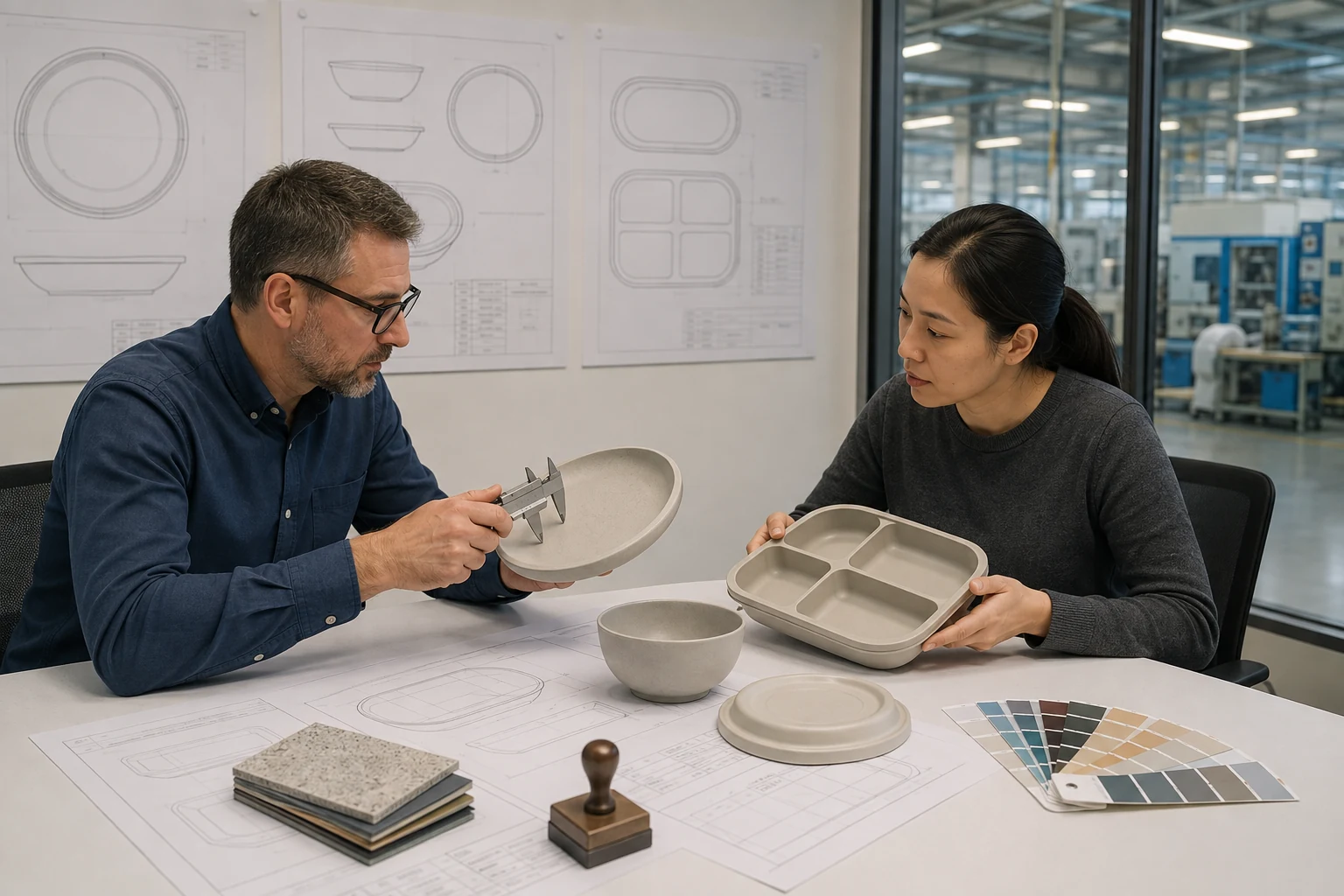
Convert Buyer Comments into Controlled Change Requests
Buyer feedback often begins as annotated screenshots, emails, meeting notes, sample photographs, or messaging-app comments. Those channels help discussion, but a change should not reach the toolmaker until it is consolidated into an identified request. The request records the source revision, affected feature, requested outcome, reason, priority, and person authorized to clarify it.
Separate observations from instructions. “The lid feels loose” is a trial observation, while “reduce the groove diameter by a stated amount” is a proposed design action that still needs engineering review. The team should translate the observation into measurable acceptance criteria before selecting a mold change.
Multiple comments may interact. Increasing a wall, moving a logo, changing a radius, deepening a compartment, or altering a closure can affect flow, shrinkage, ejection, strength, stack height, capacity, decoration, tooling, and packaging. The impact review should consider the complete product rather than close each comment in isolation.
Every request needs a disposition such as accept, reject, clarify, defer, or supersede. Accepted changes identify the affected drawing zones and tool components, while rejected changes preserve the reason. Deferred items state the later gate so they do not disappear from the project history.
Verbal urgency should not bypass authority. The buyer can nominate who approves appearance, dimensions, function, compliance inputs, packaging, cost, and timing, and the factory can nominate engineering and tooling owners. When authority differs by issue, the change log should show each required signoff.
Bundle related approved changes into a new controlled revision. Avoid issuing several nearly identical files within hours unless safety or production recovery requires it. A deliberate release rhythm reduces the chance that purchasing, engineering, the toolmaker, and sample teams work from different interim instructions.
A change request is not yet a released drawing
Until impact and approval are complete, mark the request as proposed. This distinction protects the existing baseline and allows the team to compare alternatives without accidentally authorizing machining.
After approval, update the affected documents and cross-reference the change identifier. The released revision should make clear which prior baseline it supersedes and the effective stage or trial.
Assess Tooling, Cost, Timing, and Verification Before Approval
A visual edit, dimensional adjustment, and structural redesign can create very different tool work. The impact review should identify whether the change affects steel-safe conditions, inserts, slides, lifters, gates, runners, vents, cooling or heating circuits, cavity balance, texture, polishing, ejection, fixtures, gauges, automation, or spare parts.
The team should explain whether material is being removed from or added back to the tool and whether welding, replacement inserts, or remachining are involved. Some corrections are relatively contained, while others can introduce appearance, durability, dimensional, or schedule risk. The buyer needs that distinction before accepting cost or promising a launch date.
Cost impact should separate engineering, machining, components, outside services, trial material, machine time, inspection, shipping, and new samples where relevant. If the change results from an unresolved buyer requirement, a factory manufacturing issue, or shared development learning, the commercial responsibility should be addressed under the actual agreement rather than assumed.
Schedule impact includes more than machining hours. File release, material or component availability, tool disassembly, modification, reassembly, bench checks, machine scheduling, trial, conditioning, measurement, sample shipment, and buyer review can all sit on the critical path. A revised date needs these dependencies.
Verification must be defined before the tool changes. State which dimensions, appearance points, fit relationships, functions, cavities, materials, and packaging interfaces will be rechecked and whether earlier approved characteristics could be affected. This prevents the team from discovering after machining that the required proof was never planned.
Use a change-impact summary that procurement can understand without removing engineering detail. It should show the reason, selected action, affected records, tool work, cost, schedule, risk, validation, approvers, and release status on one traceable path.
Naike Group Tooling Revision Control Leads to Defined Proof
The next trial should not be described only as trial two or new sample. Link it to the exact drawing revision, change package, tool status, material, process conditions, and verification plan. Keep that identity on the sample label.
This identity lets the buyer compare samples fairly and gives the factory a clear closure standard. It also prevents one accepted appearance from being incorrectly applied to dimensions or functions that were not rechecked.
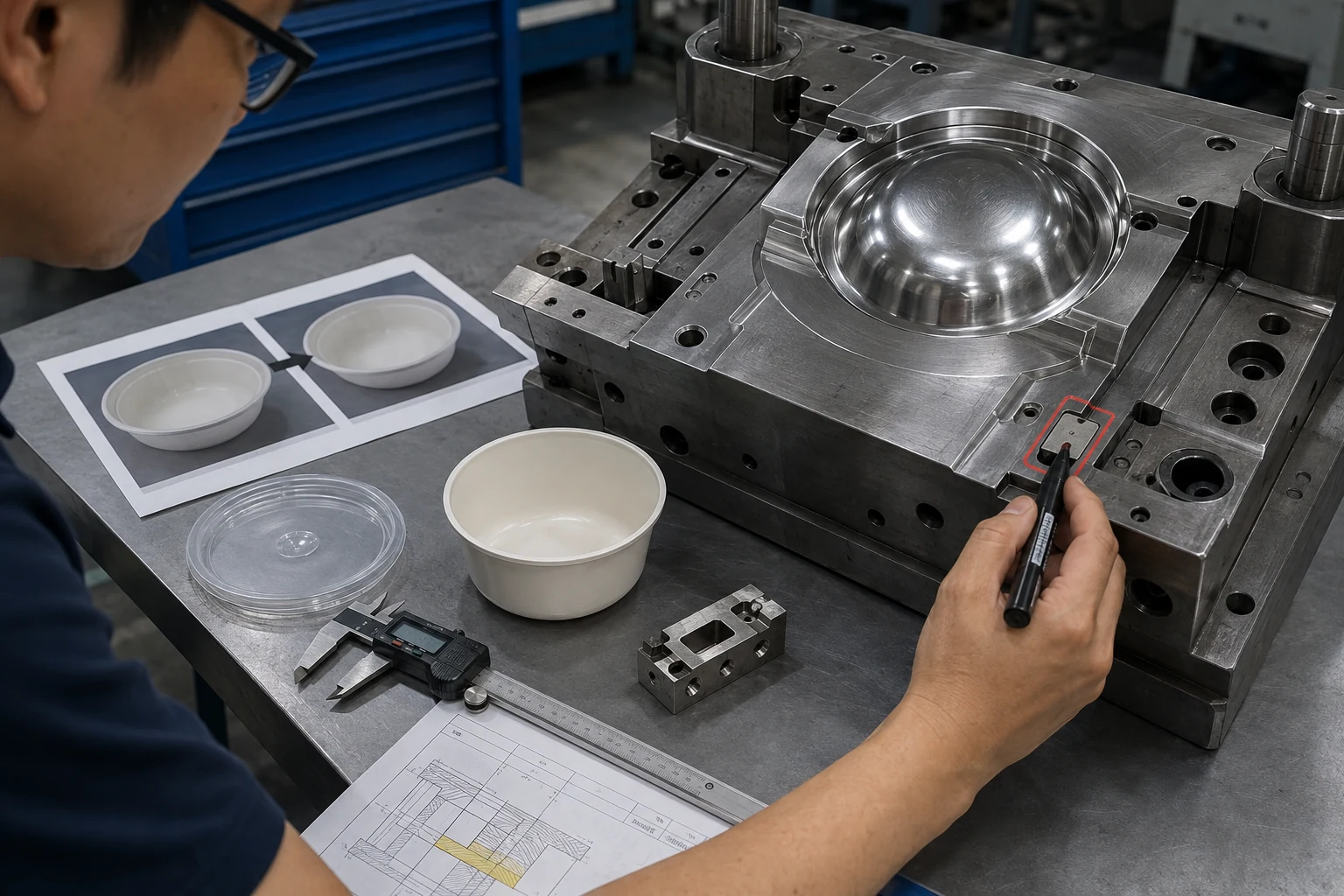
Link Every Mold Trial to Drawing and Tool Status
A mold trial generates samples and process observations, but those outputs are meaningful only when their configuration is known. Record the product drawing revision, tool or mold number, cavity or insert status, material and lot, color, equipment, important process conditions, trial date, and the change package being evaluated.
The sample label should use the same identity as the trial report. A courier bag marked “latest samples” is not enough when several versions are circulating. Individual pieces or grouped sets should be traceable to trial stage and cavity where cavity differences matter.
Inspection scope follows the change and risk. Dimensions, appearance, fit, function, part weight, capacity, hardness, surface, closure, suction, stacking, leak behavior, or packaging interaction may be relevant for different tableware products. The report should separate actual measured results from visual comments and future actions.
A revised feature can influence previously accepted characteristics. Changing wall thickness may affect cooling and shrinkage, altering a closure can affect fit and leak performance, and moving a gate can affect appearance or strength. Regression checks should cover those plausible interactions rather than inspect only the edited dimension.
Buyer sample comments need the same discipline as drawing comments. State which labeled sample was reviewed, under what use or comparison condition, what was accepted, and which issue requires correction. Photographs can locate an issue, while the controlled requirement and result support disposition.
The published Naike Group tooling workflow describes trial and revision before production approval. In practice, that means the next stage should wait until trial evidence, required changes, updated records, and approval scope align.
Retained samples preserve the physical revision story
Keep an approved production-intent sample or another controlled reference when appropriate, with identity and storage status. A physical sample can preserve appearance and tactile relationships that a drawing alone cannot fully communicate.
Retained samples still need limits. Age, handling, material change, color drift, and physical damage can affect their usefulness, so the drawing and written requirements remain part of the approved baseline.
Release an Approved Sample and Drawing as One Production Baseline
Production approval should name the exact drawing, material, color, artwork, mold and cavity configuration, approved sample, functional methods, packaging interfaces, and accepted deviations. A signed sample without a revision reference invites teams to compare production against an object whose engineering basis is unclear.
Naike Group’s published process states that an approved production-intent sample becomes the reference for mass production and that confirmed quality checkpoints are transferred to the production team. The buyer should verify which characteristics enter incoming, in-process, final, and packing checks and which require retained records.
The tool status must match the approved trial. Any cavity blocked, insert replaced, surface repaired, texture changed, or temporary adjustment should be disclosed. Production should not begin from an altered tool while the approval still points to an earlier configuration.
Packaging files join the baseline when product dimensions, set count, insert fit, label position, or retail presentation depend on them. A product change can invalidate a tray, carton, instruction sheet, photograph, or barcode location. Revision control therefore extends beyond CAD to the entire released sellable configuration.
The release can be conditional for a pilot quantity or named open action. State the quantity, duration, inspection frequency, hold point, deviation, evidence due, and person who can close the condition. Conditional approval should not quietly become indefinite bulk authorization.
Provide production with the current versions and withdraw obsolete instructions from active use. Historical files remain protected and retrievable for traceability, but workstations, inspection areas, suppliers, and packaging teams should not have ambiguous alternatives labeled as current.
Production release closes one loop and opens another
Once the baseline is released, routine controls must show that production continues to match it. Inspection records, tool maintenance, material identity, process changes, deviations, and buyer complaints can all trigger review.
The factory capability page describes support from material selection and sample development through production, inspection, private-label packaging, and shipment preparation. Revision alignment should remain visible across that sequence.
Control Post-Approval Changes Without Losing the Original Release
Tooling and product changes can continue after launch. Maintenance repair, cavity replacement, material substitution, color change, supplier change, new artwork, packaging redesign, equipment relocation, demand expansion, complaint correction, or regulatory update may affect the approved baseline. The team should define which events require notification and review.
Preserve the original release and create a new change path rather than editing history. The record should show when the proposed change was raised, when it was approved, which production order or date it became effective, and how remaining old-revision material or packaging was handled.
Implementation timing must prevent mixed configurations. Use order, lot, batch, carton, or date boundaries suitable to the product and supply chain, and reconcile work in process, stock, components, labels, and samples. A change is not fully implemented while unidentified old and new versions can still enter the same shipment.
Revalidation depth follows impact. A logo adjustment may require artwork, placement, adhesion, appearance, and packaging-photo review; an insert change may require dimensions, fit, function, cavity balance, and process checks. Document why the selected verification scope is sufficient.
Emergency corrections still need retrospective completeness. If production must stop or contain a risk, identify affected goods, authorize temporary action, record tool and document status, verify the correction, and close the change with named approval. Speed changes the sequence, not the need for traceability.
Buyers should review the open change log during repeat-order planning. That confirms the current baseline, unresolved actions, tool status, retained sample, packaging revision, and required documents before dates and prices are reconfirmed.
Repeat orders should start from current revision evidence
Do not assume the last purchase order describes today’s manufacturing baseline. Reconcile the current drawing and sample with every approved change since the prior shipment.
For a project-specific review, buyers can share the current revision pack and repeat-order requirements. Our manufacturing team can identify which technical, quality, packaging, and timing points need reconfirmation.
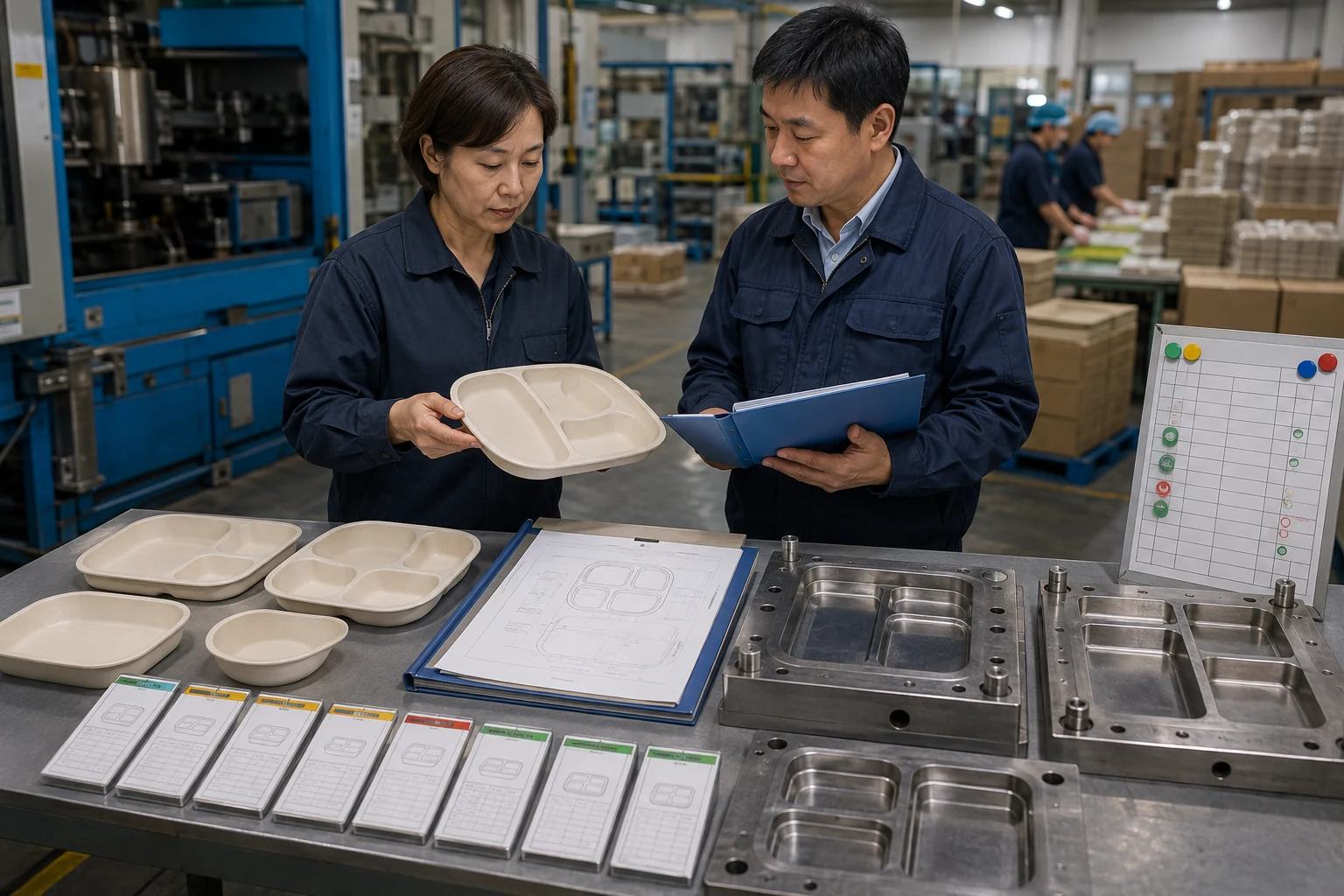
Revision Status Map from Buyer Input to Production
This status map keeps a proposed comment from being mistaken for an approved manufacturing instruction. Names can vary by project, but the authority, evidence, and point-of-use meaning should remain unambiguous.
| Status | Meaning | Permitted action | Required evidence |
|---|---|---|---|
| Received | Input arrived but has not been reconciled | Register and review only | Source, date, owner, file identity |
| Under review | Engineering or commercial impact is being assessed | Discuss alternatives; do not machine | Affected requirements, questions, impact owners |
| Proposed | A specific change route is documented | Quote, simulate, or evaluate | Source revision, reason, proposed dimensions or outcome |
| Approved for tooling | Authorized for the named tool stage | Release controlled work package | Approvers, released files, effective stage, open conditions |
| Trial configuration | Tool and sample state used for a named trial | Make and inspect controlled samples | Drawing, tool status, material, process, sample labels |
| Approved for production | Defined configuration released for bulk work | Produce within stated scope | Approved drawing, sample, deviations, quality checkpoints |
| Obsolete | Superseded and blocked from active use | Retain only for traceability | Superseding revision and withdrawal record |
| Pending closure | Evidence or action remains incomplete | Proceed only within written limits | Owner, due date, hold point, conditional authority |
B2B Buyer Drawing and Tool Revision Checklist
Use this checklist before approving machining, another trial, or production. Every answer should identify a controlled record or named approver.
| Check | Question | Why It Matters |
|---|---|---|
| Baseline | Are the current drawing, material, artwork, product-set, and packaging relationships identified? | Prevents one correct file from being combined with obsolete companion requirements. |
| Authority | Who can approve geometry, function, appearance, cost, timing, and deviations? | Stops informal feedback from becoming unauthorized tool work. |
| Change | Does every request state reason, affected feature, source revision, and desired result? | Turns scattered comments into an assessable instruction. |
| Impact | Are tooling, product, process, cost, schedule, quality, and packaging effects recorded? | Reveals consequences before the buyer commits. |
| Trial | Can each sample be traced to drawing, tool status, cavity, material, process, and date? | Makes comparison and correction evidence reliable. |
| Approval | Does the release name exactly what is approved, conditional, pending, or rejected? | Prevents sample acceptance from expanding beyond its scope. |
| Point of use | Have obsolete instructions been withdrawn from tooling, production, quality, and packaging? | Reduces mixed-revision manufacturing. |
| Repeat order | Are post-approval changes, tool status, stock disposition, and retained references reconciled? | Protects consistency across later orders. |
External Principles Used to Frame Document Control
These sources provide general documented-information and configuration-control principles. They do not certify Naike Group, define a buyer’s contract, or prove that a particular product revision was controlled; project records and approvals provide that evidence.
The ISO technical committee release for ISO 10013:2021 explains that the guidance addresses documented information supporting an effective quality management system and can be tailored to an organization’s needs. For a tooling project, that supports a right-sized record set that preserves decisions without claiming that one universal form fits every product.
The NIST configuration-management glossary describes maintaining consistency between performance, functional and physical attributes and their requirements, design, and operational information through a life cycle. Although the referenced context includes information systems, the principle usefully illustrates why product, tool, sample, and production records must remain aligned.
The NASA configuration-identification guidance highlights version identification and access to previous versions as foundations for control, status accounting, and verification. Applied carefully as a general analogy, it supports unique revision identities, retained history, and an auditable current baseline for tooling records.
Practical disclaimer: this article describes a buyer-facing factory workflow based on Naike Group’s published custom manufacturing pages and general configuration principles. It is not a certification claim, contract term, engineering release, regulatory conclusion, or guarantee that every project uses identical documents; agree the actual responsibilities, records, confidentiality, approvals, and validation for each order.
A Nine-Record Revision Pack for Custom Tableware
Record one is the input register. List every buyer and factory file, physical sample, photograph, artwork, component reference, packaging reference, and market requirement with source, date, identity, status, and owner. Resolve duplicates and conflicts before declaring a baseline.
Record two is the released requirement set. Link the current product drawing to material, appearance, function, mating parts, tolerances, intended use, artwork, packaging interfaces, and acceptance methods. Name the approval and the next stage it authorizes.
Record three is the change request. Preserve the observation or business reason, affected revision, requested outcome, priority, originator, and questions. Proposed solutions remain proposals until impact review and approval are complete.
Record four is the impact assessment. Engineering and tooling identify affected product features, mold components, process, inspection, packaging, cost, lead time, risks, and regression checks. Procurement records commercial disposition under the actual agreement.
Record five is the released tool-work package. It contains only authorized drawings, dimensions, models, instructions, components, and effective stage, with clear withdrawal of superseded instructions. Toolmakers acknowledge the revision they received.
Record six is the trial configuration and report. Connect sample labels with drawing revision, mold and cavity status, material, equipment, key process conditions, actual results, findings, photographs, and open actions. Retain raw evidence appropriate to the project risk.
Record seven is the buyer disposition. State what the identified samples demonstrate, which characteristics are accepted, which fail, which require clarification, and which are covered by a time-limited deviation. Do not convert a general positive comment into full production approval.
Record eight is the production baseline. Reconcile the approved drawing, sample, tool configuration, material, artwork, packaging, quality checkpoints, deviations, and order scope, then make current instructions available at each relevant point of use.
Record nine is the life-cycle change log. Record effective order or lot, old-stock disposition, repair and maintenance changes, repeat-order review, revalidation, and closure. This creates a continuous story instead of separate folders that cannot explain what production actually used.
Naike Group Tooling Revision FAQ for B2B Buyers
Can a buyer approve a mold change by email?
The communication channel is less important than clear identity, authority, scope, and retention. The project should consolidate the authorized decision into the controlled change and drawing records before work proceeds.
Does accepting a trial sample approve every drawing characteristic?
Not automatically. The disposition should name the sample, drawing revision, inspected characteristics, open issues, deviations, and next stage. Appearance acceptance should not silently approve dimensions or functions that were not reviewed.
What happens to obsolete drawings?
They may be retained as protected history for traceability, but they should be identified as obsolete and removed from active tooling, production, inspection, supplier, and packaging use. The superseding revision should be easy to find.
When does a tooling change require a new sample?
A new or partial sample review is appropriate when a change can affect geometry, dimensions, appearance, fit, function, material behavior, cavity balance, process, or packaging. The impact assessment should define the revalidation scope before machining.
How should buyers prepare a repeat order after several revisions?
Confirm the current drawing, approved sample, tool and cavity status, material, artwork, packaging, open deviations, quality points, and the effective history since the last shipment. Do not rely on the prior purchase order alone.
Keep the Product Definition Intact Through Every Handoff
Effective Naike Group tooling revision control is the connection between verified buyer requirements and the factory stages already described on Naike Group’s published mold pathway: engineering review, drawing approval, construction, trial and revision, and production approval. Each handoff needs a current identity, authorized status, impact record, and evidence route.
The buyer’s role is active. Clear inputs, consolidated comments, named approvers, timely disposition, and scoped production release help the manufacturing team protect function, cost, timing, appearance, packaging, and repeat-order consistency.
A project is ready to move when its current files, tool state, sample evidence, and approval all tell the same story. Preserve that story, and future corrections or repeat orders can begin from facts instead of reconstructed memory.
Request a Drawing and Tool Revision Review
Share the current drawing set, reference sample, material, requested changes, trial findings, artwork, packaging interactions, target market, quantity, and schedule. The Naike Group manufacturing team can organize the factory-side questions and next approval gate.
Request a Custom Quote
Share your product, quantity, target market and customization needs. Our factory team will reply with the next practical step.
Continue Your Sourcing Research
The six newest factory-side articles are updated automatically by publication date.

Wheat Straw vs Bagasse Tableware: Buyer Comparison
A B2B decision guide comparing reusable wheat-straw polypropylene composite tableware with molded bagasse fiber formats across use, evidence, operations and end of life.

Can Wheat Straw Tableware Be Recycled? Buyer Q&A
A practical buyer answer on whether reusable wheat-straw composite tableware can enter PP recycling streams, which evidence matters, and how to qualify market claims.

Global SKU vs Regional SKU: Tableware Decision Guide
A buyer decision framework for choosing one global tableware SKU or controlled regional variants across compliance, packaging, logistics, inventory and change control.

Australia Food Packaging Evidence: Buyer Guide
A practical evidence guide for Australian food-packaging buyers covering intended use, migration risk, supplier assurance, testing, hygiene, release and change control.

EU PPWR Tableware Packaging vs Conventional Packs
A buyer comparison of PPWR-ready and conventional tableware packaging across product protection, material choices, empty space, evidence, labeling and release timing.

Prop 65 Tableware Requirements: Buyer Q&A
A practical buyer Q&A for defining California Proposition 65 exposure scenarios, evidence, warning decisions, supplier records and release controls for tableware.