
Global Tableware Specification: One File or Regional?
A buyer-side architecture for keeping product identity stable while controlling different food-contact, labelling, packaging and evidence requirements across markets.

Buyer Answer: Use one controlled global tableware specification for stable product requirements, then attach regional annexes for market-specific food-contact evidence, labelling, warnings, packaging, claims and release documents. Split the full specification only when a regional difference changes the physical SKU, material, construction, artwork or factory process and cannot be controlled safely through an annex.
This hybrid architecture reduces duplicate maintenance without pretending that the United States, European Union, Australia and other destinations ask the same legal or commercial questions. It also gives purchasing, quality and the factory one authoritative product core plus a visible route for regional exceptions.
Begin with intended use through the food-contact conditions-of-use workflow and the customization scope in Naike Group custom solutions. If destination markets or claim ownership are unsettled, send the market list for a factory specification review before quoting tests, packaging or launch dates.
This article is a procurement-control framework rather than legal advice. Importers and other responsible businesses should confirm current applicable requirements for each destination, material, product class and use with qualified market specialists.
Factory Insider takeaway: Choose the document architecture from the consequences of a difference, not from a desire to have fewer files. One core plus controlled annexes works when regional requirements can be selected reliably at order and release; separate specifications are safer when the product or production route truly diverges. Record the selected route and approver before the RFQ leaves procurement.
Choose the Architecture before Writing Market Requirements
The first decision is not which regulation to paste into a document. It is whether one shared product identity can support every planned destination while regional obligations remain visible, selectable and verifiable.
List the selling countries, importer entities, channels, customer claims, user groups and foreseeable uses before deciding the file structure. A marketplace listing, retail shelf program, food-service tender and promotional campaign may impose different evidence, language and packaging expectations even within one jurisdiction.
Classify each requirement by what it changes: product design, material or formulation, performance, evidence, labelling, packaging, logistics or responsible-party documentation. Requirements that change only the evidence packet often fit an annex, while changes to the physical article or controlled process may justify a separate regional specification.
Define a rule for when an annex becomes a new specification
Set objective escalation triggers such as a different food-contact material, pigment system, warning molded into the product, dimensional feature, packaging configuration, production site or approved intended use. The document owner should not decide case by case after goods are made.
Record who can approve the architecture and who maintains each annex. Procurement should be able to identify the applicable document set from destination, customer and SKU without interpreting legal prose during purchase-order release.
Freeze the Product Facts That Belong in the Global Core
The global core should contain product identity, drawings, dimensions, tolerances, materials, approved colors, workmanship, critical performance, approved suppliers, manufacturing route, inspection rules, traceability and change control. These are the common product facts that purchasing and the factory must not recreate in every regional file.
Use controlled identifiers for the buyer SKU, factory item code, drawing revision, bill of materials, mold, color master and packaging components. Where several regions share an identical article, the core creates one source of truth and prevents conflicting tolerances or supplier grades from emerging through copy-and-paste.
Keep globally relevant safety and quality controls in the core when they apply to every shipment, but do not label a requirement global merely because it is strict. A single-market rule belongs in the relevant annex unless the buyer deliberately adopts it as a worldwide business standard and documents that decision.
Build the core for change control and repeat orders
Every field should have an owner, revision history and approval state. Link material approval to the factory material review process so supplier or formulation changes reopen the relevant global and regional assessments.
The core must also state which fields annexes may override. If an annex silently contradicts an unoverrideable material, drawing or tolerance, the document system should flag the conflict instead of leaving production to choose.

Separate Regional Requirements by Obligation and Evidence Owner
A regional annex should translate destination-specific obligations into executable requirements rather than provide a list of regulation names. For each line, state the product and use scope, responsible party, required evidence, acceptance rule, document owner, review date and shipment-release consequence.
Separate legal requirements from retailer policies, voluntary claims and buyer preferences. A test requested by one customer is not automatically a law, while a legal obligation cannot be waived merely because the customer checklist omits it.
Identify who supplies each record: raw-material producer, compounder, finished-goods factory, laboratory, importer, brand owner or packaging vendor. This prevents the factory specification from promising documents that only another supply-chain actor can issue.
Keep regional decisions connected to one intended-use brief
Market annexes should reference the same controlled use assumptions for food type, time, temperature, repeat use, heating, cleaning and age group. A regional difference may alter limits or evidence, but reviewers must still compare equivalent commercial conditions.
Where an importer adopts a narrower claim than the global design supports, record the restriction in its annex and downstream artwork. Where a region requires a physical change, create a distinct variant code and route it to separate specification control.
Build a Regional Evidence Matrix before Requesting Tests
Create one matrix with regions as columns and requirement families as rows: material basis, migration or extractives, physical performance, restricted substances, traceability, declaration, labelling, language, packaging and importer records. The matrix reveals where one evidence item can support several destinations and where scope, method or issuer differs.
For the United States, connect the commercial material and use with the applicable regulatory basis and conditions rather than asking only for an “FDA certificate.” The FDA silicone status workflow illustrates why substance identity, source and intended use must stay linked.
For the European Union, distinguish the finished business operator statement from the technical evidence behind it. The EU declaration and test-report comparison shows why a declaration, supporting file and production controls perform different jobs.
Map evidence by question, not by document filename
Each matrix row should ask what must be proved, who can prove it, which product variants it covers and when it expires or requires reassessment. This prevents a laboratory PDF from being reused merely because its title looks familiar.
Record whether the same method and acceptance basis genuinely support multiple markets. If evidence is used across regions, add a written bridging rationale and identify the strictest representative product, color, construction and exposure conditions.
Decide When a Regional Annex Is Enough
Use an annex when the shared article remains physically identical and the regional differences can be controlled through documentation, evidence, language, claims or packaging selection. The purchase order should name both the core revision and the applicable annex revision so the factory receives a complete instruction set.
Use a separate regional specification when destination requirements alter the bill of materials, colorant, decoration, dimensions, warnings incorporated into the article, manufacturing site, testing sample family or approved use. A separate code reduces the risk that an unapproved physical variant is shipped under a familiar global name.
Hybrid cases need explicit override rules. For example, the article may share a core drawing while one region uses a different printed insert and evidence packet; the annex can control that difference if packaging components and release checks are separately identifiable.
Test the architecture with a wrong-market shipment scenario
Ask whether a warehouse, quality inspector and freight coordinator could detect that goods prepared for Region A were being shipped to Region B. If the only signal is a paragraph deep inside a document, the architecture is not operationally safe.
Use distinct suffixes, packaging codes, artwork revisions or release statuses where needed. When the consequence of selecting the wrong annex is severe and the controls are weak, a separate specification and SKU variant may be the lower-cost decision.

Compare Maintenance Cost with Wrong-Market Risk
One global file appears efficient because it reduces document count, but efficiency disappears when every update requires all regions to reapprove unrelated content. Conversely, fully separate specifications can drift, duplicate testing and make common product changes slow to synchronize.
Estimate the annual effort for document maintenance, evidence renewal, artwork management, supplier changes, testing and shipment release under each architecture. Then compare it with the probability and impact of using the wrong material, claim, label, test basis or importer file.
High-volume programs with stable identical articles often benefit from one controlled core and annexes. Programs with different formulations, child-product classifications, embedded markings or retailer-exclusive constructions may justify separate specifications even when their products look similar.
Choose the simplest system that still prevents a foreseeable error
Do not optimize only for the number of files. Optimize for clear ownership, reliable selection, fast change propagation and evidence that follows the intended destination.
If the cost and risk assumptions remain unclear, discuss the specification architecture with the factory team using the market list, product family and planned variations. A short mapping exercise before RFQ can prevent repeated samples and incompatible evidence requests later.
Approve the Core and Annex at Sample and Shipment Release
Sample approval should name the global core, applicable regional annex, physical sample identity, artwork set and evidence matrix revision. A visual approval without these references can release a sample that looks correct while belonging to the wrong market file.
Build the market route into the purchase order and work order. The destination, importer or customer program should select the annex automatically or trigger a documented manual verification before materials, packaging and testing are committed.
At shipment release, reconcile the finished SKU, production lot, approved materials, inspection record, packaging artwork, labels and market evidence packet. The golden-sample approval workflow can anchor appearance and function while the annex anchors destination-specific claims and records.
Use one release record that shows both layers passed
The release form should display the core revision and annex revision together, followed by a short list of market-critical checks. Quality should not need to open several uncontrolled email attachments to determine which evidence or artwork applies.
When one order contains several regional versions, separate lot, carton and document identifiers clearly. Mixed shipments need a reconciliation check that proves the correct quantities and packets were assigned to each destination.
Govern the Global Tableware Specification across Regions
Every proposed change should be screened first against the global core, then against each active annex. A drawing or supplier change may affect all markets, while a language update may affect only one packaging file.
Use an impact record that lists affected products, regions, evidence, tests, artwork, inventory, purchase orders and customer approvals. The reviewer should state whether the existing evidence remains valid, requires a documented bridge or must be replaced.
Preserve retired revisions and effective dates so repeat orders cannot accidentally return to obsolete requirements. Buyers should also define how quickly suppliers and factories must notify them of material, process, source or regulatory changes.
Review the architecture as the market portfolio grows
Add a new annex only after comparing its requirements with the current core and existing regions. If overrides become numerous or difficult to select, split the product family or redesign the core rather than stacking exceptions indefinitely.
Schedule periodic reviews based on regulatory change, evidence renewal and commercial risk. The architecture should remain understandable to a new buyer, quality engineer or factory planner without relying on the person who created it.
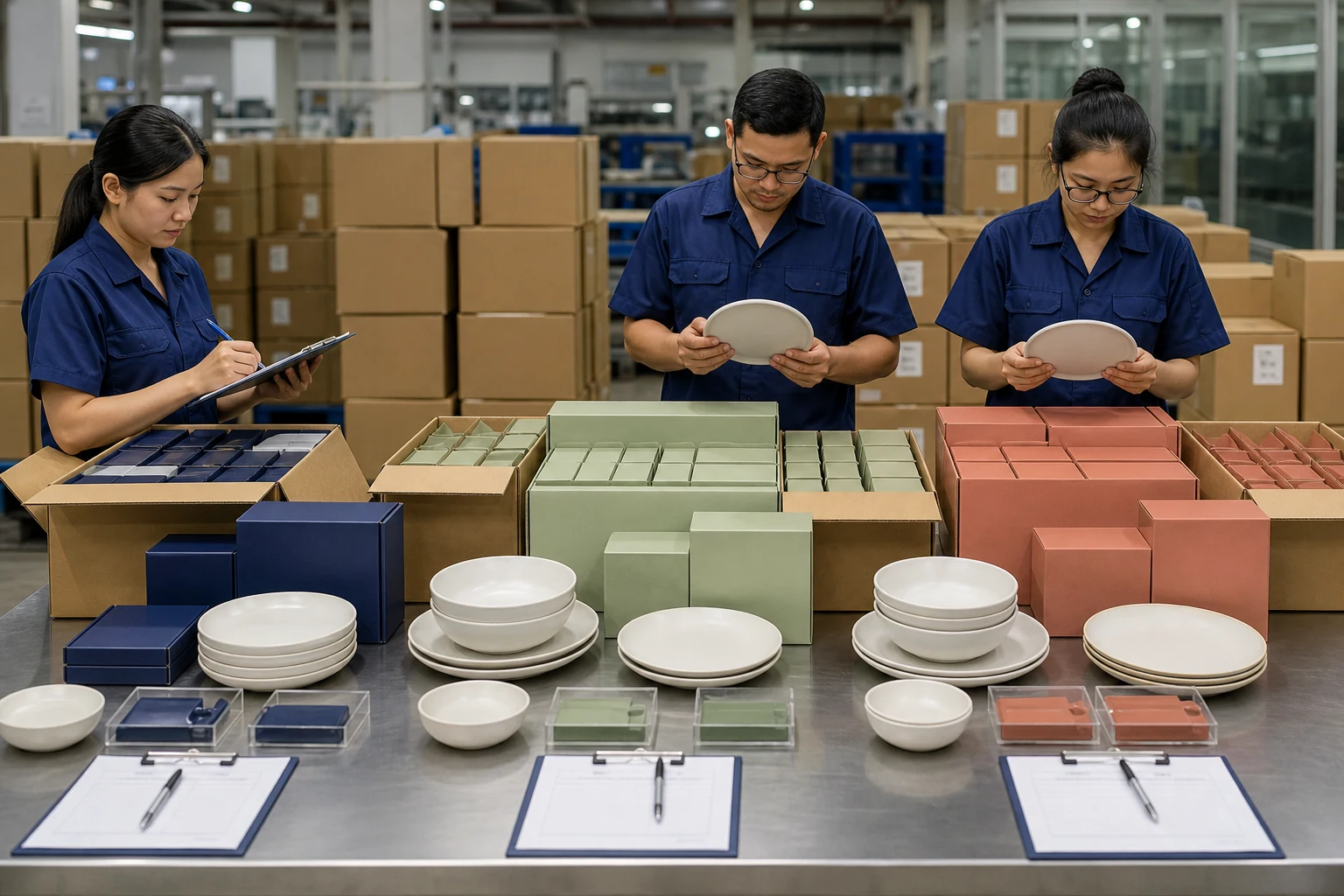
Global Core, Regional Annex or Separate Specification?
Use the consequence of the difference to choose the document route. The table is a procurement starting point; the final choice should also reflect order systems, warehouse controls and responsible-party obligations.
| Requirement Difference | Recommended Control | Procurement Reason |
|---|---|---|
| Stable dimensions and tolerances | Global core | These product facts should remain identical and change together. |
| Destination-specific compliance evidence | Regional annex | Evidence scope can vary while the physical article stays unchanged. |
| Different language or importer details | Regional annex | Controlled artwork and responsible-party data can be selected by market. |
| Different pigment, resin or compound grade | Separate specification | The bill of materials and evidence basis materially change. |
| Different molded warning or physical feature | Separate specification | The article and manufacturing instructions are no longer identical. |
| Retailer-only packaging claim | Regional or customer annex | The requirement is narrower than the market and needs a named owner. |
| One report legitimately supports several regions | Global evidence index with annex references | A bridging rationale must show method, scope and acceptance fit. |
| Weak systems for selecting the correct annex | Separate specification or SKU | Operational separation may be safer than document efficiency. |
Eight Checks before Approving a Multi-Market Specification
Complete these checks before RFQ release, then repeat the market-critical rows at sample and shipment approval. An unresolved row needs an owner and hold date rather than an assumed global pass.
| Check | Question | Why It Matters |
|---|---|---|
| Market scope | Are selling countries, channels, importers, user groups and claims defined? | Requirements cannot be selected without knowing the commercial destination. |
| Intended use | Are food type, contact time, temperature, repeat use, heating and cleaning controlled? | Evidence and product claims depend on foreseeable exposure. |
| Global core | Are shared identity, drawing, materials, suppliers, workmanship and inspection rules frozen? | Common product facts need one authoritative revision. |
| Regional matrix | Are legal, retailer, claim, evidence, label and packaging requirements separated by market? | Different obligation types require different owners and release rules. |
| Override rule | Does the system define which annex fields may override the core? | Uncontrolled conflicts can send ambiguous instructions to production. |
| Variant trigger | Do physical or process differences automatically create a distinct specification or SKU? | An annex should not hide a materially different article. |
| Evidence linkage | Can each declaration or report be matched to product, variant, use and market? | A familiar filename does not prove relevant scope. |
| Release and change control | Are order selection, shipment verification and reassessment responsibilities assigned? | The architecture works only when the right revision reaches the right goods. |
Three Official Sources for the Regional Matrix
Use current primary sources to frame the questions for each annex, then obtain qualified advice where the product or claim requires it. Save access dates and document how each official requirement was translated into the buyer specification.
1. Market scope decision for global tableware specification
For Market scope, answer “Are selling countries, channels, importers, user groups and claims defined?” for the planned program. Confirm every destination, sales channel, importer and user group before document drafting begins.
Requirements cannot be selected without knowing the commercial destination. A missing destination can invalidate the apparent efficiency of the selected architecture. Close the row with a dated commercial scope.
2. Intended use decision for global tableware specification
For Intended use, answer “Are food type, contact time, temperature, repeat use, heating and cleaning controlled?” for the planned program. Translate foreseeable exposure into food type, time, temperature, heating, cleaning and repeated-use variables.
Evidence and product claims depend on foreseeable exposure. Evidence cannot be compared across markets when the intended use is undefined. Approve one controlled use brief.
3. Global core decision for global tableware specification
For Global core, answer “Are shared identity, drawing, materials, suppliers, workmanship and inspection rules frozen?” for the planned program. Freeze identifiers, drawing, materials, suppliers, tolerances, workmanship and inspection rules in the shared core.
Common product facts need one authoritative revision. Duplicate cores can drift and produce conflicting factory instructions. Assign one product-specification owner.
4. Regional matrix decision for global tableware specification
For Regional matrix, answer “Are legal, retailer, claim, evidence, label and packaging requirements separated by market?” for the planned program. Separate law, official guidance, retailer policy, voluntary claim and buyer preference in the matrix.
Different obligation types require different owners and release rules. Different obligation types have different authority, evidence and waiver rules. Name the responsible reviewer for each line.
5. Override rule decision for global tableware specification
For Override rule, answer “Does the system define which annex fields may override the core?” for the planned program. State which annex fields may override the core and block all other conflicts.
Uncontrolled conflicts can send ambiguous instructions to production. Silent overrides can change the physical article without proper review. Escalate every prohibited conflict.
6. Variant trigger decision for global tableware specification
For Variant trigger, answer “Do physical or process differences automatically create a distinct specification or SKU?” for the planned program. Create a new variant when material, construction, molded marking, process or market risk materially differs.
An annex should not hide a materially different article. A document annex should not conceal a different manufactured product. Link the variant to its own approval state.
7. Evidence linkage decision for global tableware specification
For Evidence linkage, answer “Can each declaration or report be matched to product, variant, use and market?” for the planned program. Match each declaration, report and supplier record to the exact product, use, issuer and destination.
A familiar filename does not prove relevant scope. A reusable filename does not prove regulatory or technical relevance. Preserve the scope and bridging rationale.
8. Release and change control decision for global tableware specification
For Release and change control, answer “Are order selection, shipment verification and reassessment responsibilities assigned?” for the planned program. Verify core, annex, artwork, batch and evidence revisions together before shipment.
The architecture works only when the right revision reaches the right goods. A good architecture fails when the wrong market packet reaches the goods. Sign one combined release record.
Official Regional References and Practical Boundaries
FDA: Food Types and Conditions of Use for Food Contact Substances provides reference food categories and exposure conditions used for food-contact notifications. These variables help a U.S. annex define the exact commercial use rather than rely on an undefined food-grade claim.
European Commission: Food Contact Materials explains the EU framework, including the general Regulation, GMP and material-specific measures. An EU annex should identify which measures apply to the article and connect compliance documentation with the controlled materials and intended use.
Food Standards Australia New Zealand: Food Packaging states that packaging materials must be fit for intended use and highlights food type, storage, heating, cleaning and reuse factors. These principles help an Australia-focused annex define suitability evidence and commercial instructions for the actual conditions.
Practical disclaimer: Regional requirements change and can depend on product classification, material, user group, claims and responsible-party role. This procurement framework is not legal advice and does not replace a current jurisdiction-specific compliance assessment.
Multi-Market Specification Questions from Buyers
Should every country receive a separate tableware specification?
Not automatically. Group destinations when the physical product and core controls are genuinely identical, then use annexes for requirements that can be selected and verified reliably without changing the article.
Can the strictest regional rule simply become the global standard?
Sometimes a buyer may adopt a stricter business standard worldwide, but it should verify technical fit, cost, evidence and unintended claim effects first. A rule written for one material or market may not be relevant everywhere.
When does packaging require a separate SKU?
Use a separate code when language, responsible-party details, warnings, barcodes, quantities or retail configuration create a meaningful selection risk. A controlled packaging annex may be enough when systems reliably prevent a wrong-market pack.
Can one laboratory report support several regional annexes?
Only when the specimen, method, exposure conditions, analytes and acceptance basis support each intended use. Record a bridging rationale and identify limitations instead of assuming that a passing report is universal.
Who should own the global specification and regional annexes?
Assign one product-specification owner and named regional or compliance approvers. Procurement, quality, artwork and the factory should have defined responsibilities for selection, change review and shipment release.
Approve the Architecture before You Approve the SKU
A controlled global tableware specification should stabilize the article that every market buys, while regional annexes make destination-specific obligations, evidence, artwork and release decisions visible. This structure saves work only when overrides are limited, ownership is clear and the correct annex can be selected reliably.
Move to separate specifications when a regional difference changes the material, construction, manufacturing route or operational risk. The extra file is justified when it prevents an ambiguous order, an unsupported claim or a wrong-market shipment.
Before RFQ, approve the market list, intended use, architecture, variant triggers and evidence owners. That decision path gives the factory a buildable instruction set and gives the buyer a file that can grow without losing control.
Request a Regional Specification Factory Review
Share the planned markets, product family, intended use, packaging variants and available evidence. Naike Group can help separate the global core from regional annexes and identify the factory records needed before quotation, sampling and production release.
Request a Custom Quote
Share your product, quantity, target market and customization needs. Our factory team will reply with the next practical step.
Continue Your Sourcing Research
The six newest factory-side articles are updated automatically by publication date.

Wheat Straw vs Bagasse Tableware: Buyer Comparison
A B2B decision guide comparing reusable wheat-straw polypropylene composite tableware with molded bagasse fiber formats across use, evidence, operations and end of life.

Can Wheat Straw Tableware Be Recycled? Buyer Q&A
A practical buyer answer on whether reusable wheat-straw composite tableware can enter PP recycling streams, which evidence matters, and how to qualify market claims.

Global SKU vs Regional SKU: Tableware Decision Guide
A buyer decision framework for choosing one global tableware SKU or controlled regional variants across compliance, packaging, logistics, inventory and change control.

Australia Food Packaging Evidence: Buyer Guide
A practical evidence guide for Australian food-packaging buyers covering intended use, migration risk, supplier assurance, testing, hygiene, release and change control.

EU PPWR Tableware Packaging vs Conventional Packs
A buyer comparison of PPWR-ready and conventional tableware packaging across product protection, material choices, empty space, evidence, labeling and release timing.

Prop 65 Tableware Requirements: Buyer Q&A
A practical buyer Q&A for defining California Proposition 65 exposure scenarios, evidence, warning decisions, supplier records and release controls for tableware.