OEM Tableware Quotation Requirements: Buyer Q&A
Turn an early product idea into a comparable factory quotation by fixing the decision inputs that control scope, risk, cost, and lead time.

The essential OEM tableware quotation requirements are a controlled product concept, intended use and market, material, dimensions, functions, color and branding, quantity, tooling route, packaging, quality and compliance scope, target delivery, destination, and commercial terms. When some inputs are unknown, ask the factory to quote named scenarios instead of hiding assumptions inside one price.
A useful quotation should show what is included, excluded, provisional, buyer-supplied, factory-supplied, and dependent on sample or test results. This lets procurement compare suppliers on the same scope and prevents a low initial number from expanding after design, packaging, or compliance decisions.
Buyers can send the current product brief, reference images, target market, quantity range, packaging idea, and timing for an RFQ completeness review. The first response should identify missing decisions and cost drivers before it promises a final unit price.
Quick Answer: What Must an OEM Tableware RFQ Include?
Provide the product type and revision, material and food-contact use, dimensions and tolerances, required functions, color and finish, logo method, tooling ownership, annual and order quantity, sample stage, packaging structure, testing or documents, inspection expectations, ship-to country, Incoterm, and requested delivery window. Attach drawings, reference products, artwork, approved standards, or buyer manuals when available.
If the design is early, state which features are fixed and which can change. Request a budgetary option, a production-intent option, and a list of assumptions so the manufacturing team can distinguish concept guidance from a binding commercial offer.
Define the Product Before Asking for Unit Price
Name every item, component, accessory, and set configuration. Is the quote for one bowl, a feeding set, replacement lids, spoons, cartons, or a complete assortment. Missing components distort material, labor, packaging, and carton quantities. Before quotation, issue one bill of materials and set map.
Provide dimensions, capacity, weight target, wall sections, and critical tolerances. Which measurements control fit, nesting, sealing, suction, stacking, or retail presentation. Visual references rarely show scale or acceptable variation. Before quotation, attach a drawing or measurement sheet with revision.
Describe functional performance under intended use. Must the product seal, suction, flex, stack, leak resist, microwave reheat, freeze, or survive dishwasher cleaning. Function changes geometry, material, tooling, testing, and risk. Before quotation, define measurable acceptance conditions.
State appearance and workmanship boundaries. Which surfaces, parting lines, gates, flashes, marks, color shifts, or texture variations are acceptable. Cosmetic expectations affect process, sorting, reject rate, and inspection. Before quotation, approve reference samples and defect limits.
Separate mandatory features from negotiable preferences. What must remain fixed for the buyer promise and what can change to improve manufacturability or cost. Factories cannot optimize a design when every informal idea appears mandatory. Before quotation, rank requirements by priority.
Identify related products that must interface. Does the new item fit an existing lid, tray, carton, appliance, shelf, or accessory. Interface errors often appear after tooling or packaging commitments. Before quotation, supply controlled counterpart samples or data.
Turn OEM tableware quotation requirements into one revision
Use a dated RFQ index listing every drawing, image, sample, specification, and answer. When information changes, issue a new revision and ask suppliers to confirm which version their price covers.
Do not merge answers from different email threads without a change record. A comparable quote depends on all bidders pricing the same product boundary.

State Material, Use Conditions, and Sales Markets
Name the preferred material and allowed alternatives. Is the project silicone, wheat-straw composite, another polymer, or open to a factory recommendation. Material identity affects tooling, process, performance, documents, and price. Before quotation, state whether alternatives require buyer approval.
Describe food types, temperature, time, cleaning, heating, and reuse. Will the article contact fatty, acidic, aqueous, hot, frozen, microwave-heated, or repeatedly washed foods. Food-contact and performance evidence depends on conditions of use. Before quotation, write the maximum and routine exposure boundary.
List every intended sales market and user group. Will the item sell in the United States, EU, UK, Australia, or several regions and is it intended for children. Different markets and claims can change evidence, labeling, and testing. Before quotation, identify launch and future markets separately.
State prohibited substances, restricted substances, and buyer standards. Does the retailer or brand impose requirements beyond law. Private specifications can change supplier qualification and laboratory scope. Before quotation, attach current authorized manuals and limits.
Define color, pigment, finish, odor, stain, and sensory expectations. Is a Pantone reference enough or are instrument tolerances and food exposures required. Appearance and sensory criteria affect sampling, approvals, and process control. Before quotation, specify methods and references.
Clarify recycled, bio-based, natural, sustainable, or other material claims. Which exact claim will appear and what evidence must support it. Marketing claims can require separate records and must not be inferred from appearance. Before quotation, quote the evidence work as a named scope.
Keep the compliance question connected to actual use
The food-contact conditions guide helps buyers convert broad safe language into product and market inputs. A factory cannot price meaningful evidence when the intended food, temperature, time, and market remain unknown.
Material selection is not the same as final compliance approval. The quote should distinguish supplier documents, production records, laboratory testing, buyer review, and any external certification responsibility.
Choose the Tooling and Development Route
State whether an existing product, private-label change, modified tool, or new mold is expected. Is speed more important than exclusive geometry or proprietary function. The route changes development cost, ownership, sample timing, and minimum quantities. Before quotation, ask for separate route options when undecided.
Provide manufacturable 2D and 3D data when available. Are files reference concepts or released production data. Incomplete geometry forces provisional estimates and later engineering changes. Before quotation, identify file format, units, revision, and design owner.
Define mold ownership, storage, maintenance, transfer, and end-of-life expectations. Who pays for and controls the tool and what happens after inactivity or project closure. Tooling terms affect quotation, accounting, access, and long-term supply risk. Before quotation, settle rights before deposit.
Request tooling scope and included trials. Does the price include design review, mold flow work, steel choice, cavities, texture, trial quantities, corrections, and approved sample stages. A tooling total is not comparable when deliverables differ. Before quotation, require an itemized tool quotation.
Define sample stages and approval authority. Are prototype, color, tooling-trial, packaging, and golden samples required. Each stage has different materials, accuracy, cost, and lead time. Before quotation, name deliverables and decision owners.
Reserve time and budget for corrections. How many buyer changes and supplier corrections are included before commercial repricing. Unlimited revision assumptions create disputes and delay. Before quotation, separate defect correction from buyer-requested change.
Ask what the quote assumes about manufacturability
The factory should identify thin walls, undercuts, draft, parting, gate, ejection, shrinkage, fit, decoration, and packaging risks that remain provisional. A low price based on unreviewed geometry is less useful than a transparent range with decision gates.
See the custom mold and tooling capability page for the types of development questions to settle before production. The final route still depends on the exact product and approved engineering review.

Specify Branding, Packaging, and Carton Inputs
Choose the logo and decoration method or request priced alternatives. Is the mark debossed, embossed, molded, printed, laser marked, labeled, or applied to packaging. Method affects tooling, artwork, durability, setup, minimum quantity, and testing. Before quotation, provide vector artwork and size or location limits.
Define retail packaging structure and presentation. Will the product use a sleeve, belly band, box, pouch, tray, insert, label, or unboxed configuration. Packaging changes material cost, assembly labor, dimensions, artwork, and damage risk. Before quotation, supply dielines or request a separate design scope.
State assortment and inner-pack rules. How many colors, SKUs, components, languages, and sets share each pack. Mixed assortments increase sorting, inventory, changeovers, and reconciliation work. Before quotation, provide a pack matrix and tolerance for substitutions.
Provide master-carton, pallet, and logistics constraints. Are there carton-size, weight, label, drop, compression, pallet, container, or retailer limits. Distribution requirements can change pack count and material. Before quotation, attach route and customer logistics rules.
Assign artwork, translation, barcode, warning, and approval responsibility. Who creates, verifies, and releases each market file. Unclear ownership creates schedule and labeling risk. Before quotation, name file owners and required approval sequence.
Define packaging test and appearance criteria. Which transit hazards, rub, print, seal, barcode, or shelf-presentation checks matter. Packaging quality cannot be priced from a photo alone. Before quotation, state test questions and acceptance rules.
Quote packaging as a controlled product, not an afterthought
Packaging often produces more late quotation changes than the molded article. Request separate one-time development, print setup, tooling, sample, and recurring unit costs.
The custom solutions overview can help frame private-label and packaging coordination. Buyers should still provide retailer, marketplace, language, and logistics requirements for the actual program.
Define Quantity, Quality, Testing, and Delivery Scenarios
Give first-order, repeat-order, annual, and growth quantities. Is the requested price for a launch trial, stable production, or a forecast with uncertain releases. Material purchasing, cavities, changeovers, packaging, labor, and amortization depend on volume. Before quotation, request price breaks with assumptions.
State color and SKU quantities separately. How is the total divided across variants and can production combine them. A large total may hide small, inefficient runs. Before quotation, provide a quantity matrix by item and pack.
Define inspection method, defect classes, AQL, functions, and report needs. Will factory reports, buyer inspection, or third-party inspection support release. Quality activities consume time and must follow an approved specification. Before quotation, price the required evidence and reinspection terms.
List tests, documents, samples, and laboratories. Which reports are existing, project-specific, buyer-nominated, or required for each market. Testing cost and timing depend on specimen identity, method, scope, and revisions. Before quotation, request itemized provisional and confirmed scopes.
Provide requested ex-factory and arrival timing. Are launch, retailer booking, promotion, vessel, or seasonal dates fixed. Tooling, samples, artwork, testing, production, inspection, and shipping form one critical path. Before quotation, ask for assumptions and latest approval dates.
Name destination, Incoterm, loading plan, and freight responsibility. Is the price EXW, FOB, CIF, DDP, or another agreed term and where does risk transfer. Commercial terms determine which logistics costs and risks appear in the quote. Before quotation, request comparable terms and exclusions.
Use scenario pricing when inputs are still moving
Ask for good, better, and target scenarios rather than one false-precision number. A scenario can vary tooling route, material, order quantity, packaging, testing, inspection, and delivery while preserving a clear product baseline.
For help with a complete request, buyers can submit the quantity matrix, target price basis, quality plan, destination, and required delivery date. The manufacturing team can then identify which assumptions must be confirmed.
Compare Quotations on Scope, Assumptions, and Risk
Normalize currency, tax, Incoterm, destination, validity, and payment milestones. Are bidders quoting the same commercial basis and date. Exchange, freight, duty, tax, and cash timing can overwhelm a small unit-price difference. Before quotation, build a landed and cash-flow comparison.
Separate unit price from tooling, samples, tests, packaging setup, molds, fixtures, and logistics. Which charges recur and which are one-time or conditional. Bundled totals hide cost drivers and ownership. Before quotation, use a common cost breakdown.
Compare included quantities, scrap, overrun, shortages, and MOQ rules. Does the quoted quantity mean ordered, produced, packed, accepted, or shipped units. Different quantity conventions create invoice and inventory surprises. Before quotation, define the commercial unit.
Review exclusions and provisional assumptions as risks. Which missing information can trigger repricing, redesign, or schedule change. The lowest price often carries the largest unresolved scope. Before quotation, assign owners and deadlines to assumptions.
Evaluate quality and evidence deliverables. Are approvals, raw results, inspections, traceability, testing, and deviations included. A price without usable evidence may transfer risk to the buyer. Before quotation, score assurance alongside cost.
Confirm change-control and quotation-revision rules. What event invalidates the price and who approves the new basis. Uncontrolled changes destroy comparability and budget confidence. Before quotation, freeze the accepted quote with the purchase-order revision.
Use the quotation as a decision record
A purchase decision should be reconstructable from the final quotation, attachments, assumptions, clarifications, and approvals. If a later change affects product, evidence, packing, quantity, or delivery, issue a revised commercial record rather than relying on chat history.
The best quote is not automatically the cheapest or most detailed. It is the one whose scope matches the buyer decision, whose risks are visible, and whose next approval steps can be executed.
Complete RFQ vs Incomplete RFQ Compared
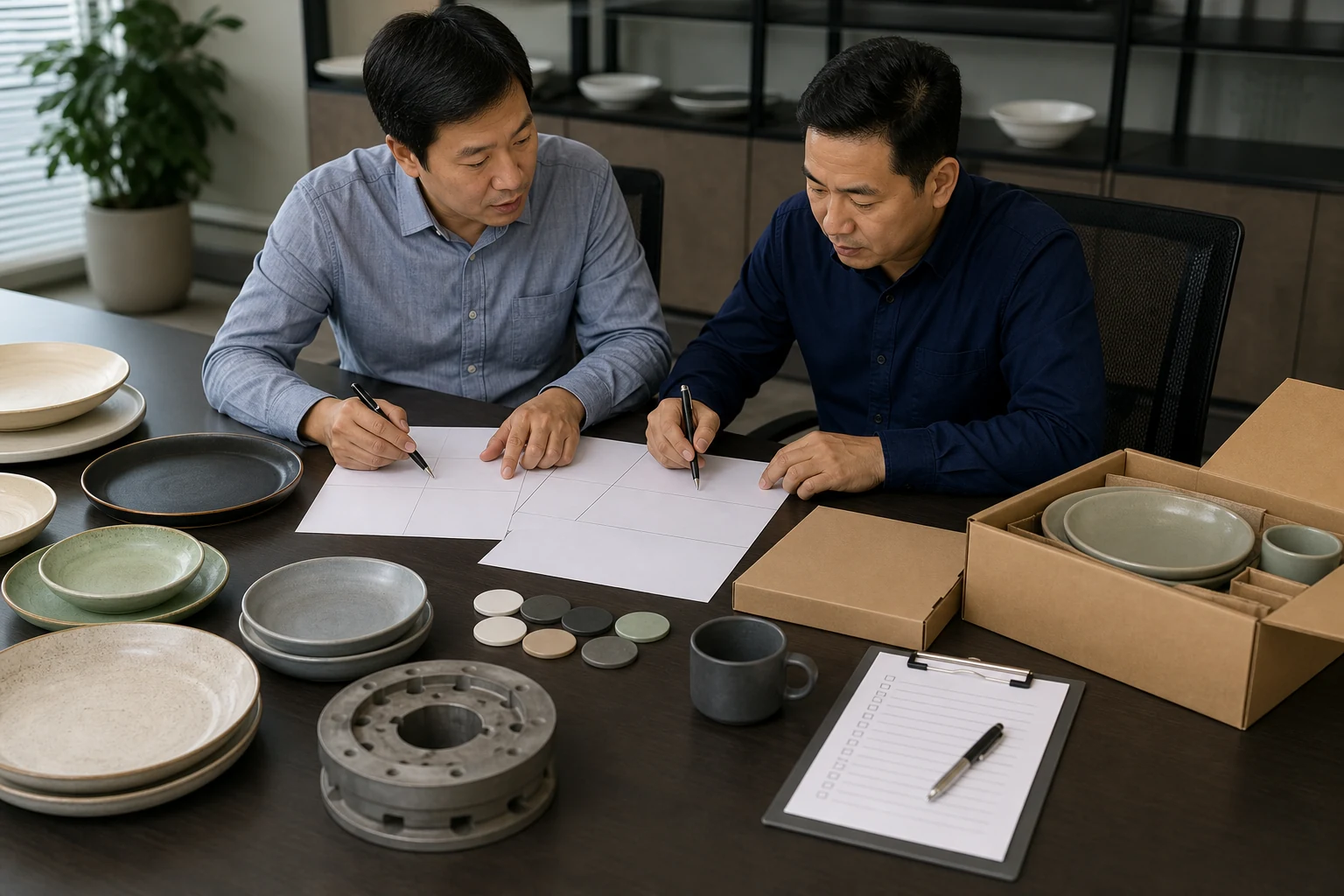
A complete RFQ does not require every design answer, but it clearly distinguishes fixed facts, options, unknowns, and requested factory work. That distinction lets every bidder price the same decision stage.
| Decision area | Complete RFQ | Incomplete RFQ | Commercial effect |
|---|---|---|---|
| Product | Revision, dimensions, functions, tolerances | Reference image only | Tooling and unit price stay provisional |
| Material and use | Material, food, temperature, market | Generic food-safe request | Evidence scope cannot be priced |
| Tooling | Route, ownership, trials, corrections | Mold needed | Deliverables and rights conflict |
| Branding | Method, artwork, size, position | Add logo | Setup and durability unknown |
| Packaging | Structure, assortment, artwork, carton | Nice retail box | Cost and schedule change late |
| Quality | Checks, defects, samples, reports | Good quality | Release evidence undefined |
| Commercial | Quantity matrix, term, destination, dates | Best price | Quotes are not comparable |
B2B Buyer OEM Quotation Checklist
Use these eight checks before sending an RFQ. Mark unknowns explicitly and request named scenarios.
| Check | Question | Why It Matters |
|---|---|---|
| Product | Are components, dimensions, functions, tolerances, and revision clear? | Defines what is priced. |
| Material | Are material, use conditions, users, markets, and claims identified? | Sets process and evidence scope. |
| Tooling | Is the route, ownership, cavities, trials, and correction scope defined? | Controls development cost. |
| Branding | Are logo method, artwork, color, finish, and approval rules available? | Controls setup and appearance. |
| Packaging | Are packs, assortments, labels, cartons, and artwork ownership stated? | Controls recurring cost and timing. |
| Quality | Are tests, documents, inspection, samples, and acceptance rules named? | Controls release evidence. |
| Quantity | Are launch, repeat, annual, SKU, and color quantities separated? | Controls capacity and pricing. |
| Delivery | Are destination, Incoterm, payment, and timing milestones stated? | Controls commercial comparison. |
Official Sources Buyers Should Use to Define Scope
Official sources help define market and commercial inputs, but they do not replace a product-specific quotation. Verify current applicability before issuing the final RFQ.
The European Commission food-contact materials overview explains the EU framework for materials intended to contact food. Buyers should use it to identify the applicable material and market questions, not ask a supplier to quote generic EU approval.
The U.S. FDA food types and conditions-of-use resource shows why food category and use condition matter when defining food-contact scope. The actual regulatory pathway and evidence must be confirmed for the exact substance and article.
The U.S. CPSC third-party testing guidance explains responsibilities for applicable children’s product testing and certification. Buyers must determine whether the product falls within relevant requirements before including that scope in an RFQ.
Practical disclaimer: this guide supports commercial RFQ preparation and is not legal, tax, customs, engineering, testing, or certification advice. Confirm current product, market, Incoterm, tariff, labeling, testing, and contract requirements with qualified professionals.
A Quote-Ready Next-Step Plan
First, freeze one RFQ index and mark every input as fixed, optional, unknown, or factory-proposed. Request scenario pricing where a decision remains open.
Second, compare quotations on the same product, evidence, packaging, quantity, delivery, and commercial basis. Convert assumptions into actions before supplier selection.
Third, attach the accepted quotation and revisions to the purchase order, then control every later change. This protects cost, schedule, approval, and supplier accountability.
Before sending the final request, ask a colleague outside the project to reconstruct the product, pack, evidence, quantity, price basis, destination, and deadline from the RFQ alone. Any answer that depends on private memory, an unlabeled sample, or an old message should become a controlled attachment or explicit assumption. This short review often prevents the most expensive quotation gaps before they reach tooling or production. Record the reviewer and date in the RFQ index for later reference.
Also ask each bidder to identify the three assumptions most likely to change price and the three approvals most likely to change lead time. Compare those answers with the buyer risk register, because one supplier may assume existing tooling, standard packaging, or available evidence while another includes new development and market-specific work. Resolve material, geometry, cavity, color, decoration, pack count, testing, inspection, and freight assumptions before ranking totals. A quotation that exposes uncertainty gives procurement more control than a precise number built on silent gaps.
Finally, define the evidence required with every commercial milestone. Tooling deposit, trial approval, artwork release, production start, balance payment, inspection release, and shipment booking should each refer to named deliverables and authorized decision owners. If an approval arrives late or the buyer changes scope, the revised quotation should show cost, schedule, inventory, test, and tooling consequences rather than carrying the old promise forward. This keeps negotiation, engineering, quality, packaging, and logistics aligned around one executable record.
OEM Tableware Quotation FAQ
Can a factory quote from a product photo?
It can provide a rough range with explicit assumptions. A production quotation needs dimensions, material, functions, quantity, tooling, packaging, quality, market, and delivery inputs.
Should buyers disclose a target price?
A target can help evaluate design and scope options when it is tied to quantity, term, packaging, and quality. It should not replace a complete cost basis or comparable quotation.
What if annual demand is uncertain?
Provide a realistic launch order and several repeat scenarios. Ask which costs, cavities, materials, or packaging change at each volume.
Are testing costs included in unit price?
Only if the quotation says so. Request an itemized scope showing existing reports, new project tests, specimen quantities, laboratories, retests, and buyer-nominated work.
When is a quotation ready for a purchase order?
When the product revision, assumptions, inclusions, exclusions, quantities, evidence, packaging, pricing basis, delivery, payment, validity, and change rules are accepted. Open items should have owners and decision dates.
OEM Tableware Quotation Requirements: Make Scope Comparable
A quote-ready RFQ defines the buyer decision rather than pretending every design detail is final. It connects product, use, material, tooling, branding, packaging, evidence, quantity, destination, and timing under one revision.
The OEM tableware quotation requirements above turn missing information into visible scenarios and actions. That makes supplier prices more comparable and reduces late surprises after samples, tooling, artwork, testing, or logistics begin.
Send one controlled brief, require assumptions and exclusions, and revise the commercial record whenever scope changes. The result is a quotation procurement can approve and production teams can execute.
Request an OEM Quotation Readiness Review
Share the product concept, market, quantity, customization, packaging, quality, destination, and target schedule. Our manufacturing team can identify missing cost drivers and prepare the next quotation questions.
Request a Custom Quote
Share your product, quantity, target market and customization needs. Our factory team will reply with the next practical step.
Continue Your Sourcing Research
The six newest factory-side articles are updated automatically by publication date.

Wheat Straw vs Bagasse Tableware: Buyer Comparison
A B2B decision guide comparing reusable wheat-straw polypropylene composite tableware with molded bagasse fiber formats across use, evidence, operations and end of life.

Can Wheat Straw Tableware Be Recycled? Buyer Q&A
A practical buyer answer on whether reusable wheat-straw composite tableware can enter PP recycling streams, which evidence matters, and how to qualify market claims.

Global SKU vs Regional SKU: Tableware Decision Guide
A buyer decision framework for choosing one global tableware SKU or controlled regional variants across compliance, packaging, logistics, inventory and change control.

Australia Food Packaging Evidence: Buyer Guide
A practical evidence guide for Australian food-packaging buyers covering intended use, migration risk, supplier assurance, testing, hygiene, release and change control.

EU PPWR Tableware Packaging vs Conventional Packs
A buyer comparison of PPWR-ready and conventional tableware packaging across product protection, material choices, empty space, evidence, labeling and release timing.

Prop 65 Tableware Requirements: Buyer Q&A
A practical buyer Q&A for defining California Proposition 65 exposure scenarios, evidence, warning decisions, supplier records and release controls for tableware.