
Wheat Straw Tableware Safety Documents: Buyer Guide
A buyer-side answer to which records belong in a defensible safety file, how to connect them to one finished SKU and why no single certificate proves everything.

Quick Answer: The most useful wheat straw tableware safety documents are a product construction and intended-use specification, supplier material identity records, applicable regulatory-status or declaration documents, finished-article migration or other risk-based test reports, GMP and production controls, and traceability/change records. No single certificate proves complete safety; every document must match the exact composite, color, SKU, food-contact condition and target market.
Buyers should evaluate the file as an evidence chain. Supplier records describe inputs, official rules establish market requirements, a qualified laboratory reports what the named sample did under stated conditions, and factory records connect the approved construction to production and shipment.
Start with the planned product in our custom wheat-straw product range and define the application using the food-contact conditions-of-use framework. If the market or claims are uncertain, send the SKU and intended use for a document review before paying for tests.
This article is a sourcing framework, not legal advice or a certificate for any product. The importer or designated compliance professional must confirm current market requirements and decide whether the available evidence is sufficient for the finished article.
Factory Insider takeaway: Build the file from the finished SKU outward: define use, identify every food-contact component, map each official or supplier record to a question, test a representative article, and preserve production traceability. A thick folder is not strong evidence if documents cannot be connected to the goods. For this safety file, name the record owner, evidence limitation and release hold beside every unanswered question.
Which Documents Prove Wheat Straw Tableware Safety?
The correct answer is a coordinated set of documents rather than one universal certificate. A buyer file should cover product identity, intended use, material composition and source, applicable authorization or restriction, finished-article evidence, manufacturing controls, traceability and change history.
Each document has a limited role. A material declaration cannot prove migration from a colored finished bowl, and a laboratory report cannot show that every shipment used the same approved compound unless production and lot records provide that connection.
The evidence index should name the product code, color, revision, food-contact parts, market and approved conditions beside each record. Missing links become hold points rather than assumptions.
Use a question-to-document map before requesting certificates
Write the buyer question in one column and the expected evidence type in another. This exposes requests such as “send FDA” that lack a defined substance, legal route, intended use or finished-product question.
Procurement implication: ask suppliers for a mapped file at quotation and sample stages. Document gaps discovered before tooling or artwork are less expensive than gaps found after laboratory work or production.
Document the Full Wheat Straw Composite Material Identity
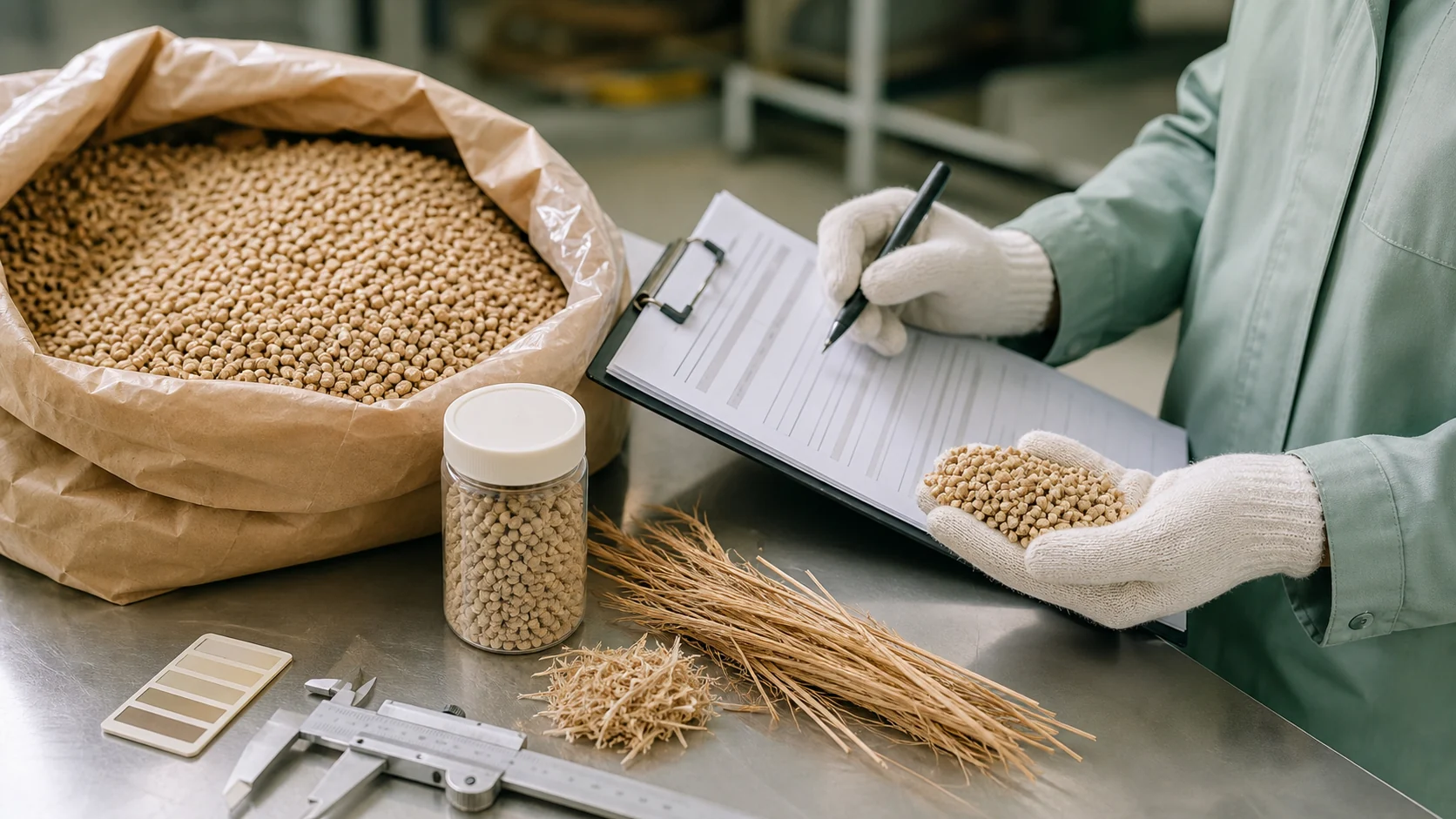
Wheat-straw tableware is normally a composite system rather than pure straw. The material file should identify the polymer or binder, wheat-straw input, relevant fillers, additives, pigment or color system and any separate food-contact seal, coating, print or accessory.
Our explanation of wheat-straw composite material helps buyers distinguish recipe input, plant-fiber percentage and finished-product performance. The safety review must still use the current project formulation and supplier records rather than a generic composition range.
Supplier specifications, declarations and lot documents should agree on names, grades, revisions and sources. Conflicting or generic records remain outside the approval basis until the material relationship is resolved.
Separate composition evidence from a fiber-content claim
A composition file explains the controlled inputs, while the methods in our wheat-straw fiber-content evidence guide address how a percentage claim may be supported. Neither question automatically proves the other.
Procurement implication: freeze the exact formula revision and marketing wording together. A later recipe or supplier change can affect both safety relevance and the truthfulness of fiber-related packaging claims.
Review Regulatory Status for the Exact Substance and Use
Regulatory-status information should identify the substance or material, the legal or authorization route, any limitations, and the intended conditions it covers. A logo, regulation number or “food grade” phrase without identity and use context is not enough.
For a composite, the reviewer considers the polymer system, plant material, additives, colorants and other relevant components. The applicable approach varies by jurisdiction and construction, so a U.S. status reference should not be relabeled as an EU declaration or vice versa.
The final decision records who assessed the status and which current official text or authorization information was used. Supplier statements support the review, but the buyer’s compliance owner remains responsible for market release.
Check scope, holder and conditions before accepting a status document
Confirm whether an authorization or notification is substance-specific, manufacturer-specific, use-specific or generally available under stated conditions. Read the limitations and cited regulation instead of relying on a database search result alone.
Procurement implication: request the regulatory route during material selection. Discovering that a grade or additive lacks suitable status after sample approval can require reformulation, new color work and repeat testing.
Match Finished-Article Test Reports to the Approved SKU
A test report should identify the laboratory, method, sample description, product code or construction, color, dates, test conditions and results. Buyers should compare those fields with the approved sample and intended-use specification instead of accepting the word pass in isolation.
Migration or other chemical testing addresses defined hazards and conditions; functional testing addresses performance questions such as heat deformation, staining, odor or repeated cleaning. One type should not be presented as proof of the other.
The golden-sample controls in our custom tableware sample approval guide help lock the version sent for evaluation. Chain-of-custody and retained samples make it easier to connect the report to the product prepared for production.
Read the sample description, method and result together
A report on a natural-color plate may not automatically cover a dark-pigmented bowl, a printed lid or a revised compound. The technical owner documents the comparison and decides whether existing evidence remains representative.
Procurement implication: approve the laboratory scope before testing. Correcting food simulants, temperature, duration, repeat-use sequence or sample identity after a report is issued can require a new test rather than an administrative edit.
Include GMP and Factory Process Records in the Safety File
Good manufacturing practice records show how the approved construction is controlled during purchasing, receiving, storage, material issue, molding, inspection and packing. They do not certify the chemical suitability of a material, but they support consistent execution and documented response to deviations.
Relevant records can include approved-supplier status, incoming verification, bill-of-material revision, batch or work-order travelers, line clearance, process checks, nonconformance disposition and release approval. The exact set should match product and market risk rather than become a generic paperwork exercise.
Our factory capability process describes the manufacturing handoff from material selection and samples into controlled custom production. Buyer files should identify which project records will be available and which confidential details can be reviewed through a controlled channel.
Distinguish system evidence from product evidence
A quality-system certificate or procedure indicates how a process is organized; it does not prove the composition or migration result of a particular SKU. Product evidence and factory-system evidence strengthen different links in the chain.
Procurement implication: request both the relevant system controls and the SKU-specific release records. Requiring only certificates can leave the actual material, sample and shipment relationship untested.

Preserve Traceability and Material Change Decisions
Traceability connects supplier lot and receiving records to material issue, production batch, finished goods and export cartons. This route lets the factory investigate a question, isolate affected goods and show which safety file applied to the shipment.
The document chain follows the principles in our food-contact tableware traceability guide. It should be practical enough to retrieve records while protecting confidential formulation and supplier information through appropriate access controls.
Change control keeps the file current when the supplier, grade, formulation, pigment, decoration, mold, process, use condition, claim or market changes. The decision states whether old evidence remains relevant, needs comparison or must be replaced.
Treat repeat orders as confirmation, not automatic carryover
Each repeat order confirms that the approved material and product revision remain in use or that a reviewed change has taken effect. Old reports stay in the history file but are not used to conceal a new construction.
Procurement implication: define notification timing and reapproval authority in the purchase specification. A transparent change decision is usually faster and safer than discovering an undocumented substitution during inspection or retailer review.
Assemble a Market-Specific Wheat Straw Safety File
The document pack should be organized by target market and finished SKU. Its index identifies applicable laws or official guidance, material status evidence, declarations where required, laboratory reports, risk assessments where relevant, GMP records, traceability and approved labeling or use instructions.
For EU plastic components, a Declaration of Compliance may be required under the applicable plastics rules and must be supported by documentation. That declaration is not interchangeable with a test report: it communicates compliance information through the supply chain while the supporting file explains the basis.
For U.S. work, buyers should identify the regulatory basis for each relevant component and its intended use rather than requesting an undefined FDA certificate. Other markets may need different evidence, language or responsible-party review.
Keep legal, laboratory, supplier and factory documents in separate evidence lanes
The index labels whether a record is an official legal source, supplier statement, third-party measurement, factory process record or buyer decision. This prevents a laboratory logo or supplier declaration from being mistaken for government approval.
Procurement implication: specify the destination markets and customer protocols before the final quote. A single global folder can hide regional gaps and create late requests for new samples, reports or declarations.
Turn the Document Pack into a Buyer Release Decision
A complete folder is not the same as an approved product. The responsible reviewer records the intended use, construction revision, evidence considered, limitations, open items and decision for sample, artwork, production or shipment release.
The decision can be approved, approved with defined restrictions, or held pending specified evidence. Restrictions should appear in the product specification and consumer instructions rather than remain hidden in an internal email.
Naike Group manufacturing team uses the approved boundary to control materials, production and changes, while the buyer or compliance owner controls the market decision. This division keeps commercial urgency from turning factory documents into unsupported legal conclusions.
Ask one final question before approving wheat straw tableware safety documents
Can every important claim and use condition be traced to a current record for the exact SKU, and can that SKU be traced to the order? If the answer is no, the missing connection should be named and closed before release.
Buyers ready to map a project can request a wheat-straw safety-file review. Share the construction, use, markets and available documents so our factory team can identify the next practical evidence step.
Compare Wheat Straw Tableware Safety Documents by Purpose
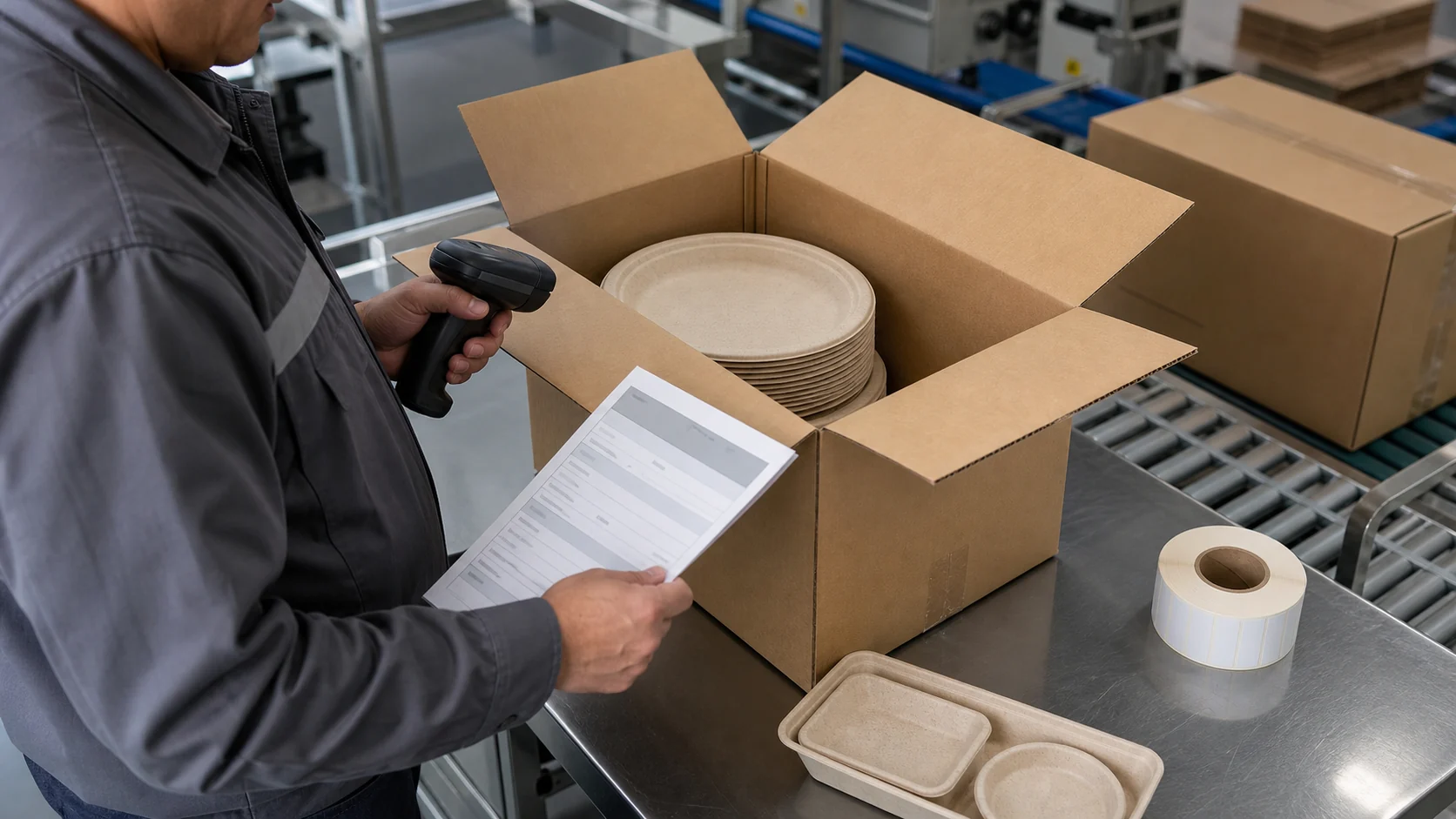
Every evidence type answers a different question. The buyer’s decision is strongest when the documents agree on product identity, revision, intended use and market scope.
| Document | What It Supports | What It Cannot Prove Alone | Critical Scope Check | Buyer Action |
|---|---|---|---|---|
| Construction and use specification | Exact SKU, food-contact parts and intended application | Regulatory status or test performance | Revision, color, temperature and market | Freeze before evidence review |
| Supplier material declaration | Declared identity, grade and selected restrictions | Finished-article migration or actual lot use | Supplier, date, formulation and use scope | Match to bill of materials |
| Regulatory-status record | Potential authorization route and limitations | Finished-SKU compliance in every market | Substance identity and conditions of use | Read cited official text |
| Finished-article test report | Named sample result under stated method and conditions | Other colors, lots, uses or production consistency | Sample, method, simulants and dates | Approve scope before testing |
| GMP and batch records | Controlled execution and link from input to order | Chemical suitability or legal market decision | Material code, lot, work order and disposition | Define retained release records |
| Declaration or buyer decision | Communicated compliance basis or formal release conclusion | Future unreviewed changes | Market, SKU, supporting file and signer | Preserve limits and modification history |
B2B Buyer Checklist for Wheat Straw Safety Evidence
Use these eight checks to turn a certificate folder into a product-specific release file. Each answer should identify the current record and responsible owner.
| Check | Question | Why It Matters |
|---|---|---|
| SKU and intended use | Are construction, food types, temperature, time, reuse and market fixed? | Evidence relevance begins with a defined application. |
| Composite identity | Are polymer, straw input, additives, pigment and contact parts identified? | Wheat-straw content alone does not describe the safety-relevant system. |
| Supplier and lot | Do supplier, grade, revision and incoming records agree? | Generic documents cannot release an unidentified source. |
| Regulatory route | Is status mapped to exact substances and conditions of use? | Food grade or FDA wording can conceal limitations. |
| Representative testing | Does the report match finished SKU, color, method and intended conditions? | A pass is only as relevant as its sample and scope. |
| GMP controls | Which purchasing, receiving, production and deviation records are retained? | System controls support consistent execution. |
| Traceability | Can input lots be linked to work order, goods and cartons? | The safety file must connect to the shipment. |
| Change and release | Who reviews changes and signs the market release decision? | Old evidence should not silently cover a new construction. |
Resolve the Eight Document Questions before Purchase Order Release
These controls define what to record, what stops approval and how to close each evidence gap without weakening the standard. Assign each control to a named buyer or supplier owner before the purchase order reaches its release date.
1. SKU and intended use control for wheat straw tableware safety documents
For SKU and intended use, the buyer and Naike Group manufacturing team answer “Are construction, food types, temperature, time, reuse and market fixed?” against the current SKU. Write the serving application, maximum fill temperature, contact duration, repeat-use plan and destination market into one controlled brief.
Evidence relevance begins with a defined application. A test scope chosen before those limits are settled may be technically valid yet irrelevant to the actual order. Resolve uncertainty by freezing a dated use profile that the laboratory and supplier can both cite.
2. Composite identity control for wheat straw tableware safety documents
For Composite identity, the buyer and Naike Group manufacturing team answer “Are polymer, straw input, additives, pigment and contact parts identified?” against the current SKU. List the plant fiber, carrier resin, additives, color system and every food-contact decoration under their controlled supplier identifiers.
Wheat-straw content alone does not describe the safety-relevant system. A percentage claim cannot reveal an undeclared processing aid or prove that two similarly colored compounds share the same formulation. Require a revision-matched composition statement and reconcile it with the purchase specification.
3. Supplier and lot control for wheat straw tableware safety documents
For Supplier and lot, the buyer and Naike Group manufacturing team answer “Do supplier, grade, revision and incoming records agree?” against the current SKU. For each constituent, record whether the cited provision, notification, listing or supplier declaration applies to the named source and conditions.
Generic documents cannot release an unidentified source. Broad phrases such as food grade do not show the legal route or restrictions that govern a specific substance. Place unresolved components on hold until a qualified reviewer records the applicable basis and boundaries.
4. Regulatory route control for wheat straw tableware safety documents
For Regulatory route, the buyer and Naike Group manufacturing team answer “Is status mapped to exact substances and conditions of use?” against the current SKU. Compare the tested article with the order by geometry, surface-area relationship, color, decoration, formulation, simulant, temperature and duration.
Food grade or FDA wording can conceal limitations. A favorable report for a different sample cannot answer exposure questions created by the current construction or use. Commission new work or document a scientifically justified bridge whenever the tested case is not representative.
5. Representative testing control for wheat straw tableware safety documents
For Representative testing, the buyer and Naike Group manufacturing team answer “Does the report match finished SKU, color, method and intended conditions?” against the current SKU. Gather incoming checks, formulation controls, cleaning records, process limits, nonconformance handling and release authorization for the production route.
A pass is only as relevant as its sample and scope. Laboratory evidence describes a submitted specimen but does not prove that every later batch was made under controlled conditions. Confirm implementation through selected batch records and close deviations before finished-goods release.
6. GMP controls control for wheat straw tableware safety documents
For GMP controls, the buyer and Naike Group manufacturing team answer “Which purchasing, receiving, production and deviation records are retained?” against the current SKU. Create a chain from supplier lot and compound issue to molding order, inspection sample, finished lot and export carton.
System controls support consistent execution. Without that sequence, a buyer cannot demonstrate that the reviewed evidence belongs to the units received. Test the chain in both directions on one real batch and record the reconciliation result.
7. Traceability control for wheat straw tableware safety documents
For Traceability, the buyer and Naike Group manufacturing team answer “Can input lots be linked to work order, goods and cartons?” against the current SKU. Compile the destination-specific declaration, test evidence, artwork claims, user instructions, importer data and supporting translations under one revision index.
The safety file must connect to the shipment. A technically sound material can still be misrepresented when labels or instructions promise uses outside the assessed conditions. Release market files only after technical and commercial owners approve the same dated version.
8. Change and release control for wheat straw tableware safety documents
For Change and release, the buyer and Naike Group manufacturing team answer “Who reviews changes and signs the market release decision?” against the current SKU. Use a decision log that states accepted evidence, explicit gaps, risk owner, action deadline and release status for the exact SKU.
Old evidence should not silently cover a new construction. File volume can disguise a critical omission unless every record is tied to a decision question. Authorize the purchase only when mandatory holds are closed and remaining limitations are communicated to responsible parties.
Official References and Evidence Boundaries
The U.S. FDA guidance on determining the regulatory status of components of a food-contact material explains that each substance must have an appropriate regulatory basis for its intended use. Buyers should apply that question to the full wheat-straw composite rather than requesting an undefined FDA certificate.
Regulation (EC) No 1935/2004 on EUR-Lex establishes the EU framework for materials and articles intended or reasonably expected to contact food, including general safety and traceability principles. The current official text should be read with applicable material-specific measures and national requirements.
The European Commission food-contact materials legislation overview explains Regulation (EU) No 10/2011 for plastics, migration limits, food simulants, testing conditions and Declaration of Compliance support. A buyer should determine how the plastics measure applies to the relevant plastic components of a composite article.
These sources establish regulatory context and do not certify a particular wheat-straw tableware product. Confirm the current legal text, material scope, sample identity, test design and market conclusion with a qualified compliance professional or accredited laboratory.
Wheat Straw Safety Document Questions from Buyers
Is one FDA or food-grade certificate enough?
No. Buyers need the regulatory basis for relevant components and intended use, plus product-specific evidence and production traceability. A generic certificate cannot prove the exact composite, color, finished SKU and market decision.
Does a migration report prove the wheat-straw percentage?
Not automatically. Migration testing addresses transfer under stated conditions, while a fiber-percentage claim needs its own formulation, traceability and suitable verification evidence. Keep the two questions separate in the file.
Can one test report cover every color?
Only after a qualified reviewer compares pigment, formulation, sample scope and risk and documents the conclusion. Visual similarity or a shared mold is not enough to assume coverage.
What is the difference between a Declaration of Compliance and a test report?
A declaration communicates compliance information under the applicable framework and is supported by a broader technical file. A test report records results for the named sample and method; it does not replace the declaration or the reviewer’s legal assessment.
When should safety documents be refreshed?
Review them when supplier, grade, formula, colorant, decoration, process, use, market, rule or claim changes, and when a document expires or is superseded. Record the new modification date while preserving the earlier approval history.
The Buyer Answer: Approve the Evidence Chain, Not the Folder
Reliable wheat straw tableware safety documents form a connected chain: defined SKU and use, complete composite identity, appropriate regulatory basis, representative finished-article evidence, GMP controls, traceability and a dated change/release decision. The absence of any one link should become a named hold point, not a reason to reinterpret another document.
Before purchase-order release, ask whether the current file proves the claims and conditions for the actual goods and whether those goods can be traced back to the approved inputs. That question is more commercially useful than counting certificates.
Request a Wheat Straw Safety File Review
Send the product code or drawing, composite details, intended foods, temperature-time conditions, colors, target markets, planned claims and available supplier or laboratory records. Our factory team will map document gaps and the next evidence step before sample, testing or production release.
Request a Custom Quote
Share your product, quantity, target market and customization needs. Our factory team will reply with the next practical step.
Continue Your Sourcing Research
The six newest factory-side articles are updated automatically by publication date.

Wheat Straw vs Bagasse Tableware: Buyer Comparison
A B2B decision guide comparing reusable wheat-straw polypropylene composite tableware with molded bagasse fiber formats across use, evidence, operations and end of life.

Can Wheat Straw Tableware Be Recycled? Buyer Q&A
A practical buyer answer on whether reusable wheat-straw composite tableware can enter PP recycling streams, which evidence matters, and how to qualify market claims.

Global SKU vs Regional SKU: Tableware Decision Guide
A buyer decision framework for choosing one global tableware SKU or controlled regional variants across compliance, packaging, logistics, inventory and change control.

Australia Food Packaging Evidence: Buyer Guide
A practical evidence guide for Australian food-packaging buyers covering intended use, migration risk, supplier assurance, testing, hygiene, release and change control.

EU PPWR Tableware Packaging vs Conventional Packs
A buyer comparison of PPWR-ready and conventional tableware packaging across product protection, material choices, empty space, evidence, labeling and release timing.

Prop 65 Tableware Requirements: Buyer Q&A
A practical buyer Q&A for defining California Proposition 65 exposure scenarios, evidence, warning decisions, supplier records and release controls for tableware.