Private Label vs Custom Mold: Buyer Decision Guide
Choose the development route that matches the buyer promise, launch window, budget, evidence needs, and long-term product control.

The private label vs custom mold decision depends on what the buyer must change. Choose private label when an existing tableware design already meets the required function and the project mainly needs color, logo, assortment, or packaging changes; choose a custom mold when proprietary geometry, dimensions, interfaces, or performance are essential to the buyer promise.
Neither route is universally better. Private label usually reduces tooling work and can shorten the path to samples, while a new mold gives greater design control but adds engineering, trials, ownership terms, correction cycles, and a longer approval chain.
Before requesting price, buyers can send the product goal, target market, quantity, launch date, reference products, and non-negotiable features for a route review. The manufacturing team should identify which requirements fit an existing platform and which require new geometry or tooling.
Buyer Answer: Which Development Route Fits the Project?
Use private label for a speed-led launch when the factory’s existing item can satisfy use, dimensions, materials, quality, compliance scope, and channel expectations without structural change. Use a custom mold when the product must deliver a distinct shape, fit, capacity, suction behavior, closure, stack, accessory interface, or protected brand feature that an existing tool cannot provide.
Compare both routes against six decision criteria: required differentiation, launch timing, one-time investment, repeat-order volume, evidence scope, and control over future changes. Ask for explicit inclusions, exclusions, ownership, sample stages, and repricing triggers before selecting the route.
Start With the Buyer Promise, Not the Tooling Preference
Write the customer-facing promise before choosing a development route. Does the buyer need a specific appearance only, or must the product perform differently in use. A logo or color promise may fit private label, while a promise about capacity, fit, grip, sealing, nesting, or compatibility may require controlled geometry.
Separate visible differentiation from functional differentiation. A new sleeve, carton, color assortment, surface mark, or bundled set can create a distinct shelf presentation without changing the molded article. By contrast, a different rim, suction base, wall section, lid interface, handle, cavity, or stack profile changes the product itself and should be evaluated as engineering work.
Define which product facts are mandatory and which are negotiable. If every feature is treated as fixed, the factory cannot show a lower-risk private-label route. If every feature is treated as flexible, the buyer may approve an available item that cannot support the intended positioning or end-use requirement.
Ask whether an existing product has already passed the same internal functions the buyer intends to claim. Prior factory experience can reduce uncertainty, but it does not automatically prove suitability for a new market, user group, food condition, retailer, or packaging system. The buyer must still define the exact intended use and evidence needed for the program.
Map the buyer promise to acceptance criteria that can be observed or measured. Appearance can reference approved color, finish, artwork, location, and workmanship samples, while function may require capacity, force, leakage, fit, temperature, cleaning, or cycle conditions. A route comparison is meaningful only when both options are measured against the same outcome.
Record the reason for choosing private label or a new mold in the approved project brief. The decision should say which customer promise is protected, which compromises are accepted, and which risks remain open. This prevents a later stakeholder from reopening the route based only on a cheaper unit price or a more attractive rendering.
A practical private label vs custom mold screening question
Ask: if the factory may not change the existing molded geometry, can the product still meet every required function, claim, channel constraint, and user expectation. A clear yes supports private label; a clear no supports custom development; an uncertain answer requires samples and evidence before commitment.
The custom solutions overview shows how product, branding, packaging, and manufacturing choices connect. Buyers should use it to frame the project, then confirm the exact available product and engineering route with the factory.
Compare Scope Boundaries Before Comparing Price
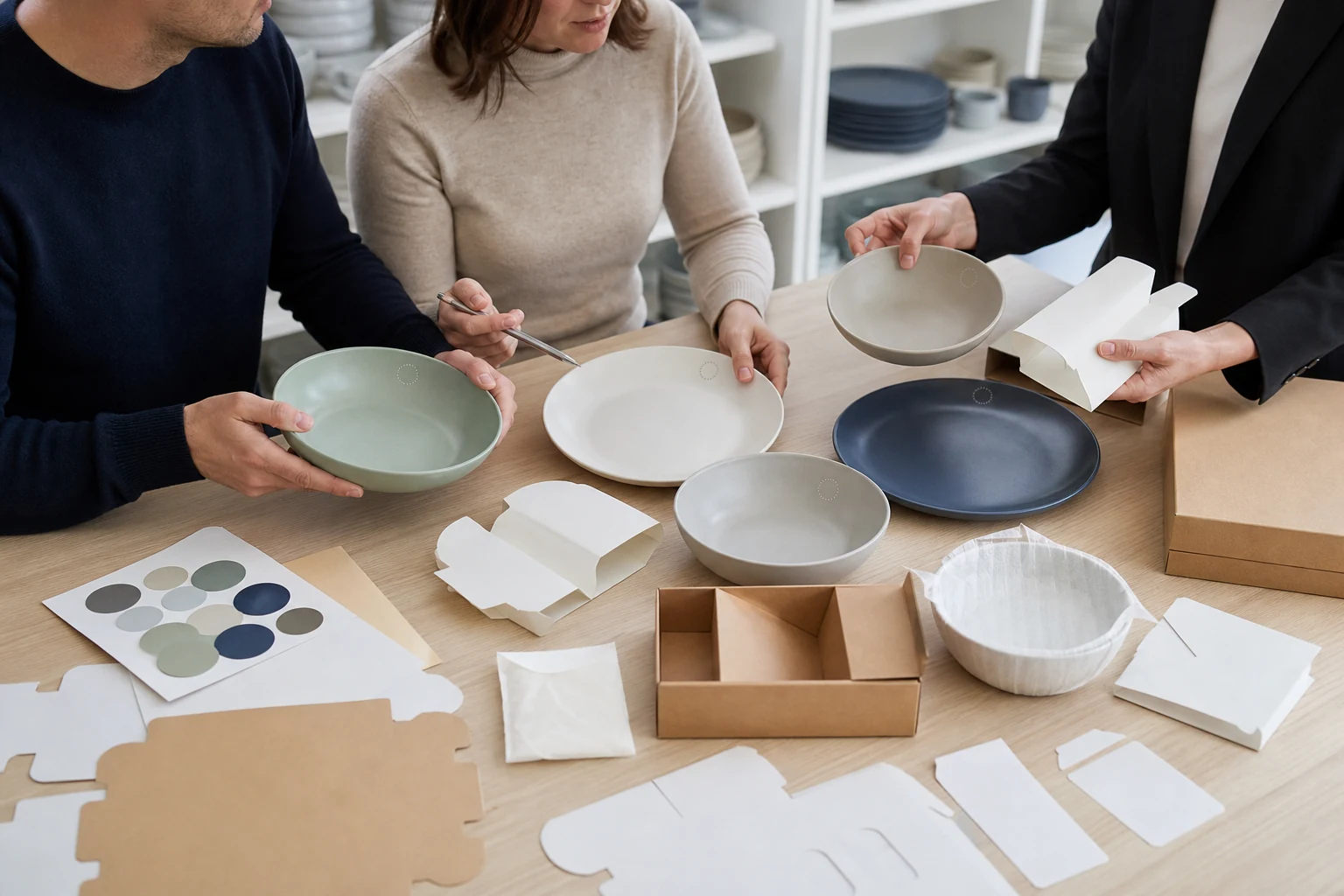
Define what “private label” includes for this supplier. It may mean only applying a logo to a standard item, or it may include custom color, mixed sets, artwork, retail packaging, inserts, labels, cartons, and coordinated documentation. Without an itemized scope, two private-label quotations may cover materially different work.
Define the custom mold boundary with the same precision. Does it include industrial design, engineering review, 2D and 3D files, prototype work, mold design, steel, cavities, texture, trial material, corrections, gauges, fixtures, and approved samples. A single tooling total hides ownership and deliverable differences that affect long-term value.
Separate recurring unit cost from one-time and conditional charges. Tooling, prototype, color matching, print setup, packaging dies, testing, photography, inspection, freight, and correction work should not be blended into an unexplained product price. Buyers need to see which cost repeats, which can be amortized, and which appears only when an assumption changes.
Compare the same quantity and assortment basis. A stock-platform price may assume efficient production in one color, while a custom route may be quoted for several small variants or a different cavity plan. Normalize ordered units, packed units, set configuration, color split, overrun, shortages, MOQ, and annual forecast before ranking price.
Request explicit exclusions and provisional assumptions. Private label can still require new packaging, market evidence, color approval, print fixtures, or retailer testing, while a custom mold may exclude design responsibility, buyer changes, texture revisions, or transfer rights. Unpriced uncertainty should appear in the decision record as risk, not disappear behind the lowest total.
Build a program-cost view rather than selecting from the opening quotation. Include development labor, buyer review time, sample shipping, tests, inspections, launch inventory, tooling maintenance, packaging write-offs, change cost, and delay exposure. The commercially stronger route is the one that supports the buyer promise at an acceptable total risk-adjusted cost.
Normalize quotation assumptions in one comparison sheet
Use one worksheet for currency, tax basis, Incoterm, destination, payment milestones, validity, first order, repeat quantity, annual volume, packaging, evidence, and delivery assumptions. Require each supplier to mark included, excluded, provisional, buyer-supplied, or factory-supplied beside every line.
Do not compare a budgetary private-label estimate with a production-intent custom mold quotation as if they have equal certainty. Label the maturity of each offer and define the decisions required before it can become a purchase-order basis.
Test Launch Timing Against Real Approval Work
Private label can shorten development only when the chosen product, material, color route, logo method, and packaging platform are genuinely available. A new color, printed decoration, complex assortment, or custom retail pack still needs samples, artwork release, setup, and production planning. Buyers should ask for a milestone schedule rather than assume that existing tooling means immediate shipment.
A new mold schedule begins before steel is cut. Product requirements, manufacturability, drawings, shrinkage assumptions, parting, gates, ejection, texture, cavity choice, and interface dimensions must be reviewed and approved. Skipping those decisions may produce an earlier trial but usually transfers delay into corrections and repeat sampling.
Compare both routes from the date of complete buyer inputs, not from the date of first inquiry. Late artwork, missing market requirements, undecided colors, absent counterpart samples, or shifting packaging quantities can hold either route. The timeline should name the buyer and factory owners for every approval and state the latest decision date that protects launch.
Build schedule contingency around the route-specific unknowns. Private label risk often sits in color, decoration, packaging, evidence, and production-slot availability, while custom mold risk also includes engineering, tool manufacture, trials, dimensional correction, and functional validation. A realistic plan exposes these paths rather than promising one optimistic completion date.
Compare samples by purpose, not by appearance alone
Identify whether each sample is an existing reference, color sample, logo sample, packaging mock-up, prototype, tooling trial, corrected trial, or production sample. Each stage proves different facts, so approving appearance on a reference item cannot release untested custom geometry.
Use the custom mold and tooling capability page to frame development questions about molds and trials. The exact schedule still depends on approved files, material, complexity, cavities, corrections, and buyer response time.

Compare Product Control, Ownership, and Future Change
Private label normally uses a factory-controlled product platform, so buyers should confirm what remains available and what can change without their approval. Material source, dimensions, tooling maintenance, color standards, decoration fixtures, packaging files, and minimum quantities may be governed differently. Contract language should distinguish the buyer-owned brand assets from the supplier’s underlying design and tools.
A custom mold does not create useful control unless ownership terms are explicit. State who pays, who owns the tool, where it is stored, who may use it, how it is identified, who maintains it, and whether it can be transferred. Also define what happens after inactivity, damage, factory closure, design change, or the end of the commercial relationship.
Clarify ownership of product drawings, mold drawings, artwork, packaging dielines, prototypes, test records, gauges, and approved samples. Payment for a mold does not automatically settle every design or file right. Buyers should obtain contract advice for intellectual-property terms instead of relying on informal labels such as exclusive or customer mold.
Compare the cost of future changes under both routes. Private label may limit structural changes but make color, logo, pack, or assortment updates easier, while a custom mold may permit controlled tool modifications within engineering limits. Ask what changes require a new tool, insert, cavity, fixture, validation, evidence review, or inventory write-off.
Treat control as an operating system, not a certificate
Maintain a controlled product specification, approved sample, color and artwork references, packaging files, test scope, inspection criteria, and change log for either route. Ownership language cannot prevent drift if production teams lack an authorized baseline.
Before deposit, buyers can request a tooling and ownership question review with the proposed product route, forecast, change expectations, and contract milestones. The factory response should identify operational responsibilities, while qualified legal advisers address enforceability and jurisdiction.
Compare Quality and Market Evidence on the Exact Article
Do not assume private label inherits every useful test report from an existing product. Confirm the tested material, formulation or grade, color, dimensions, use conditions, manufacturing location, report date, market, and scope against the proposed article. A packaging, decoration, material, or user-group change may create additional questions even when the mold stays the same.
Do not assume a custom shape becomes compliant because the raw material has supporting documentation. Final-article geometry, processing, color, decoration, assembly, intended food contact, temperature, cleaning, market, labeling, and user group can affect the evidence plan. The quotation should separate supplier records, factory checks, laboratory work, buyer review, and any external certification responsibility.
Define quality criteria before comparing route economics. Critical functions, major and minor defects, dimensions, appearance, odor, staining, fit, sealing, suction, stacking, packaging, labeling, and shipment release should have agreed methods and limits. A lower development cost is not an advantage when the route cannot support repeatable acceptance evidence.
Ask how changes are controlled after approval. A replacement material, pigment, process parameter, cavity repair, artwork revision, or packaging supplier change may require buyer notice, samples, tests, or document updates. Both routes need traceability from the accepted specification to production and shipment records.
Match evidence cost to the market and intended use
List launch and future markets separately, then identify the actual product claims, food types, temperature, duration, cleaning, reuse, age group, and sales channel. Evidence should answer those conditions rather than repeat broad phrases such as food grade or tested.
The factory capability overview provides context for manufacturing and quality coordination. Project-specific acceptance, testing, documentation, and market decisions must still be written into the quotation and approval plan.
Choose the Route With Scenario Economics, Not One Forecast
Model a low, expected, and high demand scenario for at least the launch and first repeat cycle. Include SKU and color splits, not only total units, because assortment complexity changes setup, inventory, packaging, and production efficiency. A custom tool may improve unit economics at stable volume while remaining difficult to justify under fragmented or uncertain demand.
Calculate the volume required to recover incremental development investment. Compare the custom route’s tooling, engineering, trials, tests, delay exposure, and buyer workload with any recurring unit-cost or commercial benefit. Treat the result as a scenario range because actual demand, yield, changes, and reorder timing rarely match one forecast exactly.
Value differentiation only when the sales plan can explain and monetize it. Proprietary geometry may support function, channel fit, brand recognition, or a defensible assortment, but novelty alone does not guarantee sell-through. Private-label speed can be more valuable when the buyer needs market learning before committing to a long-lived design platform.
Include the cost of exiting or changing route. Private-label projects may carry finished packaging, printed components, or supplier-specific fixtures, while custom programs may add molds, spare parts, transfer work, revised evidence, and obsolete inventory. An exit plan reveals whether apparent control can be exercised in practice.
Use decision gates instead of making one irreversible commitment. A buyer may validate demand with a private-label launch, then develop a custom product after learning which functions and pack formats matter, provided the first route does not misrepresent future exclusivity. Another buyer may need custom geometry from the start because an existing platform cannot prove the core value proposition.
Approve the route only after commercial, engineering, quality, packaging, legal, and sales owners review the same record. Their questions should be resolved as fixed requirements, accepted risks, priced options, or dated actions. This makes the decision repeatable when costs, timing, or forecasts change.
Use a weighted route score only after defining pass-fail needs
First reject any route that cannot meet a mandatory function, market, evidence, ownership, or launch constraint. Then weight speed, investment, unit economics, differentiation, control, evidence, and change flexibility according to the program rather than using a generic supplier scorecard.
Document why each score was awarded and what evidence supports it. A weighted total is useful for discussion, but a high score built on unverified assumptions should not override a lower score supported by approved samples and executable milestones.
Private Label vs Custom Mold Decision Criteria
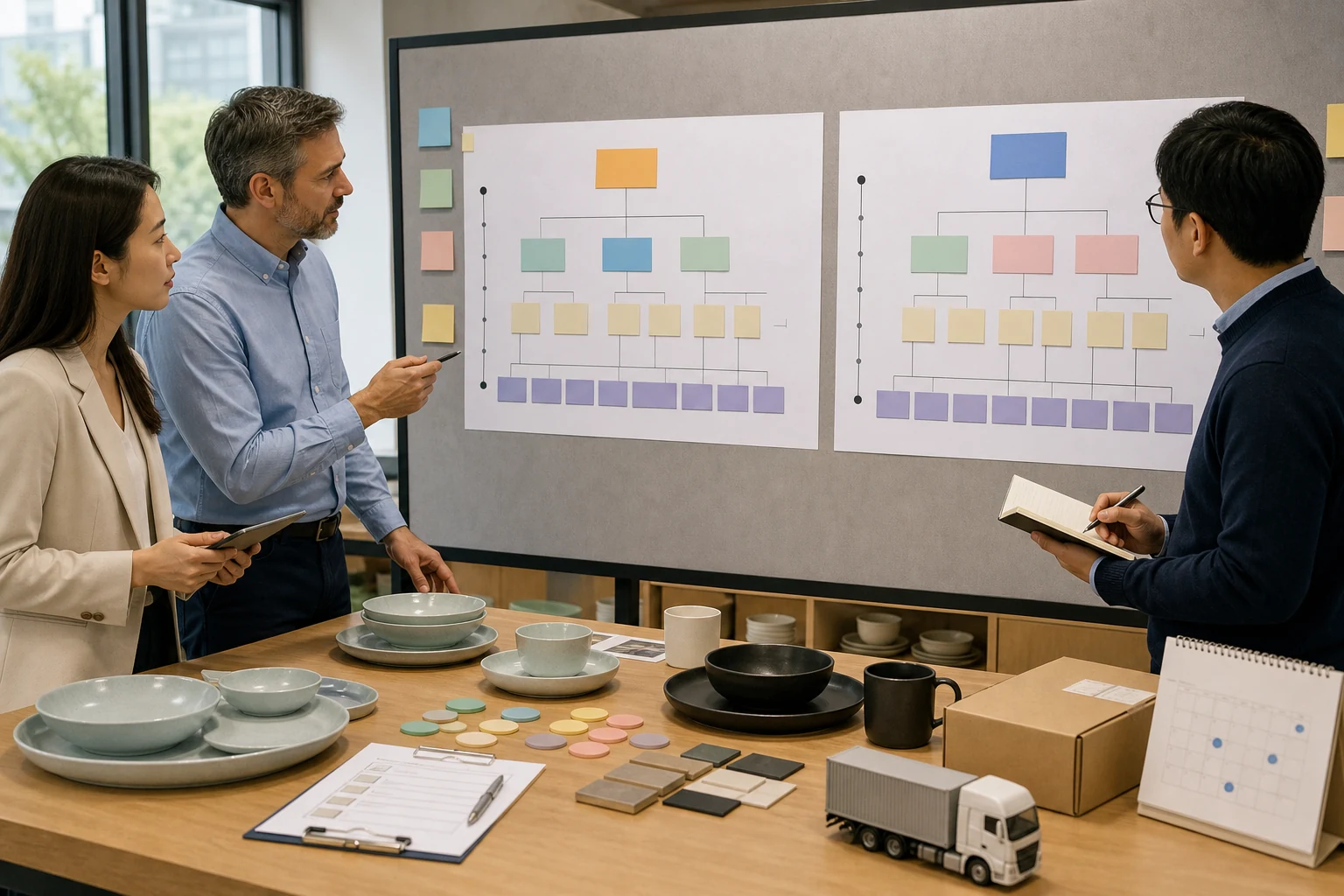
The best-fit route changes with the buyer promise, available platform, launch window, forecast confidence, and control requirements. Use the criteria below to identify trade-offs rather than declare one universal winner.
| Decision criterion | Private label best fit | Custom mold best fit | Decision evidence |
|---|---|---|---|
| Product change | Color, logo, assortment, or packaging | New geometry, dimensions, interfaces, or function | Approved requirement map |
| Launch timing | Available platform meets mandatory needs | Schedule can absorb engineering and trials | Milestone plan with owners |
| Investment | Buyer limits one-time development exposure | Buyer funds a longer-lived proprietary platform | Scenario cost model |
| Differentiation | Presentation and brand assets create value | Product architecture creates essential value | Customer promise and sales case |
| Control | Factory platform limits structural change | Tooling and design terms support defined control | Contract and operating records |
| Evidence | Existing evidence can be matched to exact scope | New article evidence is planned and funded | Market-specific evidence matrix |
| Demand | Volume is uncertain or fragmented | Repeat volume supports investment and complexity | SKU-level forecast scenarios |
B2B Buyer Route-Selection Checklist
Complete these eight checks before approving private label or a custom mold. Any unresolved mandatory item should become a dated action or stop the route decision.
| Check | Question | Why It Matters |
|---|---|---|
| Buyer promise | Can an existing geometry deliver every mandatory customer outcome? | Separates presentation changes from product changes. |
| Scope | Are product, branding, packaging, evidence, and deliverables itemized? | Makes quotations comparable. |
| Timing | Do milestones include buyer inputs, samples, corrections, and release dates? | Protects the launch path. |
| Economics | Are one-time, recurring, conditional, and exit costs modeled by scenario? | Shows risk-adjusted program cost. |
| Ownership | Are tools, files, brand assets, maintenance, use, and transfer terms clear? | Defines practical control. |
| Quality | Are functions, defects, dimensions, approved samples, and inspection rules set? | Supports repeatable acceptance. |
| Evidence | Does the plan match the exact material, article, use, market, and claims? | Avoids unsupported compliance assumptions. |
| Change control | Who approves changes and what triggers samples, tests, repricing, or new tools? | Prevents scope drift after approval. |
Official Sources That Frame Route Responsibilities
Official sources clarify selected brand, licensing, and food-contact questions, but they do not choose a development route or replace product-specific professional review. Use them to define questions and evidence owners before contract and purchase-order approval.
The USPTO trademark basics explains that names, logos, and source identifiers involve trademark questions distinct from product design or tooling ownership. Buyers should protect and authorize brand assets deliberately rather than assume a private-label purchase settles all intellectual-property rights.
The WIPO technology licensing guide outlines issues commonly considered when preparing and negotiating licensing arrangements. It can help buyers recognize that use rights, know-how, territory, duration, confidentiality, improvements, and termination deserve qualified legal review instead of informal promises.
The FDA food types and conditions-of-use resource illustrates why food category and use condition belong in a food-contact evidence scope. Neither an existing mold nor a newly built mold proves suitability without matching the exact material, article, intended use, and applicable authorization pathway.
Practical disclaimer: this comparison supports sourcing and manufacturing decisions, not legal, intellectual-property, regulatory, tax, customs, testing, or engineering advice. Confirm current rights, contracts, market rules, evidence, product requirements, and commercial terms with qualified professionals.
Build a Route Decision Record Before Paying a Deposit
Create one controlled record containing the buyer promise, mandatory requirements, route options, approved samples, cost scenarios, milestone plan, ownership terms, evidence matrix, and unresolved actions. This record should explain why the selected route fits the project today.
Ask the factory to state the three assumptions most likely to change cost and the three approvals most likely to delay launch. Assign an owner and decision date to each item before tooling, branded packaging, or production deposits become non-recoverable.
For a private-label route, attach the exact factory item reference, approved material and color, logo method, packaging files, assortment, quality limits, evidence scope, quantity basis, and production sample. Record which parts of the platform the factory may change and which changes require buyer notice or reapproval. This prevents a familiar catalog item from becoming an uncontrolled specification after the first order.
For a custom mold route, attach released product data, tool specifications, ownership terms, trial stages, correction rules, critical dimensions, counterpart samples, functional tests, evidence responsibilities, and maintenance expectations. Link each payment milestone to named deliverables and an authorized approval. This gives procurement a practical basis for releasing deposits and resolving later change requests.
Review the selected route again at sample approval and before purchase-order release. If the forecast, market, use condition, claim, packaging, product requirement, or delivery date has changed, update the economics and risks instead of carrying the original decision forward. A controlled reevaluation is cheaper than discovering after tooling or inventory that the project is following the wrong route.
Private Label and Custom Mold Buyer FAQ
Can private-label tableware use a custom color and logo?
Often yes, subject to material, pigment, decoration method, setup, quantity, durability, and approval limits. The buyer should obtain samples and itemized assumptions before treating those changes as production-ready.
When does a private-label change become custom tooling?
It becomes tooling work when the requested result changes molded geometry or needs a new insert, cavity, mold, gauge, or structural fixture. The factory should explain the boundary and quote affected development stages separately.
Who owns a mold paid for by the buyer?
Payment alone does not answer every ownership, use, maintenance, file, transfer, or jurisdiction question. Put the agreed rights and operating responsibilities in reviewed written terms before deposit.
Is a new mold always more expensive per unit?
Not necessarily, because geometry, cavities, cycle, material, yield, labor, decoration, and volume affect unit economics. The custom route usually adds one-time investment and development risk that must be compared with recurring costs over realistic demand scenarios.
Can buyers launch private label first and develop a custom item later?
Yes when the existing product honestly meets the first launch promise and the brand avoids unsupported exclusivity claims. Use launch evidence to define the later custom requirements, but control packaging inventory and customer expectations during the transition.
Choose the Route That Protects the Next Commercial Decision
Private label is a strong fit when an existing product platform satisfies mandatory function, use, market, quality, and channel needs and differentiation can come from color, brand, assortment, or packaging. A custom mold is stronger when unique geometry or controlled performance is central to what the buyer sells and the forecast can support development investment and approval work.
The private label vs custom mold comparison should therefore end with a controlled route record, not a general preference for speed or exclusivity. The selected option must show comparable scope, milestones, scenario economics, ownership responsibilities, evidence, quality controls, and change triggers.
Approve only the work needed to reach the next reliable decision. That may be a private-label color sample, an engineering review, a prototype, a tooling quotation, or a complete production-intent package, depending on which uncertainty must be removed first.
Request a Tableware Development Route Review
Share the buyer promise, mandatory features, forecast, target market, launch date, branding, packaging, evidence needs, and available files. Our manufacturing team can identify which requirements fit a private-label platform and which require custom engineering or tooling.
Request a Custom Quote
Share your product, quantity, target market and customization needs. Our factory team will reply with the next practical step.
Continue Your Sourcing Research
The six newest factory-side articles are updated automatically by publication date.
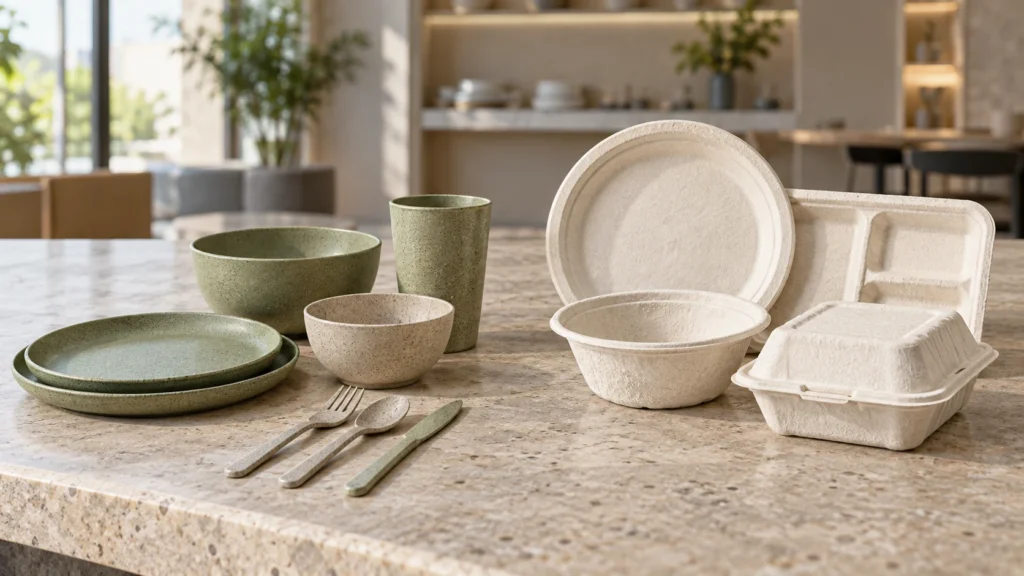
Wheat Straw vs Bagasse Tableware: Buyer Comparison
A B2B decision guide comparing reusable wheat-straw polypropylene composite tableware with molded bagasse fiber formats across use, evidence, operations and end of life.
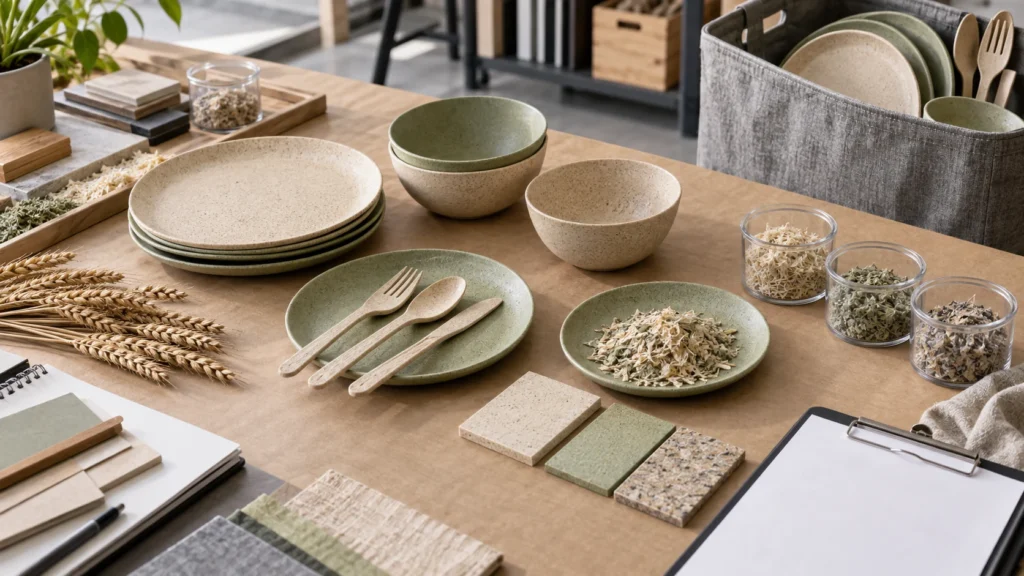
Can Wheat Straw Tableware Be Recycled? Buyer Q&A
A practical buyer answer on whether reusable wheat-straw composite tableware can enter PP recycling streams, which evidence matters, and how to qualify market claims.

Global SKU vs Regional SKU: Tableware Decision Guide
A buyer decision framework for choosing one global tableware SKU or controlled regional variants across compliance, packaging, logistics, inventory and change control.

Australia Food Packaging Evidence: Buyer Guide
A practical evidence guide for Australian food-packaging buyers covering intended use, migration risk, supplier assurance, testing, hygiene, release and change control.
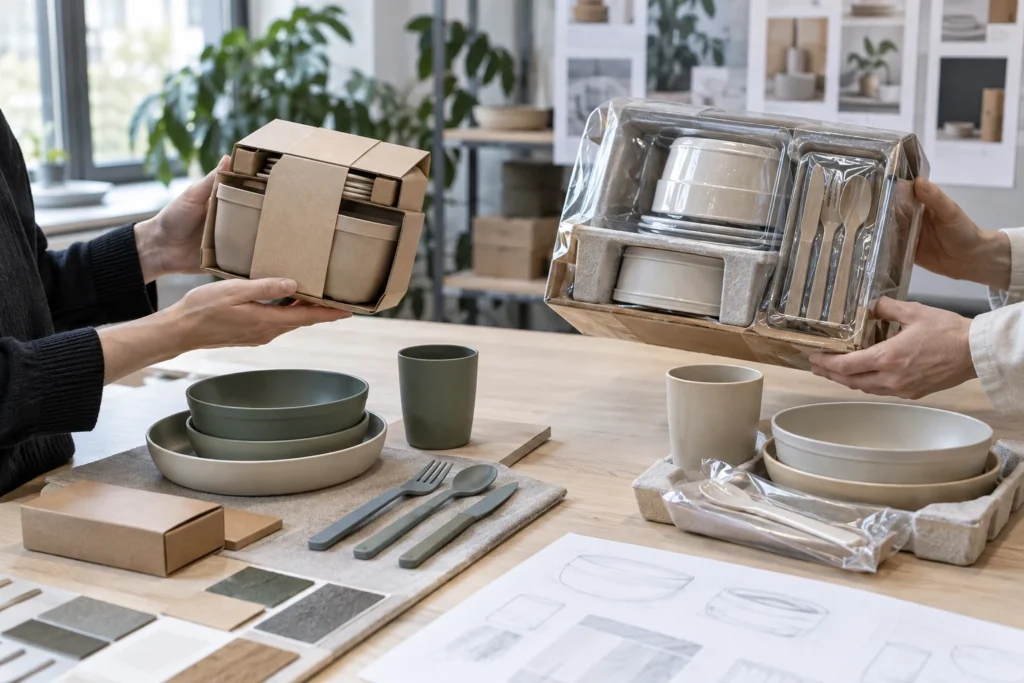
EU PPWR Tableware Packaging vs Conventional Packs
A buyer comparison of PPWR-ready and conventional tableware packaging across product protection, material choices, empty space, evidence, labeling and release timing.
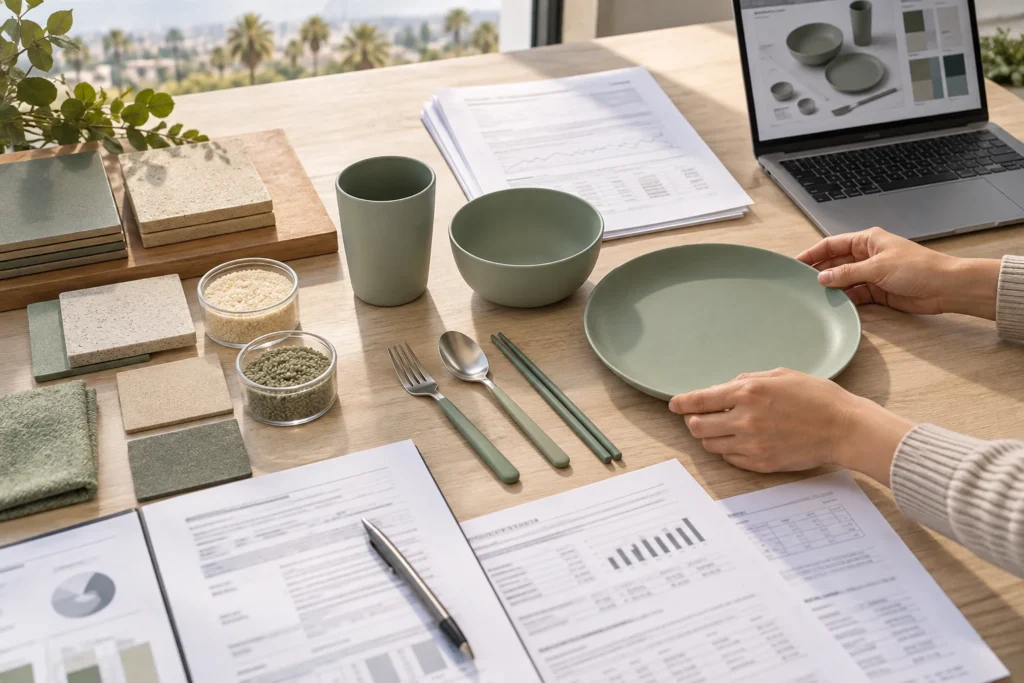
Prop 65 Tableware Requirements: Buyer Q&A
A practical buyer Q&A for defining California Proposition 65 exposure scenarios, evidence, warning decisions, supplier records and release controls for tableware.