
Eco-Friendly Tableware Market 2026: Buyer Outlook
A sourcing outlook for brands and distributors turning sustainability demand into verifiable material, product, packaging and market claims.
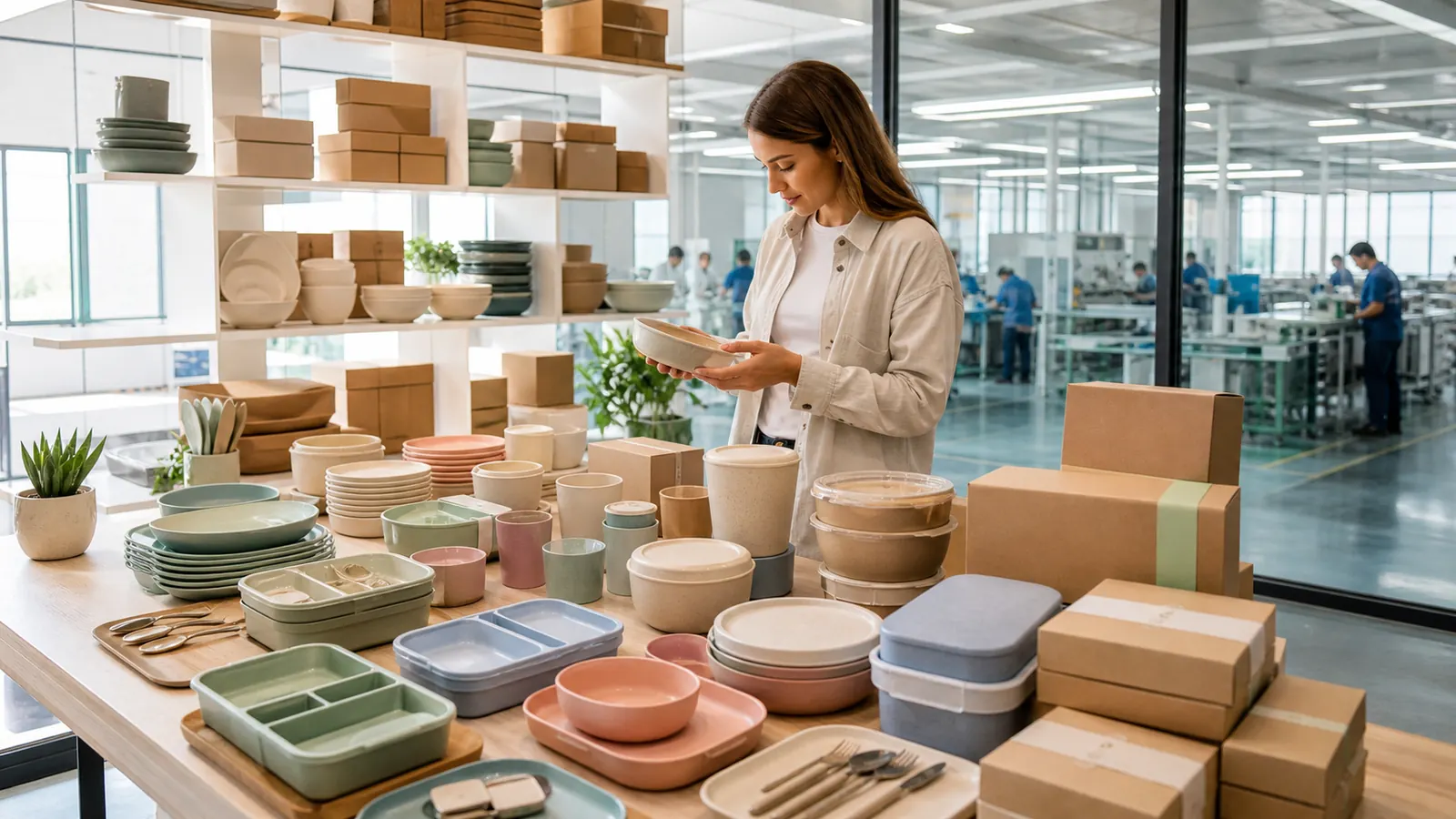
The eco-friendly tableware market 2026 is not one clean category with one reliable global value. Published estimates often mix disposable plates, compostable food-service items, durable reusable dinnerware, drinkware, lunch boxes and baby feeding products, so B2B buyers should compare scope before using a market-size number in a sourcing plan.
From the Naike Group manufacturing team’s view, the more useful signals are regulation, retailer claim standards, consumer reuse behavior, promotional-industry demand and the economics of a specific product channel. Those signals point to opportunities, but they also raise the cost of unsupported environmental language.
This outlook focuses on reusable wheat-straw composite and silicone tableware for North America, Europe and Australia. Buyers can translate the themes into products through our catalog, custom solutions and private-label packaging programs.
Factory insider takeaway: Do not source a product because a market report calls the category fast-growing. Define the channel, target consumer, measurable environmental claim, use cycle, compliance route and landed-cost threshold, then validate the product with real buyers.
Define the Eco-Friendly Tableware Market 2026 Before Using Its Size
Market reports can produce very different totals because they use different boundaries. Some include disposable paper and bagasse food-service ware, others include reusable plastic and ceramic dinnerware, and some combine plates, cups, cutlery, storage and packaging under one headline.
A buyer should record product lifespan, material families, end-use channels, geography, price basis and forecast period before comparing two estimates. Without that scope, a large market number may describe a category the proposed silicone feeding set or wheat-straw lunch box does not actually serve.
Use top-down figures only as context, then build a bottom-up opportunity model. Estimate reachable accounts, annual programs, expected units, replacement cycle, average selling price, gross margin, testing cost, tooling, logistics and the conversion rate that the sales team can realistically achieve.
Separate demand from addressable supply. Strong consumer interest can coexist with retailer resistance when claims are unclear, product performance is weak or the premium exceeds the channel’s price architecture.
How to compare sustainable dinnerware trends without false precision
Prefer transparent sources that define the survey, sample and category. Treat proprietary forecasts as directional unless the methodology and tableware scope are available for review.
Track leading indicators such as retailer assortment, search interest, tender requirements, reusable-service systems, corporate gifting demand and regulatory changes. A consistent group of signals is more actionable than one dramatic growth rate.

Read North America, Europe and Australia Through Different Demand Drivers
North American demand is fragmented by retailer, state, province and consumer segment. Durable lunch systems, baby feeding products, outdoor tableware and corporate merchandise can perform well, while environmental claims need substantiation and product compliance must match U.S. or Canadian requirements.
Europe combines strong policy attention to waste and circularity with country-level differences in food-contact, labeling, language and retailer expectations. Buyers should not assume one test report or disposal claim works across every member state and sales channel.
Australia has active retailer and consumer interest in reusable products alongside strict expectations for truthful environmental claims and imported-product safety. Distance from Asian manufacturing makes carton efficiency, demand planning and replacement availability especially important to landed cost.
Regional assortment planning should preserve a common manufacturing platform where possible while allowing colors, set composition, packaging language and test scope to vary. This reduces tooling complexity without forcing one product story into markets that evaluate value differently.
A regional launch sequence for reusable tableware
Start with one priority market and channel, validate the use case and collect complaint or return data before expanding claims and variants. A controlled pilot reveals whether the buyer’s sustainability message survives price, function and cleaning expectations.
When expanding, run a gap review for compliance, artwork, language, barcodes, recycling or disposal instructions and packaging. Do not simply place a new flag on the same retail box.
Position Wheat-Straw Composite and Silicone by Function, Not Buzzword
Wheat-straw composite can provide a recognizable natural-fiber story, muted visual texture and lightweight reusable format for plates, bowls, cups, cutlery and lunch products. The actual construction still includes a polymer system and additives, so claims must describe the material accurately.
Silicone supports flexible, heat-resistant and soft-touch designs used in baby feeding, kitchen tools, molds and collapsible products. Its commercial strength comes from function and durability; “eco-friendly silicone” is too broad unless the buyer defines the comparison and supporting evidence.
PP remains relevant because it is lightweight, durable, cost-effective and widely understood in manufacturing. A lower-impact decision may come from long service life, efficient design and reduced packaging rather than replacing PP with a material that performs poorly for the use case.
Bamboo-fiber or other plant-filled composites also require formulation clarity. Buyers should avoid implying that a composite item is pure plant material, biodegradable or compostable unless the finished article and disposal pathway substantiate that specific claim.
How to create a defensible material comparison
Compare service life, weight, breakage, heat exposure, cleaning, food-contact route, packaging, end-of-life options and consumer instructions under the same functional unit. A material percentage alone does not describe the full product impact.
Ask the factory for formulation and process information that can be disclosed, then have environmental claims reviewed for the destination market. Product design should be frozen only after the evidence and marketing language can coexist.

Follow Channel Hotspots Where Reuse Solves a Clear Buyer Problem
Outdoor and camping programs value stackability, low weight, component retention and easy cleaning. A coordinated wheat-straw set can support the channel when packed dimensions and durability are proven rather than assumed from lifestyle photography.
Baby feeding products value soft edges, suction, portion design, easy cleaning and gift-ready presentation. Silicone sets can command stronger positioning when the buyer controls odor, fit, color consistency and food-contact documentation.
Corporate gifting and promotional merchandise look for useful products that carry a brand story over repeated use. Lunch boxes, cups and cutlery sets offer visible branding surfaces, but program success depends on packaging, lead time and consistent color across components.
Private-label retail and e-commerce require shelf or screen appeal plus transit protection. Sets should be engineered around carton size, insert material, drop performance, barcode location, photography and replacement risk before the first large order.
Why category growth does not guarantee SKU success
A broad trend cannot rescue a product with poor suction, inconvenient cleaning, weak closures or confusing claims. Buyers need review samples, user testing and channel-specific price validation.
Reduce the first assortment to a few clear jobs rather than many colors and minor variants. A focused launch generates cleaner data for repeat orders and new-mold decisions.
Expect More Evidence Behind Recycled, Reusable and Plant-Based Claims
Regulators and corporate buyers increasingly challenge vague sustainability language. Terms such as green, eco-friendly, natural, biodegradable and plastic-free can be misleading when the claim lacks a defined attribute, comparison, boundary and disposal condition.
For wheat-straw composite, state the relevant material description and avoid suggesting that the item is entirely fiber. For reusable products, explain intended use and care without promising a number of cycles that has not been tested.
Packaging should not make a product claim stronger than the technical file. Keep material declarations, test reports, supplier records, durability evidence and approved artwork linked through revision control.
Corporate programs may also request social and environmental information about the factory. Product claims and supplier-responsibility evidence should be managed as related but separate files, each with a clear scope.
A claim approval workflow for B2B tableware
Draft the proposed claim early, identify the evidence needed, assign legal or compliance review, and prevent final artwork release until the wording is approved. Late review can force reprinting or shipment delay.
Monitor complaints and new guidance after launch. A claim that was accepted for one market or customer may require revision before expansion.

Turn the 2026 Outlook into a Controlled Product Portfolio
Build a platform around shared materials, colors, components and packaging dimensions so the factory can scale without creating unnecessary molds and inventory. Product architecture should support channel variation while keeping critical manufacturing controls stable.
Use a stage-gate portfolio: opportunity brief, feasibility, costed concept, sample, compliance review, pilot, launch and performance review. Stop weak concepts before tooling and packaging consume the budget needed for stronger programs.
Track commercial metrics by SKU and channel, including sample-to-order conversion, gross margin, on-time delivery, inspection result, return reason, repeat rate and claim questions. These measures show whether the market thesis is becoming a reliable business.
Plan for updates rather than endless novelty. New colors, coordinated accessories, packaging refreshes and improved stackability can extend a platform when user data supports the change, while uncontrolled variant growth creates small batches and inconsistent evidence.
How Naike Group reviews a market-led product brief
Our factory needs the target consumer, market, channel, intended use, quantity, price direction, material preference, customization and compliance priorities. We then review whether an existing product, modified set or new mold offers the most practical path.
Buyers can start with the private-label wheat-straw guide or submit a new concept through Contact Us. Our factory team can then translate the selected opportunity into a controlled product and validation brief.
2026 Tableware Opportunity Comparison by B2B Channel
The matrix compares practical demand conditions rather than claiming one channel will outperform in every market. Record the selected comparison assumptions in the eco-friendly tableware market 2026 project brief before quotation.
| Channel | Primary Job | Strong Product Direction | Evidence Priority | Commercial Risk |
|---|---|---|---|---|
| Outdoor & camping | Portable meals and repeated travel use | Stackable wheat-straw sets and secure lunch systems | Durability, closures, packed size and care instructions | Seasonality and performance under rough handling |
| Baby feeding | Safe-feeling, convenient daily feeding | Silicone bowls, plates, bibs, cups and spoons | Food-contact route, odor, suction, cleaning and age claims | High return sensitivity and retailer documentation |
| Corporate gifting | Useful branded merchandise with a responsible story | Lunch boxes, cups, cutlery and coordinated gift sets | Material claim, logo durability, packaging and social compliance | Event deadlines and price pressure |
| Private-label retail | Differentiated assortment at a defined shelf price | Coordinated dinnerware and kitchen sets | Claims, packaging, barcode, inspection and replenishment | Markdown risk and variant complexity |
| E-commerce | Visual discovery and direct delivery | Compact sets with clear functional demonstrations | Drop protection, listing accuracy and replacement parts | Transit damage and review-driven returns |
B2B Buyer Checklist for the Eco-Friendly Tableware Market 2026
Use the questions to convert a trend into a product opportunity that can be manufactured, supported and defended. Record every answer against the current eco-friendly tableware market 2026 project assumptions and approval owner.
| Check | Question | Why It Matters |
|---|---|---|
| Market scope | Which products, channels, geographies and price basis define the opportunity? | Market-size comparisons are misleading when category boundaries differ. |
| Consumer job | What practical problem will the product solve repeatedly? | Functional value supports reuse and protects the program from trend fatigue. |
| Material truth | Can the complete material construction be described accurately? | Plant-filled and silicone products require more precise language than a green label. |
| Claim evidence | What test, declaration or calculation supports each environmental claim? | Unsupported claims can create retailer, regulatory and reputational risk. |
| Durability | Which use, cleaning, heat and handling cycles should the product survive? | Reuse value depends on actual service performance. |
| Compliance | Which food-contact and product requirements apply in the destination market? | Market growth does not remove importer responsibility. |
| Channel economics | Do landed cost, margin, packaging and return assumptions fit the channel? | A compelling story still fails when the price architecture is unrealistic. |
| Pilot design | What minimum launch can validate demand without excessive variants? | Focused pilots generate cleaner evidence for scaling. |
| Factory route | Can existing molds meet the need, or is new tooling commercially justified? | Tooling should follow validated differentiation and volume. |
| Performance review | Which sales, quality, return and repeat-order metrics will govern expansion? | A portfolio needs measurable stop, improve and scale decisions. |
Factory Control Notes for eco-friendly tableware market 2026
These controls help a sourcing team test its market assumptions before committing to molds, inventory and environmental claims. Each eco-friendly tableware market 2026 decision should identify its owner, evidence and release condition.
1. Market scope control for eco-friendly tableware market 2026
For eco-friendly tableware market 2026, the market scope checkpoint must become a dated project record rather than an informal chat instruction. The buyer should ask, “Which products, channels, geographies and price basis define the opportunity?” and then require the answer to identify the responsible person, the controlling document, the evidence available at that stage and the point at which a change would affect cost or schedule.
Market-size comparisons are misleading when category boundaries differ. For the market scope decision in this eco-friendly tableware market 2026 project, our factory links the checkpoint to the quotation, approved sample, purchase order or inspection standard that governs the next approval. If the eco-friendly tableware market 2026 evidence is incomplete, the team holds that approval gate, closes the information gap and records the revised assumption before production continues.
2. Consumer job control for eco-friendly tableware market 2026
For eco-friendly tableware market 2026, the consumer job checkpoint must become a dated project record rather than an informal chat instruction. The buyer should ask, “What practical problem will the product solve repeatedly?” and then require the answer to identify the responsible person, the controlling document, the evidence available at that stage and the point at which a change would affect cost or schedule.
Functional value supports reuse and protects the program from trend fatigue. For the consumer job decision in this eco-friendly tableware market 2026 project, our factory links the checkpoint to the quotation, approved sample, purchase order or inspection standard that governs the next approval. If the eco-friendly tableware market 2026 evidence is incomplete, the team holds that approval gate, closes the information gap and records the revised assumption before production continues.
3. Material truth control for eco-friendly tableware market 2026
For eco-friendly tableware market 2026, the material truth checkpoint must become a dated project record rather than an informal chat instruction. The buyer should ask, “Can the complete material construction be described accurately?” and then require the answer to identify the responsible person, the controlling document, the evidence available at that stage and the point at which a change would affect cost or schedule.
Plant-filled and silicone products require more precise language than a green label. For the material truth decision in this eco-friendly tableware market 2026 project, our factory links the checkpoint to the quotation, approved sample, purchase order or inspection standard that governs the next approval. If the eco-friendly tableware market 2026 evidence is incomplete, the team holds that approval gate, closes the information gap and records the revised assumption before production continues.
4. Claim evidence control for eco-friendly tableware market 2026
For eco-friendly tableware market 2026, the claim evidence checkpoint must become a dated project record rather than an informal chat instruction. The buyer should ask, “What test, declaration or calculation supports each environmental claim?” and then require the answer to identify the responsible person, the controlling document, the evidence available at that stage and the point at which a change would affect cost or schedule.
Unsupported claims can create retailer, regulatory and reputational risk. For the claim evidence decision in this eco-friendly tableware market 2026 project, our factory links the checkpoint to the quotation, approved sample, purchase order or inspection standard that governs the next approval. If the eco-friendly tableware market 2026 evidence is incomplete, the team holds that approval gate, closes the information gap and records the revised assumption before production continues.
5. Durability control for eco-friendly tableware market 2026
For eco-friendly tableware market 2026, the durability checkpoint must become a dated project record rather than an informal chat instruction. The buyer should ask, “Which use, cleaning, heat and handling cycles should the product survive?” and then require the answer to identify the responsible person, the controlling document, the evidence available at that stage and the point at which a change would affect cost or schedule.
Reuse value depends on actual service performance. For the durability decision in this eco-friendly tableware market 2026 project, our factory links the checkpoint to the quotation, approved sample, purchase order or inspection standard that governs the next approval. If the eco-friendly tableware market 2026 evidence is incomplete, the team holds that approval gate, closes the information gap and records the revised assumption before production continues.
6. Compliance control for eco-friendly tableware market 2026
For eco-friendly tableware market 2026, the compliance checkpoint must become a dated project record rather than an informal chat instruction. The buyer should ask, “Which food-contact and product requirements apply in the destination market?” and then require the answer to identify the responsible person, the controlling document, the evidence available at that stage and the point at which a change would affect cost or schedule.
Market growth does not remove importer responsibility. For the compliance decision in this eco-friendly tableware market 2026 project, our factory links the checkpoint to the quotation, approved sample, purchase order or inspection standard that governs the next approval. If the eco-friendly tableware market 2026 evidence is incomplete, the team holds that approval gate, closes the information gap and records the revised assumption before production continues.
7. Channel economics control for eco-friendly tableware market 2026
For eco-friendly tableware market 2026, the channel economics checkpoint must become a dated project record rather than an informal chat instruction. The buyer should ask, “Do landed cost, margin, packaging and return assumptions fit the channel?” and then require the answer to identify the responsible person, the controlling document, the evidence available at that stage and the point at which a change would affect cost or schedule.
A compelling story still fails when the price architecture is unrealistic. For the channel economics decision in this eco-friendly tableware market 2026 project, our factory links the checkpoint to the quotation, approved sample, purchase order or inspection standard that governs the next approval. If the eco-friendly tableware market 2026 evidence is incomplete, the team holds that approval gate, closes the information gap and records the revised assumption before production continues.
8. Pilot design control for eco-friendly tableware market 2026
For eco-friendly tableware market 2026, the pilot design checkpoint must become a dated project record rather than an informal chat instruction. The buyer should ask, “What minimum launch can validate demand without excessive variants?” and then require the answer to identify the responsible person, the controlling document, the evidence available at that stage and the point at which a change would affect cost or schedule.
Focused pilots generate cleaner evidence for scaling. For the pilot design decision in this eco-friendly tableware market 2026 project, our factory links the checkpoint to the quotation, approved sample, purchase order or inspection standard that governs the next approval. If the eco-friendly tableware market 2026 evidence is incomplete, the team holds that approval gate, closes the information gap and records the revised assumption before production continues.
9. Factory route control for eco-friendly tableware market 2026
For eco-friendly tableware market 2026, the factory route checkpoint must become a dated project record rather than an informal chat instruction. The buyer should ask, “Can existing molds meet the need, or is new tooling commercially justified?” and then require the answer to identify the responsible person, the controlling document, the evidence available at that stage and the point at which a change would affect cost or schedule.
Tooling should follow validated differentiation and volume. For the factory route decision in this eco-friendly tableware market 2026 project, our factory links the checkpoint to the quotation, approved sample, purchase order or inspection standard that governs the next approval. If the eco-friendly tableware market 2026 evidence is incomplete, the team holds that approval gate, closes the information gap and records the revised assumption before production continues.
10. Performance review control for eco-friendly tableware market 2026
For eco-friendly tableware market 2026, the performance review checkpoint must become a dated project record rather than an informal chat instruction. The buyer should ask, “Which sales, quality, return and repeat-order metrics will govern expansion?” and then require the answer to identify the responsible person, the controlling document, the evidence available at that stage and the point at which a change would affect cost or schedule.
A portfolio needs measurable stop, improve and scale decisions. For the performance review decision in this eco-friendly tableware market 2026 project, our factory links the checkpoint to the quotation, approved sample, purchase order or inspection standard that governs the next approval. If the eco-friendly tableware market 2026 evidence is incomplete, the team holds that approval gate, closes the information gap and records the revised assumption before production continues.
Authoritative References and Practical Limits
UNEP reviews policy and lifecycle considerations for replacing single-use products in its single-use product lifecycle report. Buyers should confirm how this reference applies to the named product, target market and current eco-friendly tableware market 2026 project.
The European Commission explains the objectives and implementation context of the Single-Use Plastics Directive, a major regional policy signal for waste prevention and alternatives. Buyers should confirm how this reference applies to the named product, target market and current eco-friendly tableware market 2026 project.
PPAI reported that substantiable sustainable promotional products represented an estimated $3.8 billion in U.S. distributor sales in 2025. Review the PPAI sales-volume summary for its industry scope and context. Buyers should confirm how this reference applies to the named product, target market and current eco-friendly tableware market 2026 project.
Market data uses different definitions and can change quickly. Treat cited figures as source-specific signals, not a guaranteed forecast for one tableware SKU or region.
Eco-Friendly Tableware Market 2026 FAQ
What is the global eco-friendly tableware market size in 2026?
There is no single directly comparable figure because reports define materials, disposability, reuse and channels differently. Check the scope and build a bottom-up opportunity for your product.
Which region offers the best opportunity?
North America, Europe and Australia each contain attractive segments, but regulations, claims, price points and channels differ. The best region is the one where product-market fit and compliance can be validated.
Is wheat-straw tableware biodegradable?
Do not assume that. Many reusable wheat-straw products are polymer composites. Any biodegradability or compostability claim must be specific to the finished construction and disposal conditions.
Is silicone an eco-friendly material?
That phrase is too broad without a comparison and evidence. Silicone’s commercial sustainability story is usually linked to durable repeated use, but the product, lifespan and claim basis should be defined.
Can Naike Group develop a market-specific assortment?
Yes. Send the consumer, country, channel, quantity, material, target price and claims through Contact Us so our team can review existing products and custom routes.
Conclusion: Use the Eco-Friendly Tableware Market 2026 as a Testable Thesis
The eco-friendly tableware market 2026 offers real B2B opportunities, but category growth does not choose the right material, claim, channel or SKU. Buyers need transparent scope, functional product value and a bottom-up commercial model.
A credible program connects material truth, durability, food-contact compliance, packaging, factory controls and claim review. It then uses pilot data to decide whether the assortment should scale, change or stop.
Naike Group can translate a defined market brief into an existing-product, modified-set or new-mold proposal. The sharper the channel and evidence requirements, the more useful the factory quotation will be.
Turn a 2026 Market Opportunity into a Product Brief
Send your target region, buyer profile, channel, material direction, quantity and environmental claim priorities for a factory feasibility review. Our manufacturing team will use those details to define the next review step for your eco-friendly tableware market 2026 project.
Request a Custom Quote
Share your product, quantity, target market and customization needs. Our factory team will reply with the next practical step.
Continue Your Sourcing Research
The six newest factory-side articles are updated automatically by publication date.

How to Verify Wheat Straw Fiber Content Claims
A factory-side evidence guide for buyers assessing wheat straw percentage claims, mass-balance records, laboratory methods and change control.
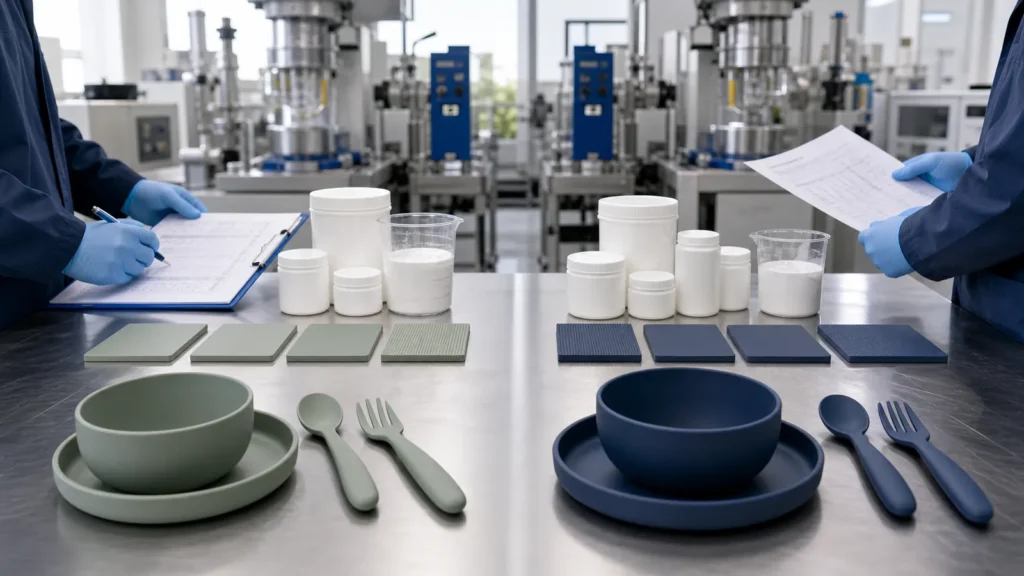
Platinum Cured vs Peroxide Cured Silicone: Buyer Comparison
A decision-focused comparison of platinum-addition and peroxide cure systems for custom silicone tableware, including process, evidence and sourcing tradeoffs.
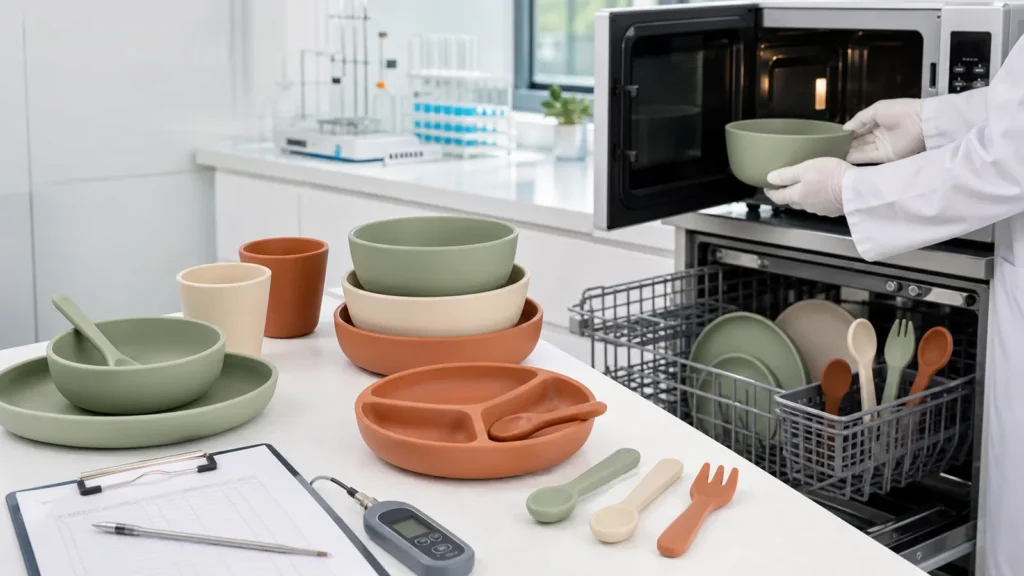
Is Silicone Tableware Microwave Safe and Dishwasher Safe?
A buyer-focused answer on when silicone tableware can be used in microwaves and dishwashers, what evidence matters, and how to validate a custom product.
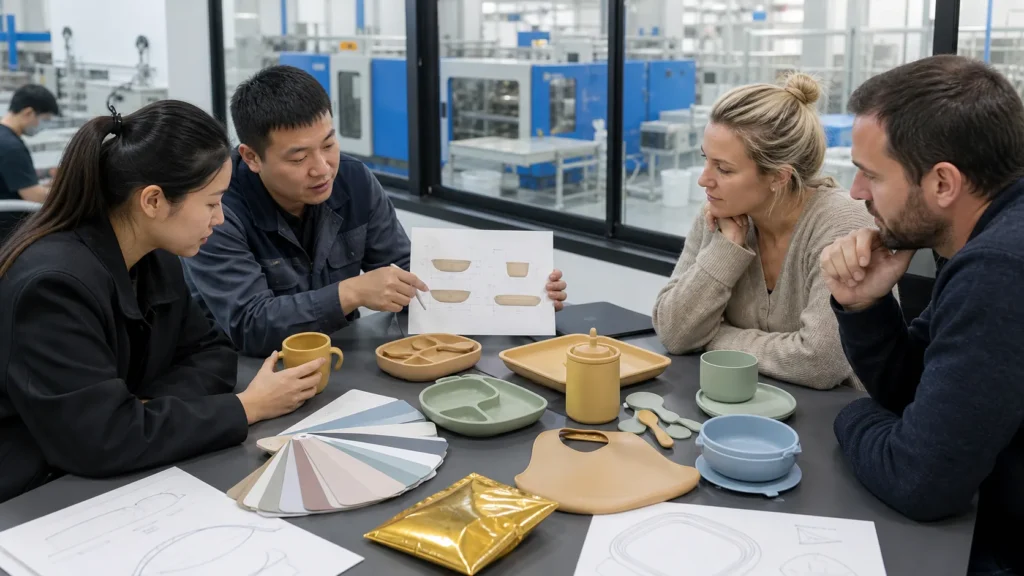
Custom Tableware Sample Approval: Golden Sample Guide
A stage-gate factory guide to drawings, prototypes, tooling trials, packaging samples, golden samples and production release for custom tableware.
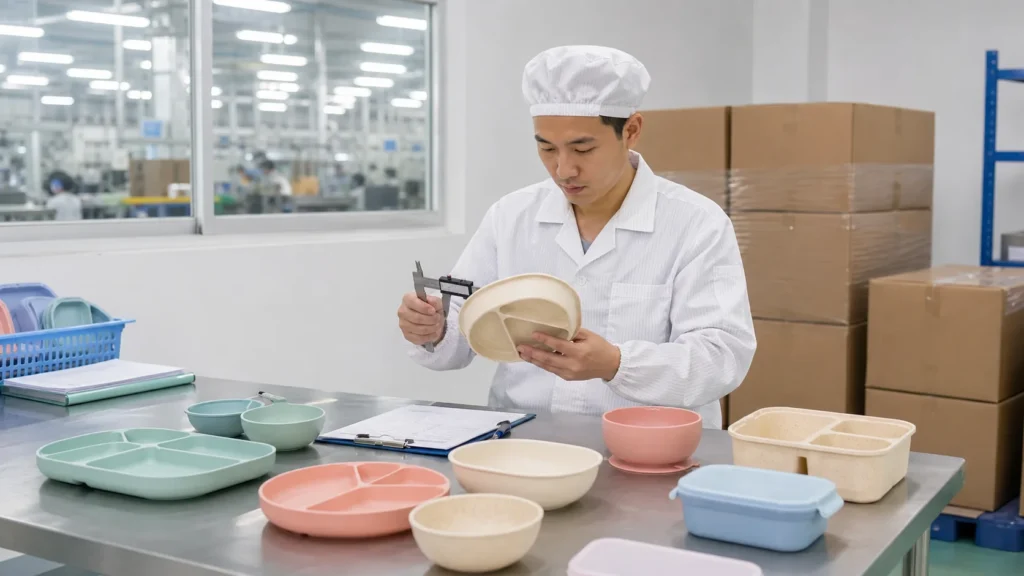
Tableware AQL Inspection: Buyer Guide
A factory-side guide to defect classification, sampling levels, acceptance limits and evidence for silicone and wheat-straw tableware shipments.
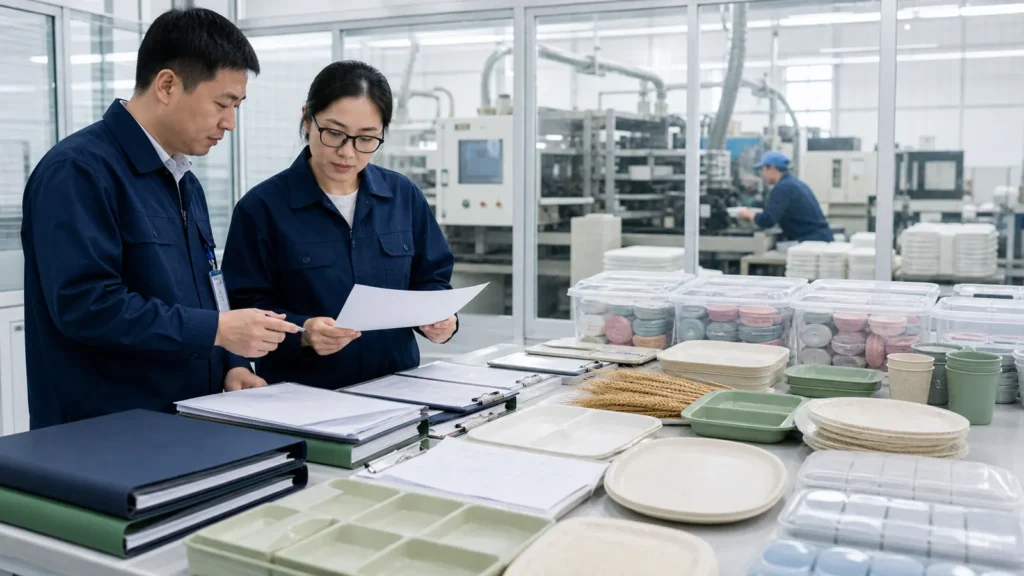
Food Contact Tableware Traceability: Buyer Guide
A factory-insider guide to material identity, declarations, test reports, batch records, change control and shipment traceability for B2B tableware buyers.