
Custom Tooling Quotation Evidence: Buyer Guide
Turn a tooling price into an auditable development offer by requiring evidence for scope, assumptions, deliverables, ownership, trials, and release criteria.

The essential custom tooling quotation evidence is a controlled product revision, itemized mold specification, design and manufacturing assumptions, priced deliverables, trial and correction plan, ownership and maintenance terms, milestone schedule, and acceptance evidence. A total price without these records cannot show what the buyer owns, what remains provisional, or what triggers added cost.
Evidence does not mean collecting decorative certificates. It means having records that let procurement reconstruct the quoted scope, compare bidders on the same basis, verify each payment milestone, and distinguish buyer changes from supplier corrections.
Buyers can send drawings, reference samples, volume scenarios, material, markets, critical functions, and draft tooling terms for an evidence-gap review. The factory response should identify missing inputs before presenting a production-intent tooling price.
Buyer Answer: What Proof Should Support a Tooling Quote?
Require the quote to reference the exact 2D and 3D revision, material and shrinkage basis, mold type, steel or tool material, cavities, parting and gate concept, expected process, included design work, trials, samples, corrections, gauges, files, ownership, maintenance, timing, payment milestones, and acceptance criteria. Every assumption should have an owner and a repricing trigger.
Also require evidence maturity labels. Separate buyer-approved facts, supplier engineering proposals, budget assumptions, pending manufacturability review, third-party documents, and future trial results so an early estimate is not mistaken for a released tool contract.
Evidence Layer 1: Prove the Quoted Scope and Deliverables
Start with a quotation index that names every priced item and attachment. The index should include product references, mold or insert count, cavities, fixtures, gauges, prototypes, trial quantities, reports, files, packaging for samples, and transport responsibility. A line called tooling is too broad to approve or compare.
Identify which engineering activities are included before tool manufacture. Does the supplier review draft, wall thickness, undercuts, shrinkage, parting, gates, ejection, cooling, venting, texture, deformation, fit, and automation needs. If these activities are excluded or provisional, the quote should state who performs them and when cost can change.
Define every tangible and digital deliverable. Buyers may need tool identification, mold data sheet, approved 2D and 3D files, bill of materials, steel or material records, sample reports, dimensional results, process settings, maintenance instructions, spare-part list, photographs, and release records. The quotation should not promise all documentation unless each deliverable is actually available and agreed.
Separate buyer-supplied, factory-supplied, and third-party work. Reference products, counterpart parts, final CAD, artwork, test methods, laboratories, shipping, and inspection may belong to different parties. A responsibility matrix prevents two suppliers from omitting the same task while both assume the buyer will provide it.
State what is explicitly outside the price. Product redesign, buyer-requested geometry changes, new materials, additional cavities, new decoration fixtures, extra trials, expedited freight, travel, storage after inactivity, transfer work, and market-specific tests may be conditional. Exclusions are evidence of commercial boundaries, not fine print to ignore.
Require revision control on the quotation itself. The price, attachments, assumptions, and response log need a date and revision so later email clarifications do not silently change the basis. Procurement should attach the accepted version to the purchase order and preserve superseded versions for change analysis.
A scope statement is evidence only when it is testable
Replace phrases such as complete mold, standard trial, or all drawings with quantities, formats, stages, and acceptance conditions. A buyer should be able to point to the record that proves a promised deliverable was received.
The custom mold and tooling capability page helps frame questions about development work. The project quotation still needs an exact scope tied to the selected product, material, process, and commercial arrangement.
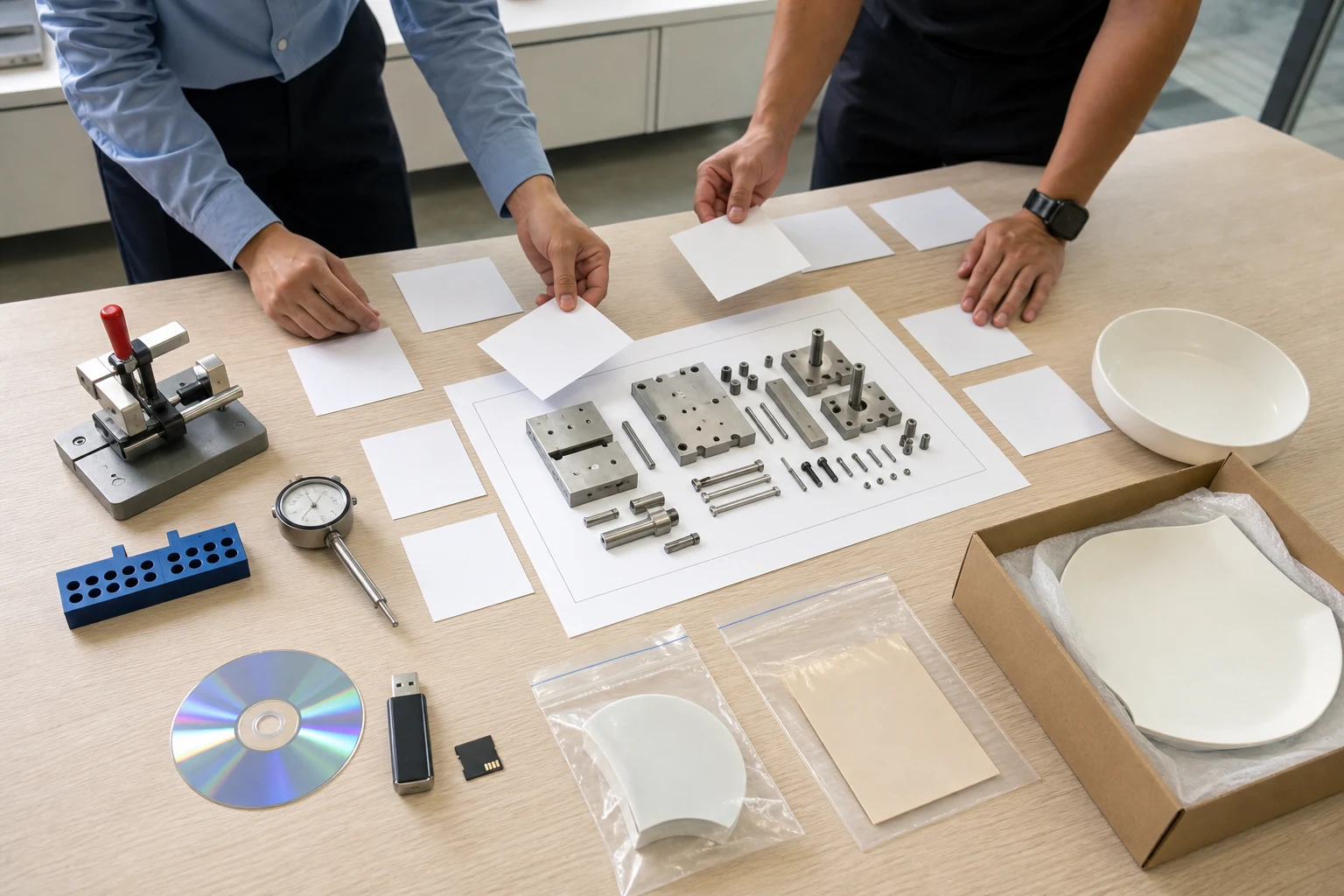
Evidence Layer 2: Freeze Engineering Inputs and Assumptions
Reference the exact product geometry that was reviewed. File names, units, revision, release status, and owner should be listed, along with any physical sample used to interpret the design. A rendering or unlabeled sample may support discussion but cannot establish controlled dimensions or interfaces.
Document the material and process basis. Polymer grade or family, additives, color route, shrinkage assumption, expected molding process, temperature exposure, post-processing, decoration, and assembly can influence the tool design. If the final material is pending, quote named scenarios and identify the validation required before steel release.
Mark critical dimensions, tolerances, fits, seals, stack relationships, capacities, wall sections, and cosmetic surfaces. These requirements affect cavities, tool construction, correction risk, measurement methods, and acceptance. Unmarked requirements tend to become expensive discoveries after the first tooling trial.
Record manufacturability findings as evidence, not informal advice. Each identified undercut, thin wall, draft concern, sink risk, parting witness, gate mark, ejection mark, deformation risk, or texture limitation should have a proposed disposition. The buyer must know which risks were accepted, redesigned, or left for trial evaluation.
Define the cavity and output assumptions used in the commercial offer. The quotation should show whether cavities, family tooling, cycle estimate, machine size, automation, changeovers, and yield are confirmed or preliminary. A high-cavity price can be misleading when the product or forecast cannot support the proposed layout.
List the unanswered engineering questions and their deadlines. Each question should name the person who supplies information, the person who approves the resolution, and the cost or schedule consequence of delay. This converts uncertainty into controlled actions rather than hidden contingency.
Custom tooling quotation evidence must identify maturity
Label files and decisions as concept, supplier proposal, buyer reviewed, released for tool design, released for manufacture, trial result, corrected, or finally accepted. A quotation can be commercially useful at an early stage only when its uncertainty is visible.
For projects with incomplete inputs, use the custom solutions pathway to frame a staged engineering and tooling proposal rather than one false-precision total. The first stage can close design and manufacturability questions before the buyer authorizes irreversible tool manufacture.
Evidence Layer 3: Define Trials, Corrections, and Acceptance
Name each planned trial and what it is intended to prove. A first tool trial may check fill, ejection, parting, gates, dimensions, and obvious defects, while later trials may address corrections, color, texture, function, assembly, packaging, or production stability. Calling every event a sample round hides different evidence and approval needs.
Specify the sample quantity and identity delivered from each trial. Parts should be linked to the tool, cavity, material, color, date, process condition, and correction status where those facts matter. Mixed or unlabeled samples cannot support a reliable dimensional or functional decision.
Define the inspection and functional evidence required with trial parts. Dimensional reports, cavity mapping, photographs, appearance review, fit checks, leakage, suction, stack, load, capacity, assembly, or use simulations should follow agreed methods. The quotation should distinguish factory process evidence from independent laboratory or third-party evidence.
Separate supplier corrections from buyer changes. A tool that misses a released requirement should follow the agreed correction path, while a buyer-requested geometry, tolerance, appearance, material, or interface change may require repricing. The quote should describe who determines the cause and what evidence supports that decision.
Set the number and scope of included trial and correction cycles without implying that defects become acceptable after a limit. Included commercial cycles define price, while product requirements define acceptance. Unresolved supplier nonconformance and new buyer scope must remain distinct in the change record.
State the final acceptance package before tooling payment is complete. It may include approved samples, measured results, functional records, process window, tool photographs, identification, file handover, maintenance information, and a signed release. Payment should follow verified deliverables rather than calendar dates alone.
Trial evidence should answer one release question at a time
For each gate, write the decision as approve, approve with documented deviation, correct and resubmit, or buyer change requiring a new quote. Avoid approvals that merely say looks good without identifying the sample and requirement baseline.
The factory process record explains how trial parts were produced, but it does not replace a legally required assessment or buyer-nominated third-party result. Procurement should preserve both types of evidence under the same project revision.

Evidence Layer 4: Establish Ownership, Access, and Maintenance
Require the quotation to state who owns the tool and when ownership transfers, if at all. Payment terms should be consistent with the written ownership arrangement, tool identification, location, and approved deliverables. Buyers should obtain qualified legal advice because commercial labels do not settle every right or remedy.
Define permitted use and access. The record should address whether the supplier may use the tool or design for another customer, who may inspect it, whether photographs or files can be shared, and what confidentiality controls apply. Operational practice must match the contract language.
List the files and know-how that can be delivered. Product CAD, mold design data, manufacturing drawings, programs, electrode data, bills of materials, process settings, and maintenance records may have different ownership or availability. A transfer promise is incomplete when the receiving factory cannot use the delivered package.
Describe maintenance, expected wear items, spare components, repair approval, and storage conditions. The quotation should say which routine activities are included, which are charged, how work is recorded, and how production is protected during repair. Do not treat an unsupported lifetime number as evidence of future condition.
Set inactivity, storage-fee, relocation, transfer, damage, insurance, and end-of-life rules. A buyer may own a tool yet face practical barriers if transfer notice, preparation, files, freight, export, inspection, and responsibility are undefined. Price these activities or identify the future quotation basis.
Require a tool history throughout the program. Trials, corrections, repairs, preventive work, cavity changes, deviations, transfers, and approvals should be traceable to dates and authorized people. This history supports repeat-order decisions better than a one-time ownership certificate.
Ownership evidence must be operationally usable
Ask whether another qualified toolmaker could identify, inspect, maintain, and use the asset from the agreed records. If not, the buyer may own a physical block without the information needed for continuity.
The factory capability overview provides general context for manufacturing coordination. The project agreement must still define the actual tool, records, access, maintenance, and change-control responsibilities.
Evidence Layer 5: Tie Milestones, Timing, and Price to Records
Break the schedule into input release, design review, mold design approval, material procurement, manufacture, assembly, trial, correction, sample approval, and final release. Each milestone should state its starting evidence, completion evidence, owner, and expected duration. A single lead-time number cannot show the critical path.
Separate factory working time from buyer response time and external dependencies. Counterpart samples, material decisions, artwork, tests, laboratories, freight, holidays, and change approvals may sit outside direct toolmaking work. The quotation should state which delays move the promised date.
Link deposit, design payment, tool-manufacture payment, trial payment, acceptance balance, or other milestones to named deliverables. Avoid paying solely because a date passed or a photo was sent. Procurement needs evidence that the agreed stage is complete and that unresolved issues are recorded.
Itemize one-time, recurring, and conditional charges. Engineering, tool material, components, heat treatment, texture, trials, gauges, samples, testing, freight, tax, maintenance, storage, transfer, and corrections may be priced differently. Currency, tax basis, Incoterm, validity, payment method, and bank charges should also be explicit.
Define repricing triggers and the method for evaluating them. Geometry revision, material change, added cavity, tighter tolerance, new finish, extra trial, accelerated schedule, or market evidence change can affect cost. The supplier should show the technical and commercial consequence before work proceeds.
Keep a milestone evidence register alongside invoices. The register should link the accepted quotation revision, purchase order, deliverable, approval, open deviation, payment, and next authorization. This creates an auditable chain from budget approval to tool release.
A tooling schedule is credible when its dependencies are visible
Ask every bidder to identify the longest path, the three approvals most likely to delay it, and the assumptions most likely to alter price. Compare these answers instead of ranking only the earliest promised date.
Buyers can request a milestone and payment evidence review before deposit. Share the quotation, project revision, launch date, approval owners, and unresolved decisions so the manufacturing team can identify gaps.
Evidence Layer 6: Classify Proof Before Making a Claim
Separate legal requirements from commercial preferences. Laws and regulations come from applicable authorities, while buyer manuals, retailer rules, internal policies, and contract terms may add obligations without becoming law. The quotation should name the source and responsible reviewer instead of using the word required without context.
Separate official guidance from product approval. A regulator, standards body, or national metrology institute may explain principles, methods, or responsibilities, but a general webpage does not certify a supplier, tool, material, or finished article. Buyers should use official sources to design questions and verify applicability.
Separate third-party evidence from supplier declarations. Laboratory reports, calibration certificates, inspection reports, certification-body documents, and external audits each have a defined subject, date, method, scope, and issuer. Their value depends on matching the project and should not be extended to untested tools, cavities, parts, or revisions.
Separate supplier records from factory process evidence. Material purchase records, steel declarations, tool bills of material, design reviews, maintenance logs, trial sheets, dimensional reports, correction records, and process settings can show what the factory did. They do not automatically prove legal compliance or independent conformity.
Separate future evidence from evidence already available. A quote may promise trial measurements, material records, or acceptance reports that cannot exist before the tool is built. Mark these as deliverables with methods and release gates, not as current proof.
Ask who reviews each evidence type and what decision it supports. Procurement may verify commercial scope, engineering may release design, quality may accept measurements, legal counsel may review rights, and regulatory specialists may determine market applicability. A file has little control value when no authorized owner uses it.
Evidence strength depends on identity, scope, and decision use
For every record, capture the issuer, subject, revision, date, method, result, limitations, and link to the quoted tool or part. Then state whether it supports budgeting, engineering release, payment, correction, acceptance, transfer, or market review.
A quotation evidence matrix prevents one impressive document from being used for unrelated claims. It also shows which proof is available now, which must be created, and which requires an independent or qualified reviewer.

Custom Tooling Quotation Evidence: Strong vs Weak Proof
Strong evidence identifies the exact subject, revision, method, responsibility, limitation, and decision it supports. Weak evidence uses broad labels that cannot be checked at a milestone.
| Evidence area | Strong evidence | Weak evidence | Buyer consequence |
|---|---|---|---|
| Scope | Indexed deliverables with quantities and formats | Complete tooling package | Missing work appears later |
| Engineering | Released revision and logged assumptions | Based on drawing | Price basis cannot be reconstructed |
| Tool specification | Material, cavities, components, process concept | Standard mold | Offers are not comparable |
| Trials | Named stages, sample identity, methods, reports | Samples included | Approvals prove little |
| Corrections | Cause, requirement, action, verification | Free modification | Buyer changes and defects blur |
| Ownership | Written rights, access, files, maintenance, transfer | Buyer-owned mold | Control may be unusable |
| Milestones | Deliverable-linked approval and payment | Deposit then balance | Cash leads evidence |
B2B Buyer Tooling Quote Evidence Checklist
Use these eight checks before accepting a tooling quote or releasing a deposit. Unknowns should become dated actions with owners and commercial consequences.
| Check | Question | Why It Matters |
|---|---|---|
| Revision | Does the quote reference controlled product files and samples? | Defines the priced design. |
| Scope | Are engineering, tool, fixture, trial, report, and file deliverables itemized? | Prevents hidden omissions. |
| Assumptions | Are material, shrinkage, cavities, process, and output assumptions visible? | Shows uncertainty and repricing risk. |
| Trials | Are stages, quantities, identity, methods, and approval decisions defined? | Makes sample evidence usable. |
| Corrections | Are supplier nonconformance and buyer change handled separately? | Protects cost accountability. |
| Ownership | Are use, access, files, maintenance, storage, and transfer terms written? | Makes control operational. |
| Milestones | Does each payment follow named evidence and authorization? | Links cash to progress. |
| Evidence types | Are legal, official, third-party, supplier, and future records classified? | Prevents unsupported claims. |
Official Sources for Evaluating Tooling Evidence
These sources explain quality records, measurement traceability, and technology-rights questions. They do not approve a specific tool or replace project-specific engineering, legal, and commercial review.
The USPTO comparison of trademarks, patents, and copyright distinguishes several forms of intellectual property and the subject matter they address. Buyers can use it to recognize that brand assets, technical inventions, drawings, specifications, and other project records may raise different rights questions that require qualified legal review.
The NIST metrological traceability guidance explains that traceability belongs to a measurement result and requires a documented chain, not merely a calibrated instrument. For tooling trials, buyers should require identified methods, equipment status, results, and relevant uncertainty or limitations instead of accepting a calibration label as proof of every dimension.
The WIPO technology licensing guide addresses issues considered when preparing and negotiating licensing arrangements. It helps buyers recognize that tooling possession, design files, know-how, permitted use, confidentiality, improvements, and transfer rights may need qualified legal review and specific written terms.
Practical disclaimer: this evidence guide supports sourcing and project control, not legal, intellectual-property, regulatory, tax, customs, calibration, testing, or engineering advice. Confirm current requirements, rights, methods, measurement needs, contracts, and market obligations with qualified professionals.
Build the Evidence Register Before Tool Authorization
Create one register with each quoted requirement, its source, current evidence, future deliverable, owner, due date, acceptance authority, and commercial consequence. Link the register to the quotation revision and purchase order so it remains the operating baseline.
Before authorizing manufacture, close every decision that can change the tool concept or identify it as a priced scenario. Do not use a deposit to force certainty that the engineering evidence does not yet support.
At design release, verify that product files, material basis, shrinkage, cavities, interfaces, cosmetic expectations, and manufacturability dispositions match the accepted commercial offer. Record deviations and their price, schedule, function, and evidence effects before they enter mold design. This prevents a technical approval from silently changing the purchase commitment.
At each trial, require identified samples and a report that links conditions, cavity, measurements, functions, defects, corrections, and remaining risks. Approve only the evidence needed for that gate, and preserve later evidence requirements rather than treating a good-looking sample as final acceptance. Buyer-requested changes should receive a separate revision and authorization.
Before final payment, reconcile every promised tool, component, file, report, sample, maintenance record, ownership term, and open deviation. Photograph and identify the asset, confirm its location and status, and attach the final acceptance decision. Any unresolved item should have a retained amount, corrective action, or explicitly approved exception consistent with the contract.
For repeat orders, continue the register with maintenance, repairs, changes, cavity condition, process updates, approved samples, and production evidence. The original quote remains useful only when later records show how the tool and product baseline evolved. This creates continuity for procurement, engineering, quality, finance, and future suppliers.
Tooling Quotation Evidence FAQ
Is a mold drawing enough evidence for a tooling quote?
No, because a drawing shows only part of the quoted basis. Buyers also need controlled product inputs, assumptions, specifications, deliverables, trials, correction rules, ownership terms, timing, price structure, and acceptance evidence.
Should the supplier provide the complete mold design before deposit?
Not necessarily, because detailed mold design may be a paid deliverable after initial authorization. The quote should state what concept evidence is available before deposit and what design records will be produced at each milestone.
How many tooling trials should be included?
The commercial offer should name included stages and work, but acceptance still depends on meeting released requirements. Supplier corrections, buyer changes, and optional extra trials need separate cause and cost rules.
Does a calibration certificate prove trial dimensions are correct?
A certificate may support the status of measuring equipment within its scope and date. The measurement result also needs identified parts, methods, conditions, values, relevant uncertainty or limitations, and connection to the acceptance requirement.
When is tooling evidence ready for final payment?
When the contractually required tool, samples, results, files, ownership records, maintenance information, corrections, and acceptance decisions are complete or explicitly resolved. The buyer should reconcile the evidence register against the accepted quotation and purchase order.
Release Tooling Only When the Evidence Supports the Decision
A reliable tooling offer is not the longest document or the lowest total. It is the quotation whose scope, engineering basis, assumptions, trials, rights, milestones, and acceptance package can be checked by the people who approve design, payment, and production.
The custom tooling quotation evidence should distinguish current facts from supplier proposals and future deliverables. That discipline prevents general certificates, unlabeled samples, broad ownership phrases, or calendar milestones from being used as proof they cannot provide.
Use the evidence register to authorize one controlled step at a time and update it whenever the product, tool, responsibility, price, or schedule changes. Procurement then gains a defensible path from early estimate to accepted production asset without weakening engineering or commercial standards.
Request a Tooling Evidence Factory Review
Share the product revision, material, volume, critical functions, draft mold specification, quotation, milestone plan, and ownership expectations. Our manufacturing team can identify missing assumptions, deliverables, trial proof, and acceptance records before authorization.
Request a Custom Quote
Share your product, quantity, target market and customization needs. Our factory team will reply with the next practical step.
Continue Your Sourcing Research
The six newest factory-side articles are updated automatically by publication date.

Wheat Straw vs Bagasse Tableware: Buyer Comparison
A B2B decision guide comparing reusable wheat-straw polypropylene composite tableware with molded bagasse fiber formats across use, evidence, operations and end of life.

Can Wheat Straw Tableware Be Recycled? Buyer Q&A
A practical buyer answer on whether reusable wheat-straw composite tableware can enter PP recycling streams, which evidence matters, and how to qualify market claims.

Global SKU vs Regional SKU: Tableware Decision Guide
A buyer decision framework for choosing one global tableware SKU or controlled regional variants across compliance, packaging, logistics, inventory and change control.

Australia Food Packaging Evidence: Buyer Guide
A practical evidence guide for Australian food-packaging buyers covering intended use, migration risk, supplier assurance, testing, hygiene, release and change control.

EU PPWR Tableware Packaging vs Conventional Packs
A buyer comparison of PPWR-ready and conventional tableware packaging across product protection, material choices, empty space, evidence, labeling and release timing.

Prop 65 Tableware Requirements: Buyer Q&A
A practical buyer Q&A for defining California Proposition 65 exposure scenarios, evidence, warning decisions, supplier records and release controls for tableware.