
Silicone Suction Base Design: Wide vs Thin
A design-decision guide for buyers choosing footprint, lip profile and base stiffness before tooling and sample approval.
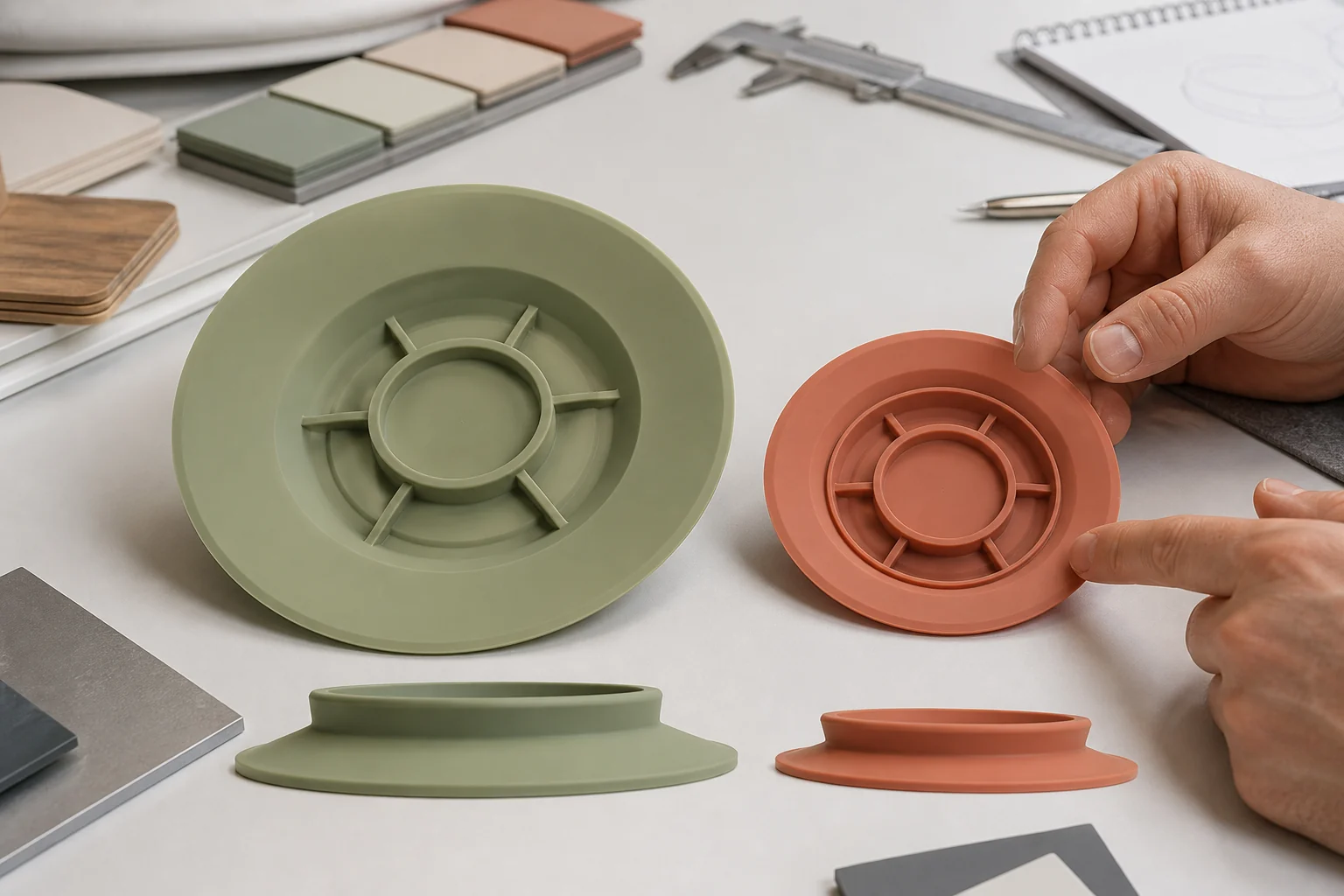
Silicone suction base design should be chosen by matching the sealing footprint, lip flexibility and supported product load to the target table. A wider base usually offers more overturning resistance and a larger potential seal, while a thinner or narrower base can flex onto mild surface variation and fit compact products; neither geometry is automatically better without controlled prototypes.
For B2B buyers, the useful decision is not maximum diameter at any cost. It is which architecture holds the intended bowl, plate or tray on named surfaces, releases predictably for the caregiver, survives molding and packaging, and remains consistent across cavities and production lots.
This comparison treats width and thickness as interacting variables rather than competing marketing labels. It gives procurement and product teams a decision path before CAD freeze, tooling quotation and golden-sample approval.
Buyer Answer: Choose the Base Around the Use Case
Choose a wide base when the product has a broad body, higher or off-center loads, and enough package space for a larger sealing footprint. Choose a thinner, more compliant lip when the approved surface set includes small flatness variation and the product needs easy activation, but support that lip with a stable center and controlled transition so it does not wrinkle, roll or release under load.
The best commercial specification defines the target surface, product mass, load position, activation method, dwell time and release force before it defines diameter alone. Buyers can send a concept and target-surface brief when they want our factory team to compare feasible base zones before a mold quotation.
Compare What “Wide” and “Thin” Actually Mean
A wide suction base describes plan-view coverage: the outside diameter or footprint extends farther from the product center. A thin base may describe the sealing lip thickness, the entire membrane thickness, or simply a low-profile part, so drawings must separate these meanings before suppliers compare concepts.
Treat the base as at least three functional zones: the outer sealing lip, a flexible transition membrane and the supported center connected to the product body. Two bases can share the same outside diameter yet behave very differently because one has a thin lip with a stiff center while the other flexes across nearly its full width.
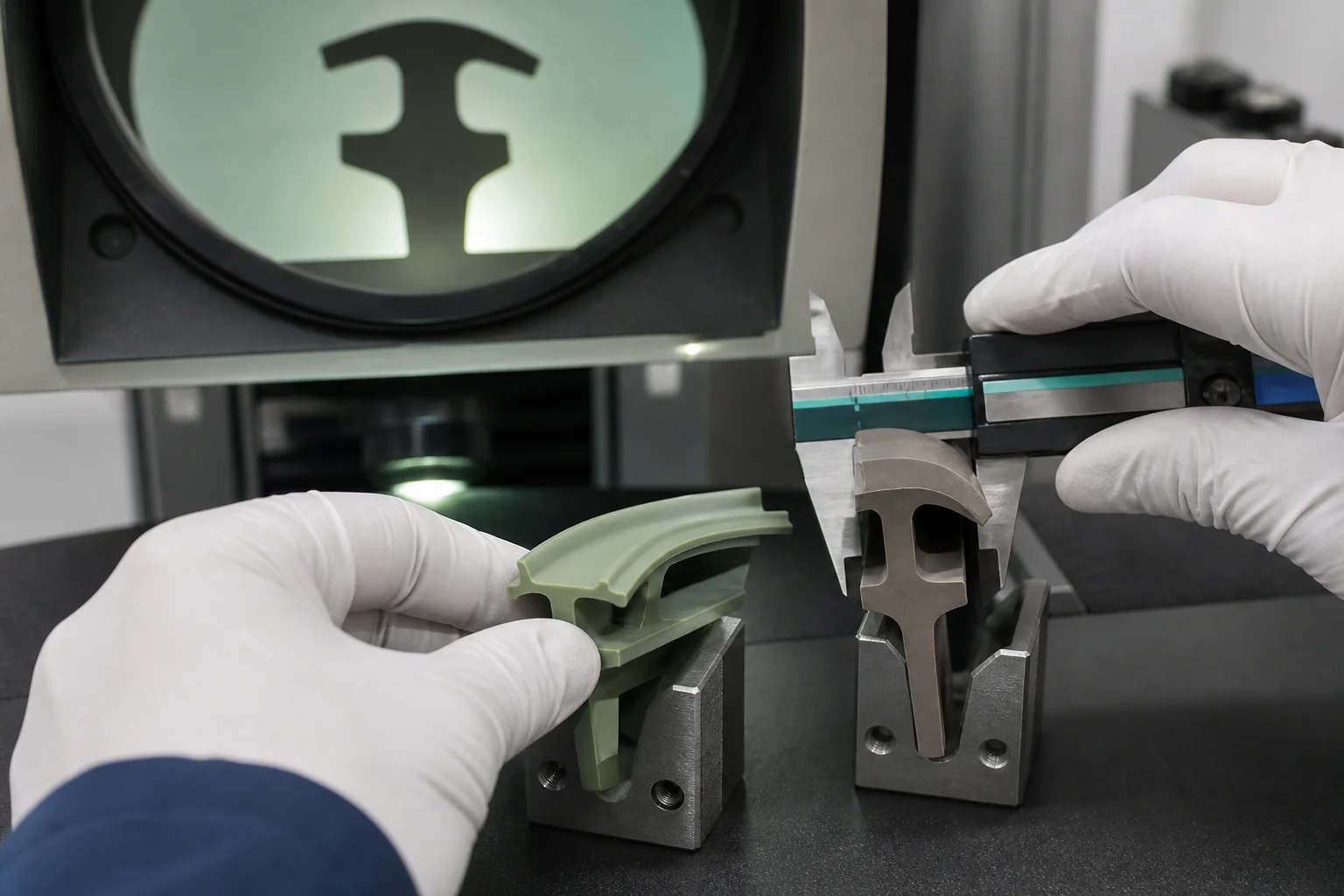
Buyers should therefore request section views and controlled dimensions, not only a top-view diameter. Useful callouts include lip width and thickness, transition radius, membrane thickness, center support diameter, release-tab location and the distance between the product load path and the sealing perimeter.
The comparison also needs an agreed reference condition. Record the molded part temperature, conditioning time, test-panel material and cleanliness, because a geometry that looks stronger immediately after molding may settle differently after storage or repeated washing.
Use ratios to compare different product sizes
Absolute diameter is misleading when one concept supports a 250-milliliter bowl and another supports a large divided tray. Teams can compare base-to-product width, supported-center-to-base width and lip-width-to-base-diameter ratios while retaining the actual millimeter dimensions on the controlled drawing.
Ratios do not create acceptance limits by themselves, but they help identify whether a new SKU is a scaled design or a new mechanical architecture. A large change in product width without a corresponding review of load position and sealing footprint deserves fresh prototype evidence.
Wide Bases: More Footprint, More Stability, More Constraints
A wider footprint places the sealing perimeter farther from the product center, which can improve resistance to tipping when a user pushes near the rim. It also provides more potential pressure-loaded area after activation, provided the lip seals continuously and the membrane does not trap folds or local leak paths.
This architecture often fits divided plates, broad toddler trays and products expected to experience off-center spoon loads. The geometry can keep the reaction force outside more of the product footprint, reducing the leverage that tries to peel one edge upward.
The trade-off is that a large base samples more of the table surface. A panel that is locally flat over a small circle may have texture, seams, curvature or debris across a wider circle, so increasing diameter can expose the seal to more discontinuities even while it improves overturning geometry.
Wide bases also occupy package area and can be compressed by nesting, dividers or tight retail boxes. If the outer lip is stored bent or loaded for weeks, the release condition after unpacking may differ from the approved fresh sample, so package validation must use final production geometry.
Where a wide base is usually the better starting point
Start wide when the product body is broad, the center of mass may move as food is added, or the use case includes repeated lateral utensil forces. A wide concept is also useful when product styling permits a generous skirt and the approved surfaces are large, smooth and consistently flat.
Do not assume that the widest CAD envelope is automatically best. The release tab must remain reachable, the membrane must activate without excessive caregiver force, and the mold and package must protect the outer sealing edge.
Thin and Compact Bases: Compliance With Less Margin for Drift
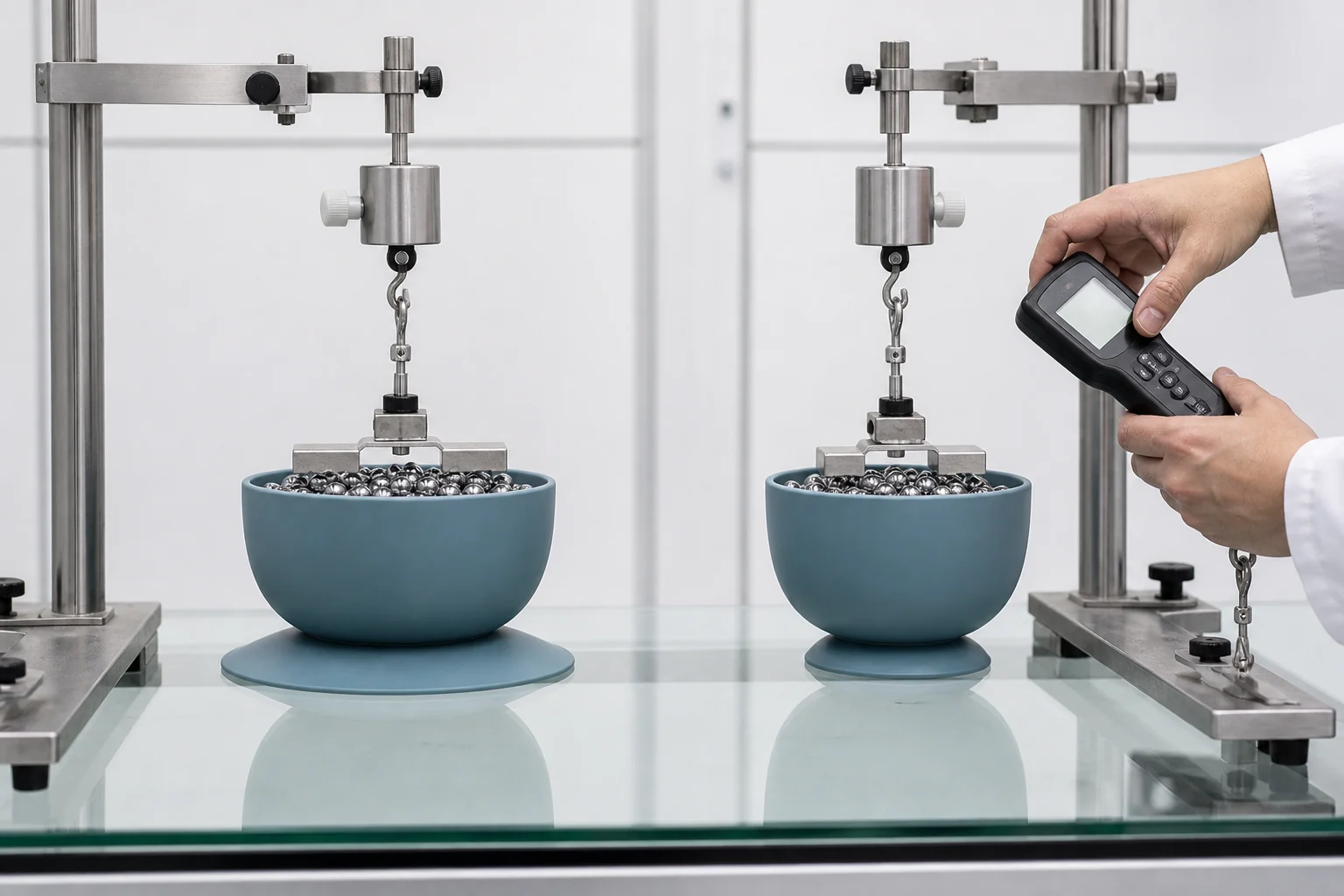
A thin outer lip can conform to small flatness variation with relatively low activation force. This can be valuable on compact bowls or snack cups where a very wide skirt would look disproportionate, collide with adjacent tableware or exceed the package footprint.
The same compliance creates risks when the unsupported span is too large. A very thin membrane may wrinkle during placement, roll at the edge, stretch around an off-center load or become sensitive to small thickness differences between mold cavities.
A compact outside diameter also puts the sealing perimeter closer to the load. That can make edge peel more likely when a tall bowl is pushed near its rim, even if the base performs well under a straight vertical pull at the center.
The strongest compact concepts usually do not make every zone uniformly thin. They combine a compliant sealing lip with a reinforced center or transition that controls how the product body transmits force into the seal.
Where a thinner lip or compact base earns its place
Use this direction when package space, adjacent-item clearance, low activation effort or mild panel variation matters more than maximum overturning leverage. It can suit smaller feeding bowls, travel products and designs where the base must stay visually discreet.
Approval should include peel-like edge loading, not only central pull force. If the compact design fails only when the user pushes high on the wall, the geometry—not merely the material hardness—may be the controlling variable.
Compare Load Stability, Peel Resistance and Holding Area
Suction performance is created by a pressure difference acting over an effective sealed area, but a tableware product rarely experiences a perfect centered vertical pull. Users push the rim, drag utensils, add uneven food loads and sometimes lift one side, so design approval must include moments and peel initiation rather than quoting one maximum force.
A wide base can move the sealing edge outward and increase the distance between the load and the point where peeling begins. That geometry is especially useful for low, broad products, although the benefit disappears if the lip cannot maintain a continuous seal across the larger perimeter.
A compact base can still perform well when the product is light, the walls are low and the intended user force stays close to the center. Its smaller area may activate quickly, but the design has less geometric margin when the center of mass rises or the user pushes near the outer wall.
Compare concepts under the actual filled mass and worst credible load position. A dry empty sample can rank the two designs in the opposite order from a warm, filled bowl with a spoon force applied near the rim.
How Silicone Suction Base Design Changes Load Paths
Record whether each sample slides, peels, vents gradually, releases at the tab or deforms without losing the seal. A central pull result cannot be substituted for lateral drag or edge-load evidence because each mode stresses a different part of the base.
Buyers should define the application method, dwell interval, force direction, loading rate and pass condition. Use the same fixture and panel set for both concepts so a wider design is not favored by a different activation or cleaner surface.
Match Each Base to the Approved Table Surfaces
Surface compatibility can reverse a design decision. A broad, relatively stiff membrane may work strongly on polished glass yet bridge over shallow texture, while a compliant lip may follow mild variation but become vulnerable to scratches, crumbs or a locally damaged edge.
Build a panel library around real buyer markets instead of the smoothest laboratory plate available. Useful panels may include glass, sealed wood, laminate, glazed stone and other named finishes, but each panel needs controlled flatness, texture, cleaning and identification so results remain comparable.
The test area must fit the full sealing footprint. A wide base tested partly over a seam, edge radius or panel defect is not being compared with a compact base placed in a pristine central zone, and the report should map the placement area when panel uniformity is uncertain.
Water can temporarily improve the apparent seal on some surfaces while oil or detergent residue can promote sliding or local leakage. Approve a cleaning and conditioning method that represents intended use, then state which surfaces are supported and which require buyer instructions.
Balance activation effort with predictable release
A design that holds strongly but requires excessive downward pressure may be poorly matched to the user. Conversely, a very easy-to-activate lip that releases during normal edge loading creates a product complaint even if it passes a gentle bench demonstration.
Measure the caregiver action as part of the scenario: placement, press location, activation time and release-tab use. Teams can compare these observations with the diagnostic controls in the suction plate grip troubleshooting guide without duplicating that article’s failure-analysis purpose.
Compare Tooling, Molding and Packaging Consequences
A wide or thin concept must be manufacturable at stable dimensions, not only attractive in CAD. Large flexible membranes can trap air, distort during demolding or change shape when handled hot, while very thin lips may be sensitive to venting, flash, trimming and small cavity-to-cavity differences.
Tool access and part release influence where the parting line, vents and gates can be placed. The final geometry should keep critical sealing zones away from avoidable witness marks and should let operators remove the part without stretching or nicking the lip.
Thickness transitions deserve particular attention because abrupt changes can create uneven flow, cure behavior or local stiffness. A reinforced center with a compliant lip is useful only when the transition is repeatable across the mold and does not form a hinge that folds during nesting.
Buyers should connect critical base dimensions to the drawing, mold trial report and approved sample. The custom mold tooling process is the right stage to settle measurement access, cavity identification and revision control before production evidence is collected.
Packaging can change the ranking after the mold trial
Wide skirts can exceed retail-box limits or press against dividers, while thin membranes can take a temporary set when nested under sustained load. Test finished packed samples after realistic storage, temperature and transport conditioning rather than assuming the unpacked first-off sample represents the delivered product.
A compact design may reduce package volume, but any commercial saving must be weighed against stability and complaint risk. Buyers can request a tooling and packaging review with product dimensions, pack count and target surfaces before selecting the lower-cost footprint.
Wide vs Thin Suction Base Decision Matrix
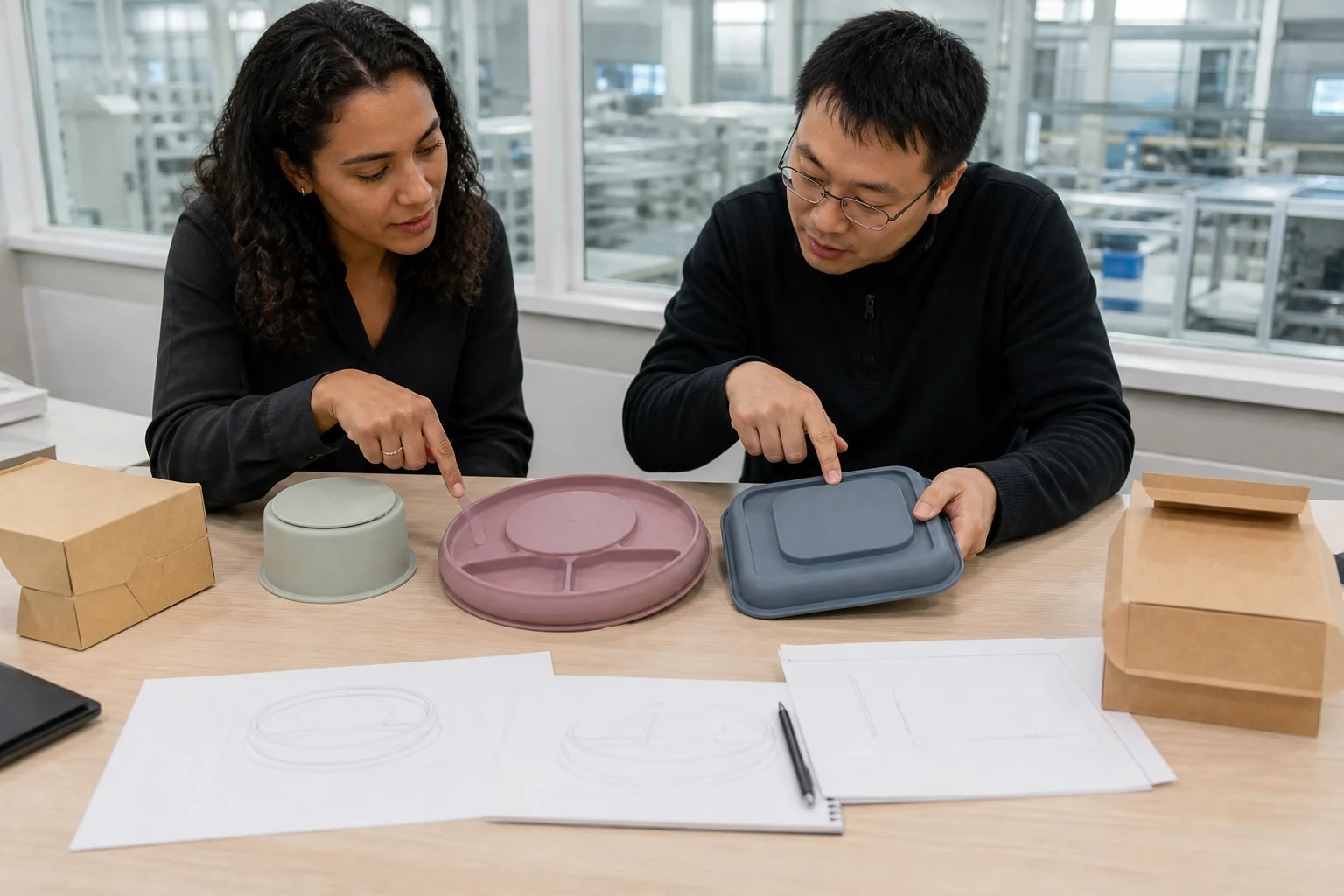
Use this matrix to choose a prototype direction, not to approve production from descriptions alone. “Wide” refers mainly to footprint, while “thin” refers mainly to lip or membrane compliance, so a hybrid design can deliberately combine both attributes.
Score each criterion against the buyer’s named product, surfaces and package. When two concepts remain close, build controlled prototypes and compare them with the same activation, load and panel method before freezing the drawing.
| Decision criterion | Wider footprint direction | Thinner or compact direction | Best-fit implication |
|---|---|---|---|
| Off-center stability | Longer lever arm to the sealing edge can resist tipping | Less margin when a tall or broad product is pushed near the rim | Favor width for divided plates, broad trays and higher wall loads |
| Surface conformity | Covers more area but can encounter more texture or curvature | Compliant lip can follow mild local variation when it does not wrinkle | Favor compliance only for named panels proven by repeatable tests |
| Activation effort | Large membrane may require deliberate central pressure | Thin lip can activate with lower force but may fold if unsupported | Match the action to the intended caregiver and instructions |
| Release behavior | Can hold strongly and needs an accessible controlled tab | Can release easily but may peel too early under edge loading | Approve release force and accidental-peel resistance together |
| Molding control | Large flexible areas increase handling and flatness challenges | Thin zones increase sensitivity to venting, flash and cavity variation | Choose the geometry the tool can reproduce and measure |
| Packaging footprint | Consumes more box area and may contact dividers | Fits compact packs but can take a set when tightly nested | Validate the final pack after realistic storage conditioning |
| Typical starting products | Wide plates, divided trays and heavier feeding sets | Small bowls, snack cups and travel-oriented products | Use this only as a starting scenario, then test the actual SKU |
B2B Buyer Checklist Before Freezing the Suction Base
Complete the checklist before asking a supplier to quote one final geometry. Missing surface, load or package inputs usually create more risk than a small difference in nominal base diameter.
Attach each answer to a controlled revision of the product drawing and sample request. A later change to the product wall, food capacity, material hardness or pack-out should trigger a focused review of the affected checks.
| Check | Question | Why It Matters |
|---|---|---|
| Use surface | Which named table finishes and flatness ranges must the product support? | The sealing perimeter can rank differently on glass, laminate, sealed wood and textured panels. |
| Product load | What are the empty, typical filled and worst off-center masses? | The same base can pass empty and peel when the center of mass moves upward or outward. |
| Base zones | Are lip, transition membrane and supported center dimensioned separately? | A single overall thickness hides the features that control conformity and force transfer. |
| User action | Where will the user press, how long will activation take and how is release initiated? | Bench methods should represent the action described in instructions and packaging. |
| Failure modes | Will the comparison record sliding, edge peel, slow venting, wrinkles and tab release? | One peak-force number can conceal a commercially important failure mechanism. |
| Tool control | Which sealing dimensions, cavity IDs and trim limits will be measured? | Production consistency depends on features the factory can inspect and trace. |
| Package state | Can nesting, dividers or carton pressure deform the outer lip during storage? | Delivered performance may differ from an unpacked mold-trial sample. |
| Approval evidence | Which drawings, panel records, test results and signed samples define acceptance? | A connected file prevents verbal preferences from becoming uncontrolled production criteria. |
Evidence Boundaries for a Fair Design Comparison
A credible comparison links physical principles to product-specific evidence without claiming that a general reference certifies a particular base. The factory report should identify the tested revision, panels, conditioning, loads, method, sample quantity and observed failure modes.
Procurement teams should also separate design performance from material food-contact status. A base can seal well and still lack appropriate material evidence, while compliant material alone says nothing about suction stability.
NASA’s official explanation of pressure and pressure force supports the basic statement that a pressure difference acting over area can create force. It does not determine the holding force of a finished suction base because real seals leak, deform and experience peel and lateral loads.
The U.S. National Institute of Standards and Technology maintains official pressure and vacuum metrology information that helps buyers understand traceability and measurement discipline. It does not prescribe a pass limit for silicone tableware, so the buyer and manufacturer must define a product-specific method and acceptance rule.
The U.S. Food and Drug Administration maintains an official inventory of food-contact substances listed in 21 CFR. That information should be used for material and intended-use review, not as evidence that a wide or thin suction geometry will hold on a particular table.
Practical disclaimer: this article is a product-development and procurement framework, not a legal opinion, engineering certification or guarantee of holding force. Final claims should be limited to the approved material, geometry, surfaces, conditioning, loads and test method supported by the buyer’s actual sample and production evidence.
Choose a Starting Architecture by Product Scenario
For a broad divided plate used on large smooth tables, begin with a generous footprint, a reachable release tab and a center structure that keeps food loads from folding the membrane. Prototype at least one smaller-footprint alternative so the team can quantify whether the added package area buys meaningful stability.
For a compact bowl or travel cup, begin with a compliant lip and restrained outside diameter, then challenge the concept with filled mass and high edge loads. Add local center or transition support if the lip wrinkles, but avoid making the sealing edge so stiff that normal activation becomes unreliable.
For a multi-SKU feeding set, do not force one base ratio onto every item merely for visual consistency. Use a shared test method and design language while allowing the plate, bowl and tray to use different footprints or support zones where their load cases justify it.
The final silicone suction base design should be the concept that passes the agreed surfaces and loads with repeatable activation, controlled release and manufacturable dimensions. This is a best-fit selection with documented trade-offs, not a declaration that one geometry wins every market.
Buyer FAQs About Wide and Thin Suction Bases
Is a wider silicone suction base always stronger?
No. A wider footprint can improve area and overturning leverage only when the entire lip seals and remains flat; extra diameter can also encounter more surface texture or package deformation.
Should the whole suction membrane be made thinner for better conformity?
Usually not without prototype evidence. Many stable concepts use a compliant outer lip with a more supported center and controlled transition so conformity does not become wrinkling or uncontrolled stretch.
Which dimension should buyers put on the specification?
Control the outside diameter plus the lip width and thickness, transition geometry, supported-center dimensions and release-tab features. Tie tolerances to the measurement method and functional evidence rather than copying nominal CAD values alone.
Can one smooth-glass pull test approve the design?
No. It may be a useful repeatable reference, but approval should also include named market surfaces, filled and off-center loads, activation and release actions, conditioning and failure-mode records.
When should a buyer compare prototypes instead of revising the drawing?
Compare physical prototypes when footprint, lip compliance or support architecture changes enough to affect force transfer and surface contact. A drawing review can screen feasibility, but it cannot substitute for controlled product-specific evidence.
Silicone Suction Base Design: Make the Trade-Off Explicit
Select the wide, compact or hybrid silicone suction base design only after the buyer can explain what advantage it delivers for the named SKU. The decision file should connect surface panels, activation, load cases, release behavior, critical dimensions, package state and failure modes to one controlled drawing revision.
If the wide option wins, record whether it won through stability, effective seal area or both, and accept its tooling and packaging consequences. If the thinner or compact option wins, record the conformity and activation benefit together with the controls that prevent rolling, wrinkling and cavity drift.
This comparison gives purchasing teams a defensible path from product scenario to prototype evidence and production acceptance. It also makes later changes easier to review because the original reasons for the geometry remain visible instead of being reduced to a vague claim that the sample felt stronger.
Compare Your Suction Base Concepts With Our Factory
Share the product envelope, filled mass, candidate drawings, surface panels, activation method and pack-out. The Naike Group manufacturing team can review which dimensions and prototype scenarios should be settled before tooling approval or a production quotation.
Request a Custom Quote
Share your product, quantity, target market and customization needs. Our factory team will reply with the next practical step.
Continue Your Sourcing Research
The six newest factory-side articles are updated automatically by publication date.
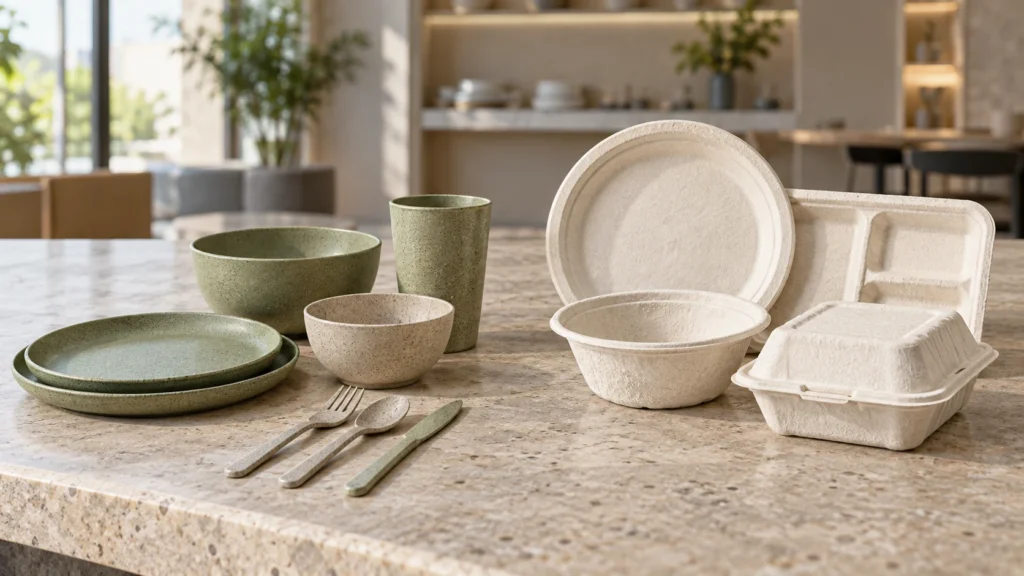
Wheat Straw vs Bagasse Tableware: Buyer Comparison
A B2B decision guide comparing reusable wheat-straw polypropylene composite tableware with molded bagasse fiber formats across use, evidence, operations and end of life.

Can Wheat Straw Tableware Be Recycled? Buyer Q&A
A practical buyer answer on whether reusable wheat-straw composite tableware can enter PP recycling streams, which evidence matters, and how to qualify market claims.

Global SKU vs Regional SKU: Tableware Decision Guide
A buyer decision framework for choosing one global tableware SKU or controlled regional variants across compliance, packaging, logistics, inventory and change control.

Australia Food Packaging Evidence: Buyer Guide
A practical evidence guide for Australian food-packaging buyers covering intended use, migration risk, supplier assurance, testing, hygiene, release and change control.

EU PPWR Tableware Packaging vs Conventional Packs
A buyer comparison of PPWR-ready and conventional tableware packaging across product protection, material choices, empty space, evidence, labeling and release timing.

Prop 65 Tableware Requirements: Buyer Q&A
A practical buyer Q&A for defining California Proposition 65 exposure scenarios, evidence, warning decisions, supplier records and release controls for tableware.