Custom tableware sample approval is the control path that converts a product idea into a production reference. A sample can look attractive yet still leave material, dimensions, function, artwork, packaging or test conditions unresolved. B2B buyers reduce launch risk when every sample has a defined purpose, revision identity and written decision.
Naike Group manufacturing team uses staged approvals for silicone tableware, silicone baby feeding sets and wheat-straw composite products. The route changes according to whether a project modifies color and branding, combines existing components or requires a new mold. Buyers can send a sourcing brief for an approval-path review before quotation assumptions become fixed.
This guide complements our custom solutions and custom mold and tooling pages by focusing on evidence between commercial agreement and production release. It is not a substitute for market-specific legal, safety or laboratory advice. The buyer remains responsible for confirming requirements in each intended destination market.
Factory Insider takeaway: Name the purpose of every sample, approve against controlled evidence, record open deviations and release production only from a clearly identified golden sample revision. This checkpoint keeps custom tableware sample approval decisions traceable from buyer instruction through factory release.
Translate the RFQ into a Custom Tableware Sample Approval Plan
The first gate begins before a physical sample is made. Convert the buyer request into a product specification that identifies intended users, food-contact conditions, target countries, material, dimensions, colors, functions, packaging, quantity and launch schedule. Mark uncertain items as assumptions so the quotation does not disguise missing decisions as confirmed requirements.
Next, state what each proposed sample must prove. A stock reference can demonstrate general workmanship, a color plaque can narrow pigment direction, a rapid prototype can review scale and ergonomics, and a tooling trial can evaluate production geometry. Asking one early sample to prove every requirement creates false confidence because its material or process may differ from mass production.
Assign Custom Tableware Sample Approval Owners and Evidence
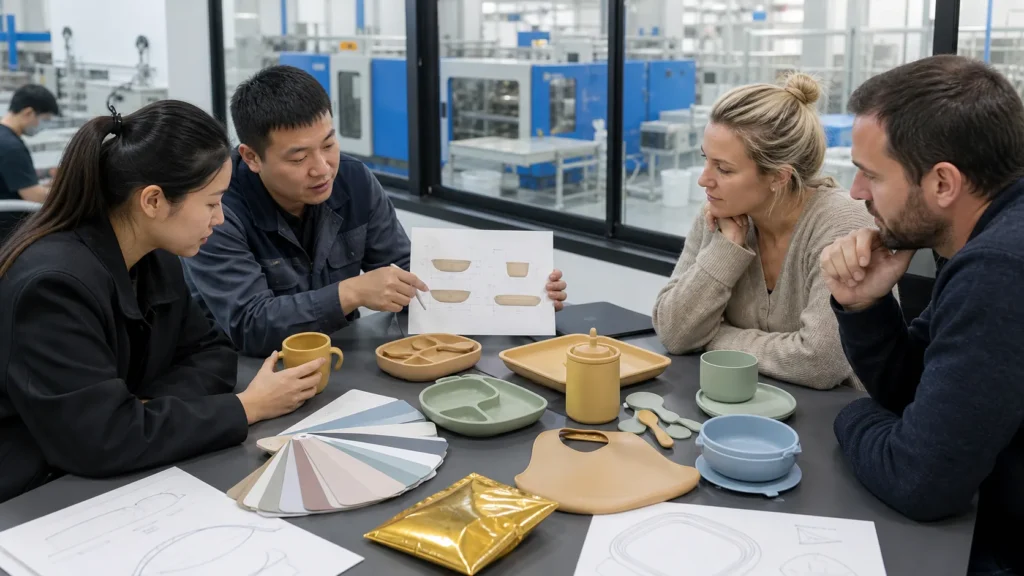
Name the buyer and factory representatives authorized to approve commercial appearance, engineering details, compliance evidence and packaging. Different functions may need separate sign-off, especially when a brand team values appearance while quality teams require measurable limits. A consolidated decision record prevents contradictory comments from being treated as simultaneous instructions.
Set the expected evidence for each gate, including drawings, specifications, photographs, measurements, test results, artwork files and physical samples. Record the planned quantity, cost and lead time for each iteration. This allows buyers to compare a fast exploratory route with a production-intent route without confusing their reliability.
Control Drawings, Specifications and Revision Identity
Every submitted sample should link to a dated drawing or specification revision. The record should identify dimensions, tolerances, material grade, color reference, component relationships, surface requirements, logo location and any characteristics that cannot be judged from appearance. File names such as final-new or latest-approved do not provide reliable configuration control.
When the buyer requests a change, the factory should show its effect on tooling, unit cost, performance, compliance evidence, packaging and schedule before implementing it. The revised document then becomes the basis for the next sample. Keeping rejected or superseded versions clearly marked prevents an old artwork or dimension from returning during repeat production.
Separate buyer requirements from factory proposals
A factory may suggest draft angles, wall thickness, parting lines, gate positions or tolerance changes to improve manufacturability. Those proposals should be visible and explained rather than silently incorporated. The buyer can then approve the commercial tradeoff with an accurate understanding of appearance, function and tooling consequences.
For projects using new molds, review the development controls described on the custom mold tooling page. Record which dimensions are tooling-controlled and which may be adjusted through process settings. This distinction helps the team decide whether a trial issue requires tool correction, material review or molding optimization.
Evaluate Prototypes without Treating Them as Production Samples
Prototype methods are valuable for decisions about size, grip, stacking, component layout and packaging volume, but their properties may not match production material. Surface texture, flexibility, odor, color and dimensional behavior can differ from molded silicone or compression-molded composite material. The approval record should state which observations are valid and which remain open for production-intent sampling.
Use structured review questions instead of a simple approved or rejected label. Confirm what the reviewer handled, how the product was assembled, which functions were tested and what reference was used. Photograph the sample with an identifier so later teams can connect comments to the correct object rather than a similar-looking version.
Close prototype decisions before releasing tooling work
A prototype gate closes only when the agreed decisions are documented and remaining deviations are assigned. Open questions about dimensions, capacity, nesting, logo scale or component fit can become expensive after tooling construction starts. The project owner should either resolve them or accept the identified change risk in writing.
The factory then issues a tooling-release package containing the approved geometry and defined exclusions. This package is not yet the golden sample; it is authorization to create production tooling against a controlled basis. A later tooling-trial gate must still demonstrate actual molded performance and appearance.
Review Production Tooling Trial Samples against the Release Package
A tooling trial is the first opportunity to compare actual molded parts with the geometry released for production equipment. Review samples by tool, cavity, material lot and process condition because an attractive piece from one cavity does not demonstrate stable output across the complete mold. The submission should include dimensional results, labeled samples and a list of deviations that remain open after the trial. Include baseline cycle conditions and the number of shots reviewed so later teams can judge whether the submission represents stable trial output over the planned production duration or a selectively chosen piece.
Inspect parting lines, gates, flash, wall transitions, surface texture, deformation, demolding marks and component fit under consistent lighting and conditioning. Dimensions should be measured at named locations with appropriate equipment rather than estimated from photographs. When results vary by cavity, preserve that identity so tool correction targets the source instead of hiding variation inside an average.
Separate tool correction from process optimization
Some issues require steel changes, while others respond to molding pressure, temperature, cure time, venting, handling or post-molding conditioning. The trial report should state the suspected control, proposed action and evidence needed to confirm improvement. Repeated parameter changes should not be used to compensate indefinitely for geometry that cannot hold the approved requirement.
Use the process and quality context on our factory capability page when defining trial evidence and responsibilities. After correction, compare a fresh sample with both the drawing and the previous rejected trial, then record which deviation was closed. Tool acceptance should release only the approved configuration and should not imply that color, decoration, packaging or market documentation is already approved.
Approve Material, Color, Logo and Functional Performance Together
Production-intent samples should use the specified material grade, supplier route, pigment system and relevant processing conditions. Record any substitution used for schedule or trial convenience because it limits what the sample can prove about flexibility, odor, appearance, durability or food-contact evidence. Approval should connect the physical sample with the controlled material identity rather than the broad phrase food grade. Ask the material record to identify compound code, batch reference and authorized change owner so repeat orders cannot drift to an unreviewed formulation under the same product name.
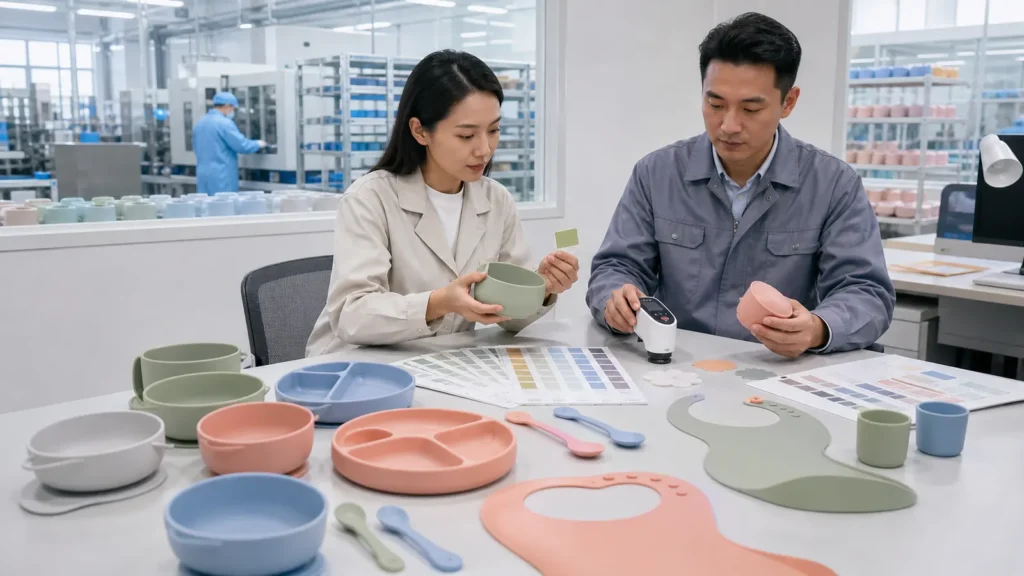
Color review needs a named reference, lighting condition, surface finish and acceptable boundary. The factory-side method in our silicone color matching guide shows why Pantone direction, molded texture and production measurement must be connected. A signed color plaque may support pigment approval, but the buyer should still confirm how the chosen color appears on the real product geometry and thickness.
Test decoration and product function on the approved construction
Logo approval should identify artwork revision, size, position, orientation, color and decoration method. Review legibility, adhesion, edge quality and resistance under the agreed cleaning or use simulation because a correct digital proof does not demonstrate performance on a flexible or textured surface. If the decoration adds material or changes food-contact exposure, route the change through the required compliance review before release.
Functional acceptance should use repeatable methods for fit, suction, leakage, stacking, capacity, stability, bending or other product-specific claims. Align those tests with intended market conditions and the testing questions outlined in our LFGB and FDA silicone testing guide. Record equipment, conditioning, sequence, sample quantity and pass limits so the golden sample represents measured performance rather than a favorable one-time demonstration.
Approve Private-Label Packaging and Market Files before the Golden Sample
Private-label approval covers more than placing a logo on a retail box. The controlled pack-out should identify product count, color assortment, accessories, bags, inserts, labels, barcode data, warnings, country information and carton configuration for the intended sales channel. Each artwork file needs a revision code that matches the physical packaging sample presented for approval. A complete approval set also records packaging material, thickness, finishing, supplier and print tolerance because those variables affect appearance, protection, cost, repeat-order consistency and the evidence available during incoming inspection.
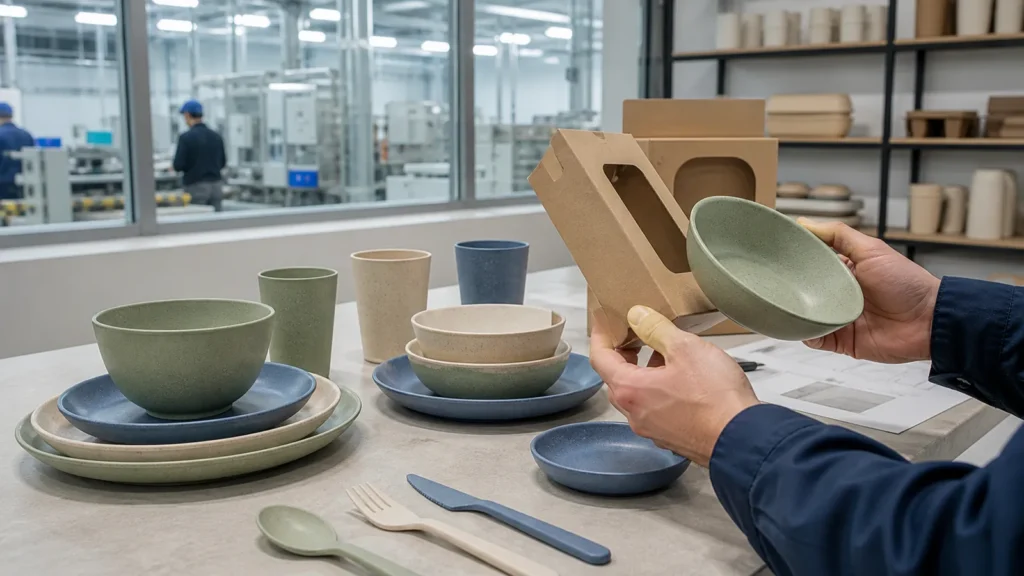
Review the commercial sequence in our private-label wheat-straw dinnerware guide when the project combines existing products with custom branding and packaging. Mockups can confirm layout, but production proofs are needed for print color, material, finishing, barcode readability and assembly. The approval record should distinguish a design proof from a fully packed production-intent sample so purchasing teams understand what remains unverified.
Link packaging approval to destination-market responsibilities
The buyer should confirm which business supplies legal text, translations, importer details, age grading, warnings, claims and recycling information for every destination. The factory can check supplied files against the approved bill of materials and pack-out, but market responsibility cannot be transferred by leaving fields blank until production. Open market information should block final artwork release or remain listed as an explicit buyer-owned risk.
Before sealing the golden sample, compare final artwork files, printed components and carton marks with the purchase specification and approved product revision. Buyers can send packaging and market requirements to our factory team for a coordinated sample plan before printing commitments are made. Matched physical samples and archived files then give production, quality and inspection teams one traceable basis for repeat orders.
Compare Sample Stages by the Decision They Can Support
Every sample should answer a defined question and should be approved only for evidence that its material and process can represent. A low-cost prototype can close ergonomic questions without proving molded color, while a production-intent sample can support broader release decisions when its configuration is traceable. Buyers should label each stage clearly so a convenient early sample is not reused as the golden sample by mistake across future production, inspection, shipment and repeat-order communication records.
| Sample Stage | Primary Decision | Representative Features | Known Limitation | Release Evidence |
|---|---|---|---|---|
| Stock reference | Review general product direction and workmanship | Existing material, geometry and factory finish | Does not represent custom dimensions, color or branding | Labeled reference with approved observations and exclusions |
| Color plaque | Narrow pigment and appearance direction | Production-intent material and controlled color target | May not show thickness, texture or product geometry effects | Color reference, lighting rule and acceptable boundary |
| Rapid prototype | Review scale, layout, grip, nesting and assembly | Proposed geometry and component relationships | Material and surface may differ from mass production | Prototype identity, dimensional comments and tooling-release decisions |
| Tooling trial | Verify mold geometry, cavities and manufacturability | Production tool, molded construction and trial conditions | Process, color or decoration may still be under development | Drawing results, cavity records, deviations and correction status |
| Decoration sample | Approve logo position, method and durability | Production surface and intended decoration process | May not include final pack-out or market artwork | Artwork revision, adhesion method and appearance limits |
| Packaging proof | Approve print, barcode and pack-out presentation | Specified packaging materials and current artwork | Does not alone approve product function or compliance evidence | Signed proof, scanned barcode and packing configuration |
| Golden sample | Release the controlled production configuration | Approved product, material, function, decoration and packaging | Valid only with linked records and defined change control | Sealed samples, digital file index and authorized sign-off |
B2B Buyer Checklist for Custom Tableware Sample Approval
Use this checklist at every approval gate and carry unresolved answers into the next controlled review. Each decision should identify the sample, document revision, reviewer, date and permitted next action. A signature should never hide an open deviation that changes function, market suitability, tooling cost or production timing.
| Check | Question | Why It Matters |
|---|---|---|
| Sample purpose | What exact decision is this sample intended and qualified to support? | A defined purpose prevents exploratory evidence from becoming an accidental production release. |
| Revision identity | Which drawing, specification, artwork and bill-of-material revision apply? | Configuration links keep later production from combining incompatible approved elements. |
| Material basis | Does the sample use the approved grade, supplier route, color system and process? | Substitutions limit conclusions about performance, appearance and compliance documentation. |
| Tooling evidence | Are tool, cavity, dimensions, conditions and open corrections recorded? | Cavity-specific evidence reveals variation that one attractive piece can conceal. |
| Functional method | Were fit, suction, leakage, stability or other claims tested repeatably? | Documented methods turn a demonstration into reviewable product-performance evidence. |
| Decoration approval | Are logo revision, size, position, color, process and durability agreed? | Digital artwork cannot prove appearance or adhesion on the production surface. |
| Packaging and market files | Do printed components, barcodes, warnings and carton marks match the destination? | Correct products can become unsellable when the approved market pack is wrong. |
| Golden-sample control | Who seals, stores, replaces and authorizes changes to the final reference? | Controlled custody keeps production and inspection aligned through repeat orders. |
Convert Sample Comments into a Stage-Gate Approval Playbook
A reliable playbook gives every checklist row an owner, evidence requirement and stop-or-proceed rule. The factory records what was submitted, the buyer records what was accepted, and both parties preserve deviations that remain open for the next gate. This shared sequence keeps schedule pressure from turning partial approval into authorization for tooling, printing or mass production.
1. Sample purpose decision record
During the sample program, Sample purpose becomes a named approval gate rather than an informal preference. The project owner answers “What exact decision is this sample intended and qualified to support?” against the current drawing, specification, artwork, or test plan and records which physical sample embodies that answer. A later team can therefore distinguish an approved feature from a temporary development experiment.
A defined purpose prevents exploratory evidence from becoming an accidental production release. The approval record links the sample identifier, review date, decision maker, open deviations, and next authorized action in one place. When new information changes this checkpoint, the factory pauses dependent work, issues a revision, and asks the buyer to approve the changed basis instead of silently replacing the golden sample.
2. Revision identity decision record
During the sample program, Revision identity becomes a named approval gate rather than an informal preference. The project owner answers “Which drawing, specification, artwork and bill-of-material revision apply?” against the current drawing, specification, artwork, or test plan and records which physical sample embodies that answer. A later team can therefore distinguish an approved feature from a temporary development experiment.
Configuration links keep later production from combining incompatible approved elements. The approval record links the sample identifier, review date, decision maker, open deviations, and next authorized action in one place. When new information changes this checkpoint, the factory pauses dependent work, issues a revision, and asks the buyer to approve the changed basis instead of silently replacing the golden sample.
3. Material basis decision record
During the sample program, Material basis becomes a named approval gate rather than an informal preference. The project owner answers “Does the sample use the approved grade, supplier route, color system and process?” against the current drawing, specification, artwork, or test plan and records which physical sample embodies that answer. A later team can therefore distinguish an approved feature from a temporary development experiment.
Substitutions limit conclusions about performance, appearance and compliance documentation. The approval record links the sample identifier, review date, decision maker, open deviations, and next authorized action in one place. When new information changes this checkpoint, the factory pauses dependent work, issues a revision, and asks the buyer to approve the changed basis instead of silently replacing the golden sample.
4. Tooling evidence decision record
During the sample program, Tooling evidence becomes a named approval gate rather than an informal preference. The project owner answers “Are tool, cavity, dimensions, conditions and open corrections recorded?” against the current drawing, specification, artwork, or test plan and records which physical sample embodies that answer. A later team can therefore distinguish an approved feature from a temporary development experiment.
Cavity-specific evidence reveals variation that one attractive piece can conceal. The approval record links the sample identifier, review date, decision maker, open deviations, and next authorized action in one place. When new information changes this checkpoint, the factory pauses dependent work, issues a revision, and asks the buyer to approve the changed basis instead of silently replacing the golden sample.
5. Functional method decision record
During the sample program, Functional method becomes a named approval gate rather than an informal preference. The project owner answers “Were fit, suction, leakage, stability or other claims tested repeatably?” against the current drawing, specification, artwork, or test plan and records which physical sample embodies that answer. A later team can therefore distinguish an approved feature from a temporary development experiment.
Documented methods turn a demonstration into reviewable product-performance evidence. The approval record links the sample identifier, review date, decision maker, open deviations, and next authorized action in one place. When new information changes this checkpoint, the factory pauses dependent work, issues a revision, and asks the buyer to approve the changed basis instead of silently replacing the golden sample.
6. Decoration approval decision record
During the sample program, Decoration approval becomes a named approval gate rather than an informal preference. The project owner answers “Are logo revision, size, position, color, process and durability agreed?” against the current drawing, specification, artwork, or test plan and records which physical sample embodies that answer. A later team can therefore distinguish an approved feature from a temporary development experiment.
Digital artwork cannot prove appearance or adhesion on the production surface. The approval record links the sample identifier, review date, decision maker, open deviations, and next authorized action in one place. When new information changes this checkpoint, the factory pauses dependent work, issues a revision, and asks the buyer to approve the changed basis instead of silently replacing the golden sample.
7. Packaging and market files decision record
During the sample program, Packaging and market files becomes a named approval gate rather than an informal preference. The project owner answers “Do printed components, barcodes, warnings and carton marks match the destination?” against the current drawing, specification, artwork, or test plan and records which physical sample embodies that answer. A later team can therefore distinguish an approved feature from a temporary development experiment.
Correct products can become unsellable when the approved market pack is wrong. The approval record links the sample identifier, review date, decision maker, open deviations, and next authorized action in one place. When new information changes this checkpoint, the factory pauses dependent work, issues a revision, and asks the buyer to approve the changed basis instead of silently replacing the golden sample.
8. Golden-sample control decision record
During the sample program, Golden-sample control becomes a named approval gate rather than an informal preference. The project owner answers “Who seals, stores, replaces and authorizes changes to the final reference?” against the current drawing, specification, artwork, or test plan and records which physical sample embodies that answer. A later team can therefore distinguish an approved feature from a temporary development experiment.
Controlled custody keeps production and inspection aligned through repeat orders. The approval record links the sample identifier, review date, decision maker, open deviations, and next authorized action in one place. When new information changes this checkpoint, the factory pauses dependent work, issues a revision, and asks the buyer to approve the changed basis instead of silently replacing the golden sample.
Authoritative References and Practical Limits
ISO 9001:2015 defines requirements for a quality management system, including documented information, operational control, performance evaluation and improvement. Review the official ISO 9001:2015 record when designing revision, approval and change-control practices for a custom tableware project.
The United States Food and Drug Administration publishes food types and conditions of use used when evaluating food-contact substances, including temperature and storage categories. The official FDA conditions-of-use resource illustrates why a sample brief must identify intended food contact instead of relying on a generic food-grade statement.
Regulation (EC) No 1935/2004 establishes the European Union framework for materials and articles intended to contact food, including general safety, labeling and traceability principles. Consult the official EUR-Lex regulation record and qualified market specialists when connecting a production sample with European compliance responsibilities.
This guide explains factory-side approval controls and is not legal advice, certification or a guarantee that one physical sample represents every production unit. Market access, food-contact suitability, claims, labeling and testing depend on the exact material, construction, intended use and destination requirements. Buyers should confirm current obligations with qualified professionals and release production only when commercial approval and required compliance evidence are both complete.
Golden Sample Decisions for B2B Buyers
Can a prototype become the golden sample?
Only when its material, process, configuration and evidence genuinely represent the intended production product. Most rapid prototypes are better treated as development references because they cannot prove molded surface, production color or stable functional performance.
How many golden samples should the buyer and factory keep?
Keep enough matched, sealed references for the buyer, factory production team and quality or inspection function identified in the project plan. Each sample should carry the same revision, approval date and custody record so damaged or missing references can be replaced through a controlled decision.
Does approving a golden sample also approve food-contact compliance?
No, physical approval and compliance evidence are related but separate gates. The buyer should verify that declarations, authorizations, laboratory reports and intended-use conditions apply to the exact approved material and construction before production release.
What should happen when packaging changes after product approval?
Issue a packaging or project revision that identifies the changed artwork, material, barcode, warning, pack-out and carton effect. Reapprove affected physical proofs and files while preserving the previously approved product evidence that remains valid.
How should repeat orders use the original golden sample?
The repeat-order brief should cite the controlled sample and current digital specification, then confirm whether any supplier, material, tool, color, decoration, packaging or market requirement changed. Any relevant change should trigger proportionate review rather than relying on an old signature without checking its assumptions.
Use Custom Tableware Sample Approval to Release Production
A commercially useful custom tableware sample approval process closes uncertainty in stages instead of asking one attractive piece to prove the whole project. The buyer receives clear evidence for geometry, tooling, material, color, performance, decoration and packaging, while the factory receives an authorized configuration for costing and production. Open deviations remain visible until the responsible owner closes them, preventing approval language from hiding unresolved launch risk.
Before requesting a firm production quotation, assemble the target markets, order quantity, drawings, reference samples, material direction, functions, branding files, packaging expectations and required dates. Use our custom solutions route to organize those inputs into a practical sequence of samples and decisions. That preparation helps the Naike Group manufacturing team quote the right development work, identify long-lead commitments and protect the golden sample as a repeatable commercial reference.
Turn Your Product Brief into an Approval Sequence
Share the decisions already made and mark the assumptions that still need factory input. We will map the appropriate reference, prototype, tooling-trial, color, performance and packaging gates before production release. This gives your sourcing team a clearer basis for budget, schedule and sign-off responsibility.