Private Label Wheat Straw Dinnerware: Factory Guide
A factory-side walkthrough for importers, distributors and retail brands that need to turn a wheat-straw dinnerware idea into a controlled, documented and packaging-ready production program.
Private label wheat straw dinnerware is not created by selecting a color, placing a logo on a plate and sending a purchase order. A commercially workable program connects material definition, product geometry, set composition, packaging, compliance priorities and quality checkpoints before mass production begins.
From our factory perspective, the smoothest projects are rarely the ones with the simplest products. They are the projects in which the buyer gives every decision an owner, a measurable requirement and an approval point. That discipline prevents a packaging change from becoming a mold problem, or a late color adjustment from becoming a shipment delay.
This production walkthrough follows a private-label project from the first inquiry through export packing. It explains what our factory needs from a B2B buyer, which decisions belong in the sample stage and where importers should pause before authorizing the next expense.
Factory insider takeaway: Do not ask only, “Can you make this set?” Ask, “Which requirements must be frozen before sampling, tooling, production and packaging release?” The second question produces a more dependable quotation and a cleaner approval path.
The Private Label Wheat Straw Dinnerware Brief Comes First
A factory cannot quote a private-label program accurately from a mood board alone. The opening brief should identify the intended user, sales channel, destination market, expected quantity, launch date and the closest existing product reference. These inputs affect the material review, mold route, packaging design and inspection plan.
For example, a compact camping set sold through outdoor retailers has different priorities from a gift-boxed family set sold online. The camping buyer may emphasize stackability, packed dimensions and component retention, while the e-commerce buyer may care more about presentation, drop protection, barcode placement and replacement risk.
Information our factory needs before quotation
A useful request for quotation should include product photos or drawings, approximate dimensions, component count, preferred colors, logo files, packaging direction and the required delivery window. Buyers should also state whether they want to adapt an existing product or develop a new shape.
The destination market matters from the first message because food-contact documentation and claims must be planned around where the finished article will be sold. In the United States, buyers should understand the FDA framework for food-contact substances; in the European Union, projects should be assessed against the applicable food-contact materials legislation.
Those references do not replace product-specific legal review or laboratory testing. They establish why a factory needs the intended market, material composition, intended use and test priorities before final claims are printed on packaging.
| Project Input | Weak Brief | Production-Ready Direction |
|---|---|---|
| Product | “Eco dinnerware set” | Plate, bowl, cup and cutlery set for four users, with target dimensions or reference products |
| Market | “Export quality” | Named destination countries, sales channel, intended consumer and expected use conditions |
| Material | “Wheat straw” | Requested wheat-straw composite direction plus required food-contact and performance priorities |
| Branding | “Add our logo” | Vector artwork, preferred method, location, dimensions, color and durability expectation |
| Packaging | “Retail box” | Box style, component layout, inserts, barcode area, labeling, carton marks and shipping channel |
| Schedule | “As soon as possible” | Target sample approval, packaging artwork release, production completion and delivery dates |
Material Decisions Shape the Entire Production Route
“Wheat straw” describes a material direction, not a complete engineering specification. A molded wheat-straw item is typically a composite, so buyers must confirm the finished construction and applicable compliance route rather than treating the agricultural appearance as proof of performance or environmental benefit.
The ratio and identity of the plant-based filler, the polymer system, pigments, additives and processing conditions can influence appearance, odor, stiffness, impact behavior and color consistency. The finished product, not only a raw-material statement, must support the claims intended for the target market.
Our factory therefore reviews the project as a complete system. A change in filler level or color may affect surface appearance; a different wall thickness may affect cooling and dimensional consistency; a deep logo texture may affect release from the mold and cleaning expectations.
Private label wheat straw dinnerware needs written claim control
Buyers should be cautious with broad terms such as biodegradable, compostable, plastic-free, microwave-safe or dishwasher-safe. Each claim needs a defined test basis and must match the actual finished composition, intended use and destination-market rules.
This point is especially important when a product combines plant fiber with plastic. European authorities have taken action against plastic food-contact products containing unauthorized bamboo and other plant additives, which is why a buyer should never assume that all fiber-filled plastics share the same regulatory status. The European Commission’s official enforcement overview explains the distinction and the associated migration concerns.
Choosing an Existing Product or New Mold Changes the Risk
Most private-label projects begin with one of three routes: use an existing product, modify a product within the limits of existing tooling, or develop new tooling. The correct route is not automatically the cheapest option; it is the route that can deliver the required function and brand position consistently.
An existing product usually offers the fastest path to a color, logo and packaging sample. It is a practical choice for market testing, seasonal programs and buyers who need to validate demand before committing to structural development.
A modified route may change the set composition, color palette, branding method or packaging without changing the core molded geometry. A new mold becomes relevant when the requirement includes a new size, profile, capacity, stacking relationship, component interface or functional detail that existing tools cannot reproduce reliably.
What buyers should approve before tooling begins
New tooling should not begin from an attractive rendering alone. The engineering package should define critical dimensions, wall transitions, radii, parting lines, draft, stacking behavior, logo geometry, surface texture and interfaces between components.
The buyer and factory should also agree what the first trial is intended to prove. Some trials confirm geometry and demolding first, while color, decoration or packaging are handled in later samples. Combining every decision into one first trial can make it difficult to identify the cause of a defect.
Naike Group’s custom mold and tooling process separates engineering review, drawing approval, tool construction, trial and revision, and production approval. That sequence gives buyers defined points to stop, review and document changes before the next stage.
A Sample Is a Decision Record, Not a Sales Souvenir
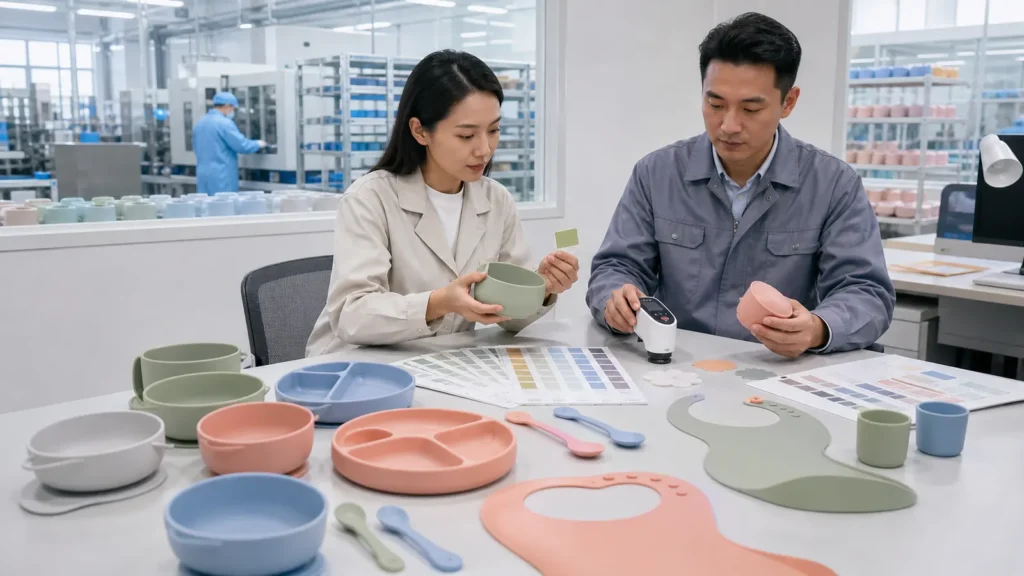
A sample only protects a bulk order when the approval is specific. “Looks good” is not a specification, and an unmarked sample on a buyer’s desk does not tell production which version, color reference or packaging file was approved.
Every approval should identify the sample date or version, material direction, color reference, dimensions, weight or functional checkpoints, logo method, surface acceptance and packaging status. If a deviation is accepted, it should be written down rather than remembered through a chat message.
Separate appearance approval from performance approval
Appearance approval covers color, speckle distribution, gloss, flow marks, logo position and visible molding details. Performance approval covers the characteristics that matter in use, such as stacking, fit, stability, resistance to intended handling and any market-specific test requirement.
A golden sample can then become the visual reference for first-piece inspection and bulk comparison. Dimensional drawings, packaging artwork and an inspection specification should sit beside it, because a physical sample cannot communicate every tolerance or document requirement.
Approval rule: If the buyer cannot identify exactly what changed between sample A and sample B, production should not be released. Version control is a commercial safeguard, not administrative decoration.
Branding and Packaging Must Be Engineered Together
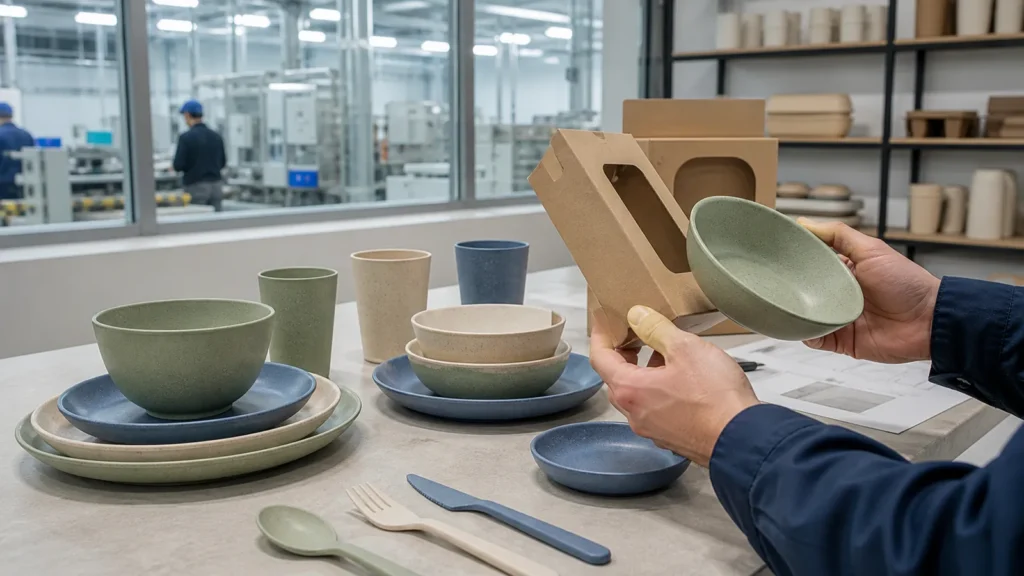
Private label is more than a mark on the product. It includes the relationship between product color, logo visibility, component arrangement, retail packaging, instructions, labels, barcodes, carton marks and the unboxing experience.
Branding methods depend on geometry, material and the durability expected by the buyer. Molded, printed, engraved, labeled or packaging-led solutions each create different tooling, sampling and quality-control needs, so the method should be selected after reviewing the actual surface and target appearance.
Packaging design should begin early enough to influence product and set decisions. A component that looks harmless on a screen may add packed volume, rub against another surface, create a weak point during transit or force a larger master carton.
Retail packaging files need production information
Before artwork release, the packaging team needs confirmed product dimensions, component orientation, insert structure, labeling areas, instruction content and any required warnings. Buyers should also define whether packaging must support retail shelves, e-commerce parcel handling, gift presentation or wholesale distribution.
Naike Group’s OEM/ODM custom solutions cover retail boxes, kraft boxes, gift sets, inserts, barcode labels and export carton marks. The correct combination is reviewed against the product set and order assumptions rather than selected from a generic packaging menu.
Production Release Converts Approvals into Checkpoints
Mass production should begin only after the commercial specification, approved sample, drawings, logo file, color reference, packaging files and inspection requirements agree with one another. A mismatch between any two documents creates room for interpretation on the line.
At production setup, the factory confirms the material batch direction, equipment and tooling, processing plan, first-piece sample and packaging schedule. The first-piece review is the earliest practical opportunity to detect a deviation before it spreads through the order.
In-process checks should follow product risk
A useful inspection plan does not treat every visible feature as equally important. Critical functional dimensions, food-contact surfaces, sharp edges, cracks, severe deformation or incorrect materials require a different response from small cosmetic variation that remains within the approved standard.
Color, appearance, dimensions, product fit, logo condition and set completeness can be checked during production according to the agreed plan. The buyer should identify any retailer-specific inspection method, acceptable quality limits or reporting format before the order is released.
Our public factory capability workflow follows material checks, sample confirmation, production setup, process inspection, final inspection and export packing. For each project, the exact checkpoints are tied back to the approved specification and destination-market priorities.
Packing Approval Protects the Product After Manufacturing
A molded product can pass final inspection and still reach the buyer in poor condition if the packaging system was not validated. Private-label dinnerware sets require control of component count, separators, surface protection, empty space, box closure, carton loading and shipping marks.
Before final packing, the line needs an approved packing reference showing the direction and sequence of every component. This is particularly important for sets with similar-looking bowls, nested parts or multiple color combinations.
The final review should compare packed goods with the purchase order, packaging artwork, barcode list and carton-mark instructions. Buyers who sell through multiple channels should separate channel-specific labels and packing rules instead of expecting the warehouse to infer them.
A Controlled Timeline Uses Gates Instead of Guesswork
Lead time depends on the selected product, material, color, tooling status, sample route, packaging complexity, testing requirements, order quantity and current production schedule. A responsible factory should review those variables before giving a project-specific commitment.
Instead of building the plan around one optimistic shipment date, use approval gates. The project moves forward when the buyer has accepted the information needed by the next stage, not simply because a calendar week has passed.
Commercial and feasibility alignment
The factory reviews intended use, destination market, product reference, quantity, customization scope, packaging direction and target schedule. Open assumptions are listed so the quotation does not hide unresolved work.
Specification and sample route
Material direction, dimensions, color, branding, set composition and sample purpose are confirmed. The parties decide whether an existing sample, customized sample or tooling trial is required.
Product and packaging approval
The buyer records product acceptance and releases final packaging information. Any remaining testing, labeling or inspection requirements are attached to the production specification.
Bulk production and process control
The factory confirms the first piece and performs planned in-process checks. Deviations are contained and reviewed before they affect the full order.
Final inspection and shipment release
Finished product, quantity, retail packing, carton marks and required documents are checked against the approved order. Shipment is released only after the agreed acceptance process is complete.
Cost Questions Should Follow the Production Logic
Unit price is affected by more than the molded part. Material specification, color changes, logo process, set composition, packaging, inspection requirements, testing, tooling and order quantity all influence the commercial model.
MOQ also varies by product and customization route. Existing products with standard packing may support a different minimum from a multi-color set with custom printed boxes, while new tooling introduces development costs that should be evaluated separately from recurring unit cost.
Buyers should request a quotation that identifies assumptions instead of only a single unit price. A useful comparison separates tooling, samples, product, decoration, packaging, testing and logistics so competing quotations can be evaluated on the same scope.
A lower quote can carry a more expensive assumption
One supplier may quote an existing mold while another assumes a new tool; one may include retail packaging while another includes only bulk packing. Without a shared specification, the lowest number often represents the least complete interpretation rather than the most efficient factory.
Use the closest references in the custom tableware product catalog to define shape and set direction, then state which elements must change. This lets our factory identify where existing capability can reduce development work and where a new investment is justified.
B2B Buyer Checklist for a Private-Label Program
The following checklist is designed for the buyer’s internal project meeting before requesting a final quotation. It turns broad product ideas into questions that purchasing, compliance, design and logistics teams can answer together.
| Check | Question | Why It Matters |
|---|---|---|
| Market | Which countries and sales channels will receive the product? | Market and channel affect documentation, labels, packaging and inspection priorities. |
| Use | Who will use the set, and under what temperature, cleaning and handling conditions? | Intended use determines performance questions and prevents unsupported claims. |
| Material | Has the complete composite and finished-product compliance route been reviewed? | “Wheat straw” alone is not a complete material or legal specification. |
| Geometry | Can an existing mold deliver every critical dimension and function? | This determines whether the project needs existing tooling, revision or a new mold. |
| Color | What physical or coded reference will control color approval? | Named colors are subjective and cannot guide stable batch comparison. |
| Branding | Are logo artwork, position, size, method and durability expectations defined? | Logo decisions can affect tooling, sampling and surface acceptance. |
| Packaging | Is the set intended for retail, e-commerce, wholesale or gifting? | The channel changes protection, presentation, labeling and carton requirements. |
| Quality | Which defects, dimensions, functions and sampling rules will control acceptance? | A written inspection standard reduces subjective disputes after production. |
| Approvals | Who can approve drawings, samples, artwork and shipment release? | Clear ownership prevents schedule loss while the factory waits for decisions. |
| Schedule | Does the launch plan include review time for samples, packaging and testing? | Production time alone is not the complete development timeline. |
Five Mistakes That Disrupt Private-Label Production
1. Approving the appearance before confirming intended use
A beautiful shape may not stack efficiently, fit the planned box or meet the functional priorities of the consumer. Intended use should be written before design details are frozen.
2. Treating every fiber-filled material as interchangeable
Plant source, polymer system, additives and regulatory status matter. Buyers should approve the actual finished construction and supporting documentation rather than buying a category label.
3. Starting packaging after bulk production
Late packaging creates pressure to accept oversized boxes, weak protection or rushed artwork. A packaging structure should be tested with representative product samples before production release.
4. Sending conflicting approvals through multiple channels
When purchasing, design and management send different instructions, the factory cannot know which file controls the order. Use a versioned approval record and nominate one authorized project contact.
5. Comparing quotations without matching assumptions
Unit prices are not comparable when the material, set composition, logo method, packaging or quality scope differs. Normalize those assumptions before selecting a supplier or negotiating cost.
Private Label Wheat Straw Dinnerware Buyer FAQ
Can Naike Group customize an existing wheat-straw dinnerware set?
Yes. Depending on the selected reference and tooling, customization can include material specifications, colors, logo application, packaging and set composition. Structural changes are reviewed against existing molds before revised or new tooling is recommended.
When does a private-label project require a new mold?
A new mold may be needed when the requested dimensions, capacity, shape, stacking relationship, component fit or surface detail cannot be produced reliably with existing tooling. Engineering review and drawing approval should happen before tool construction.
Can a buyer receive samples before placing a bulk order?
Yes, but the sample route depends on the project. An existing-product sample, custom color or logo sample, modified prototype and new-tool trial answer different questions, so purpose, cost and timing are confirmed during quotation.
How are minimum order quantity and lead time determined?
MOQ and lead time depend on product structure, material, color, decoration, packaging, tooling status, quantity and the production schedule. Our factory reviews these variables against the project brief before confirming commercial terms.
What documents should an importer request?
The required documents depend on the product and destination market. Buyers should define applicable food-contact requirements, test reports, material declarations, labeling, inspection records and shipment documents with their compliance adviser and factory before production.
What should be included in the first inquiry?
Send the closest product reference, intended use, target market, estimated quantity, dimensions, material preference, color direction, logo artwork, packaging concept, testing priorities and target schedule. Drawings, samples and packaging references make the feasibility review more precise.
Conclusion: Build Private Label Wheat Straw Dinnerware Around Approvals
A successful private label wheat straw dinnerware program is a chain of controlled decisions. The product brief determines the material and tooling route; the approved sample defines the production target; the packaging plan protects both presentation and transit; and the inspection specification determines whether the shipment is acceptable.
From the Naike Group manufacturing team’s perspective, the buyer’s strongest risk-control tool is not a longer contract or a more detailed chat history. It is a short, measurable specification connected to clear approval gates and one current set of files.
When you are ready to discuss a product line, send our factory the closest reference, target market, quantity, customization scope and packaging direction. We can then review whether an existing product, modified sample or new mold offers the most practical route to production.
Turn Your Product Brief into a Factory Review
Choose the closest product reference, prepare your market and customization requirements, and send the complete brief to Naike Group for an OEM/ODM feasibility review.