
Hardness and Flexibility Control
Shore hardness is selected according to the function: a spatula needs a different response than a baking mold or sealing component. Structure and thickness are evaluated alongside the material specification.
Food-grade Silicone Manufacturing
Source custom molds, baking tools, utensils, mats and accessories with controlled hardness, color, dimensions, logo application and retail packaging.
For kitchenware brands, e-commerce sellers, distributors and retail buying teams developing differentiated silicone ranges.
Business Overview
Silicone products are judged immediately by touch, flexibility, odor, finish and how well they perform under repeated use. A successful kitchenware program therefore needs more than an attractive rendering. Wall thickness, rib structure, hardness, parting lines and packaging pressure can all change the customer experience. We review these points during design and sampling.
Our role is to make the important decisions visible: what is standard, what is customized, which details affect price or minimum quantity, and which approvals control the schedule. This creates a more dependable foundation for quotation, sampling and repeat orders.
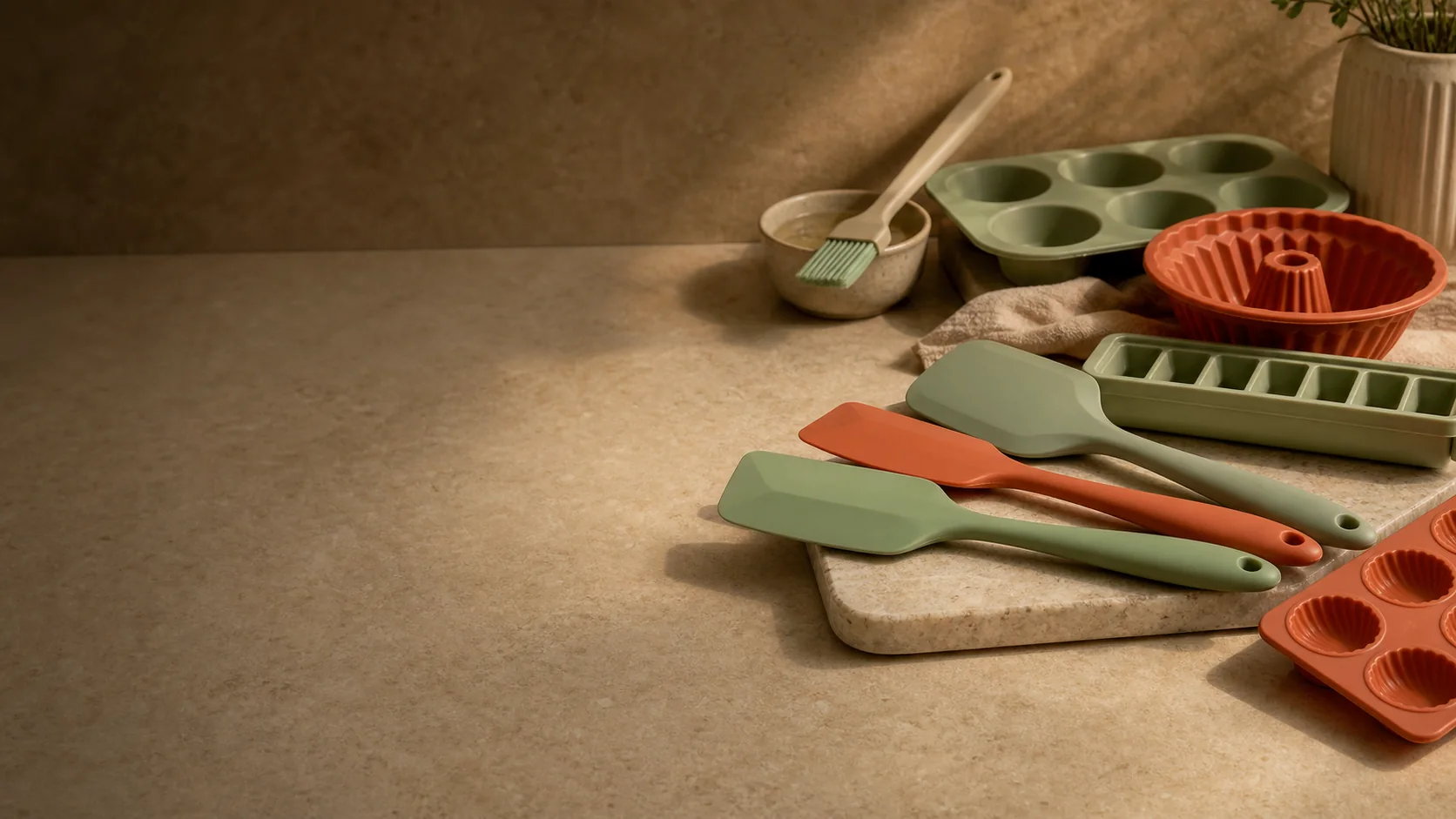
Core Capabilities
Each workstream is connected to the buyer’s commercial objective, product specification and delivery requirements.
Shore hardness is selected according to the function: a spatula needs a different response than a baking mold or sealing component. Structure and thickness are evaluated alongside the material specification.
We work from defined color references and review how pigment, texture and lighting influence perception. Matte, polished and patterned surfaces can be selected to support the brand position.
Draft angles, corners, ribs, release behavior and cleaning access are considered before tooling. The goal is a product that looks refined and remains practical in daily use.
Hanging cards, boxes, sleeves and inserts are planned to prevent distortion, dust and surface damage while presenting instructions and required retail information clearly.
Commercial Applications
A product program becomes more effective when assortment, customization and packing reflect how it will actually be sold.
Molds, mats, brushes, scrapers and measuring accessories designed for repeat home use.
Spatulas, turners, tongs and mixed-material tools developed around grip, heat exposure and storage.
Lids, containers, collapsible forms and accessories where sealing, flexibility or compact storage adds value.
Project Workflow
Clear decision gates help both teams understand what has been approved and what is required before the next stage.
Clarify temperature, food contact, flexibility, loading and cleaning expectations.
Review geometry, thickness, reinforcement, demolding and logo placement.
Produce molds and evaluate dimension, feel, color and functional behavior.
Test the pack-out for shape protection, shelf presentation and instructions.
Control material preparation, molding, finishing, inspection and packing.
Buyer Guidance
Provide the actual user scenario, not only the target dimensions. Temperature range, contact with oil or food, required stiffness, hanging or storage method and cleaning expectations help determine the most appropriate construction.
For mixed-material products, identify every component and any disassembly requirements. Handle materials, internal reinforcements and joining methods should be assessed as part of the complete product rather than approved separately.
Factory & Product View

Hardness, appearance and use conditions are reviewed together.
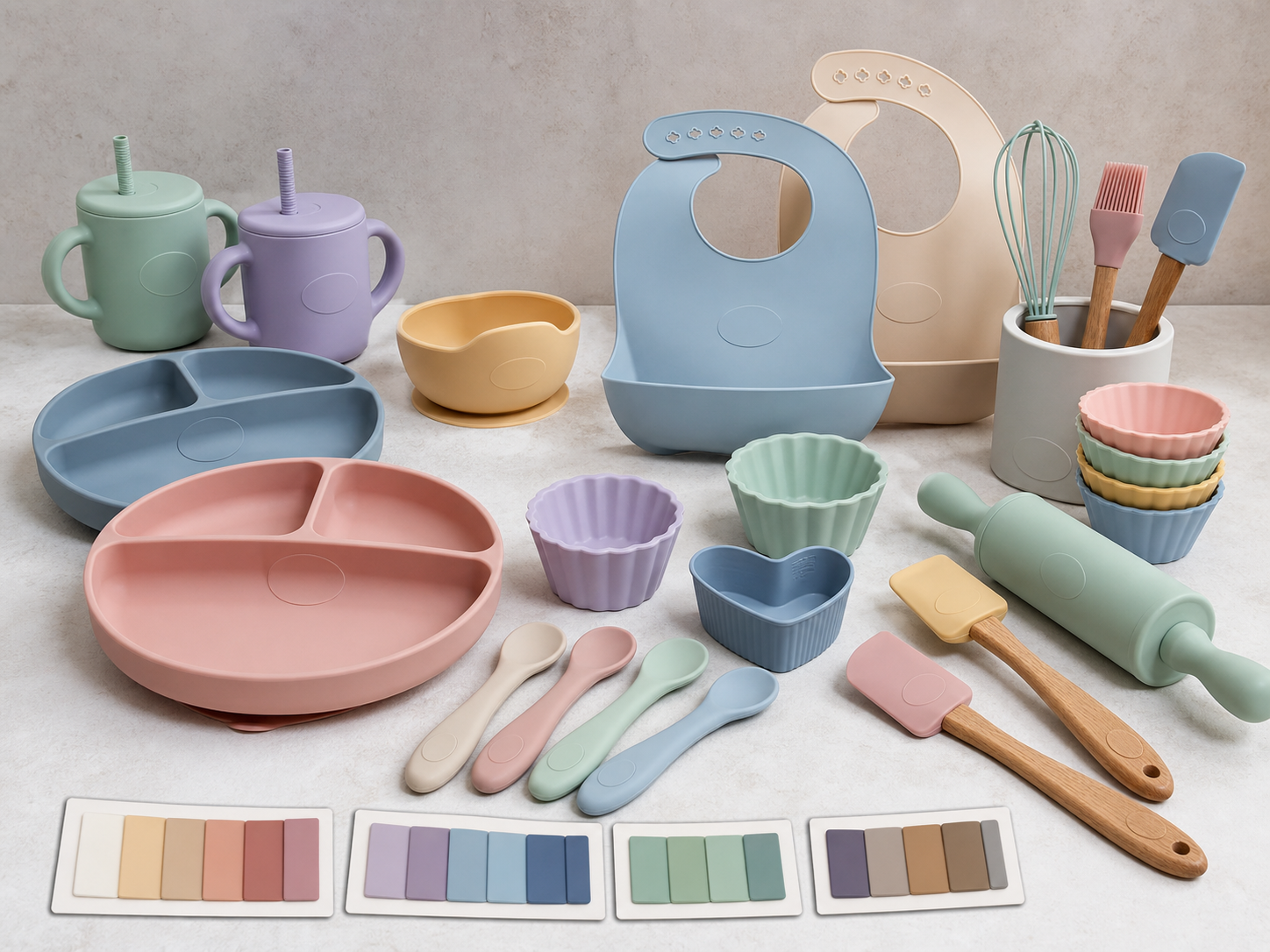
Kitchen and feeding products can share one branded palette.
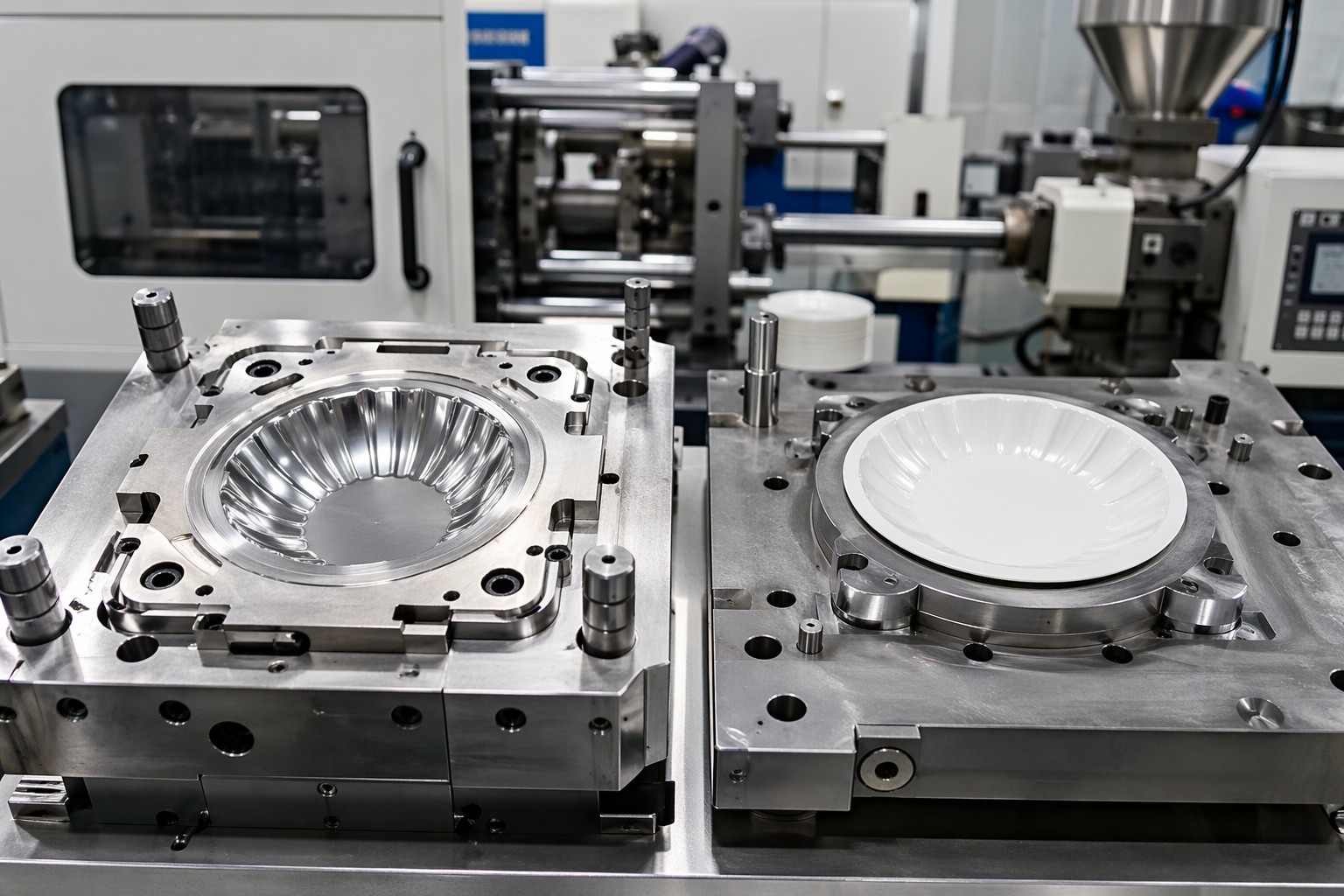
Geometry is translated into repeatable production molds.
Buyer FAQ
A precise answer depends on product structure, quantity, destination and customization. These answers explain the usual planning principles.
We can prepare color samples against a Pantone reference. Final visual approval should consider the selected silicone, surface texture and normal batch tolerance.
Yes. Hardness can be adjusted within practical ranges, but geometry and thickness also affect flexibility, so we validate the complete part.
Depending on the product, silicone may be combined with nylon, stainless steel, plastic or other components. Compatibility and joining methods are reviewed during engineering.
Please share the destination market, intended food-contact use, temperature claims and any retailer-specific protocol so appropriate documentation and sampling can be planned.
Start a B2B Project
Share your reference, target quantity, market, branding and required delivery window. Our team will review the project and recommend a practical next step.