
Feasibility and DFM Review
Drawings or reference samples are assessed for manufacturability, demolding, parting lines, shrinkage and likely cosmetic risks. Recommendations are explained before tooling cost and timing are confirmed.
Product Engineering & Tooling
Convert sketches, samples and 3D concepts into production-ready molds with feasibility review, prototype validation, controlled revisions and sample approval.
For brands and sourcing teams that need proprietary shapes, functions, sizes or improved product structures.
Business Overview
A mold commits the project to a specific geometry and manufacturing method. Small oversights in wall thickness, draft, undercuts, texture or logo position can become expensive once steel or production tooling is complete. Our workflow focuses on reviewing the part as a manufactured object before the tool is released.
Our role is to make the important decisions visible: what is standard, what is customized, which details affect price or minimum quantity, and which approvals control the schedule. This creates a more dependable foundation for quotation, sampling and repeat orders.
Core Capabilities
Each workstream is connected to the buyer’s commercial objective, product specification and delivery requirements.
Drawings or reference samples are assessed for manufacturability, demolding, parting lines, shrinkage and likely cosmetic risks. Recommendations are explained before tooling cost and timing are confirmed.
Where useful, prototypes help buyers evaluate scale, grip, nesting and visual proportion. A prototype does not reproduce every material behavior, but it can prevent avoidable dimensional mistakes.
Initial molded samples are checked for dimensions, surface, flash, fill, deformation and functional fit. Adjustments are documented and prioritized before the next trial.
The final approved sample, specification and key inspection points form the production baseline, reducing the risk that tooling approval and bulk production use different assumptions.
Commercial Applications
A product program becomes more effective when assortment, customization and packing reflect how it will actually be sold.
Distinct silhouettes and integrated brand details that are difficult to replicate with catalog products.
Revised grip, stacking, suction, sealing, drainage or portion features based on market feedback.
New sizes and companion products that preserve the design language of an existing collection.
Project Workflow
Clear decision gates help both teams understand what has been approved and what is required before the next stage.
Review drawings, samples, target performance and any confidentiality needs.
Confirm manufacturability, tool type, cavities, expected life, timing and revisions.
Approve critical geometry, logo, surface and interface dimensions.
Manufacture the mold, run trial parts and record issues for correction.
Confirm the golden sample and quality criteria for bulk production.
Buyer Guidance
Native CAD data is ideal, but it is not mandatory. A detailed physical sample or dimensioned brief can also start the review. Buyers should mark dimensions that are functionally critical and identify mating parts, lids, handles or packaging that must fit.
Surface expectations should be explicit. Texture, gloss, visible gate location, parting lines and acceptable color variation are easier to manage when treated as engineering requirements rather than subjective comments after the first trial.
Factory & Product View
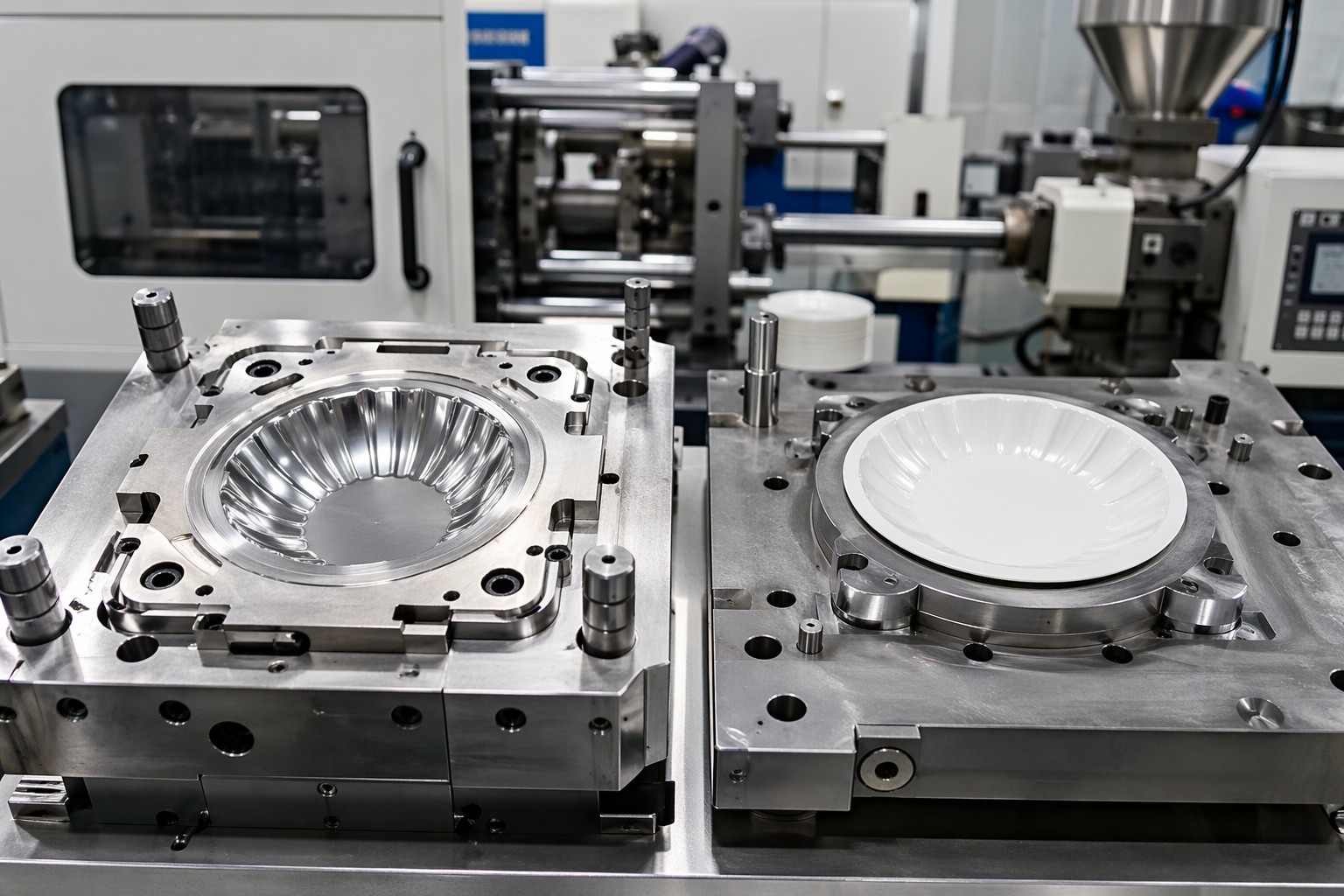
Design decisions are translated into production molds.
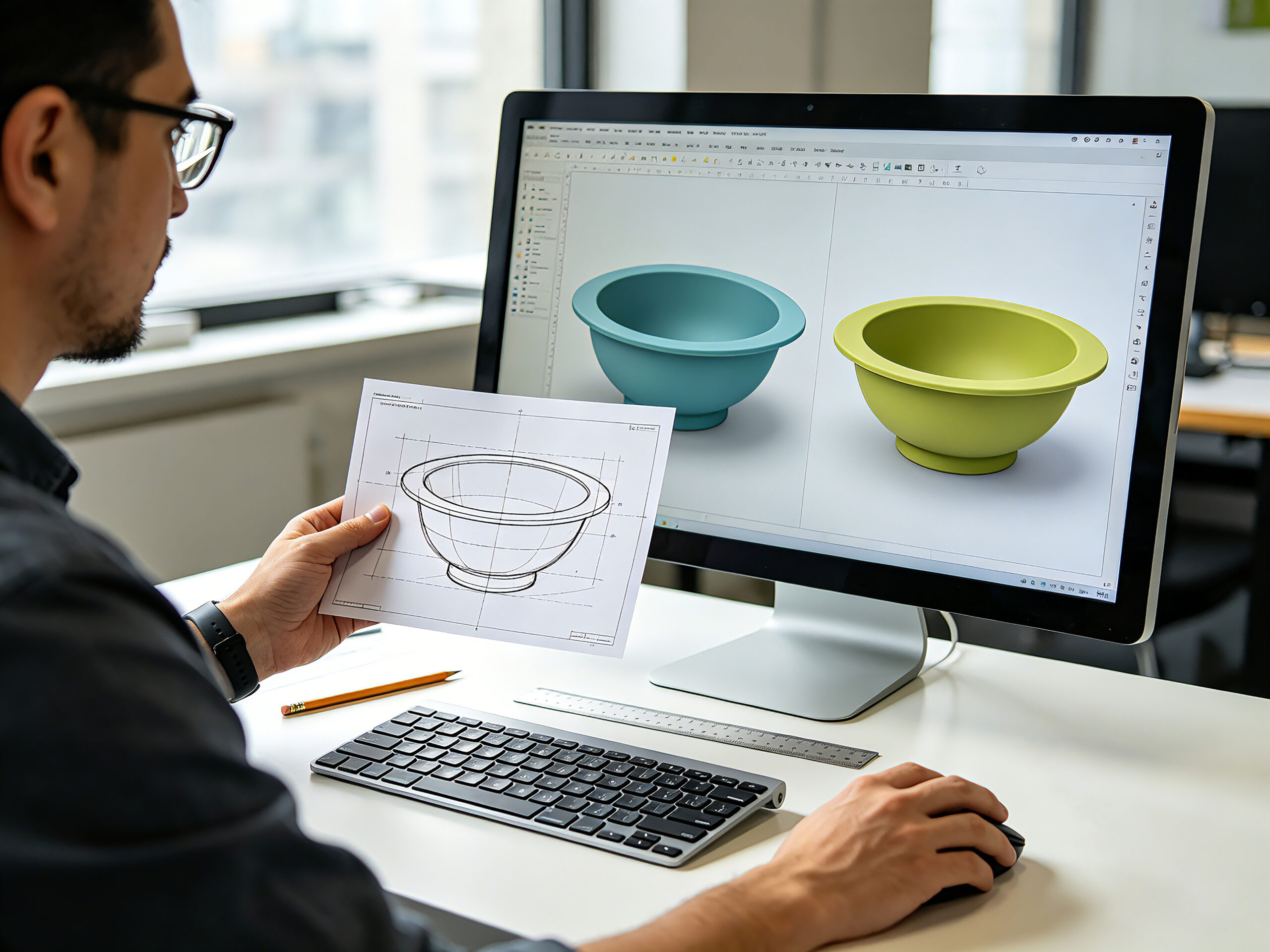
Critical dimensions and manufacturing risks are resolved early.
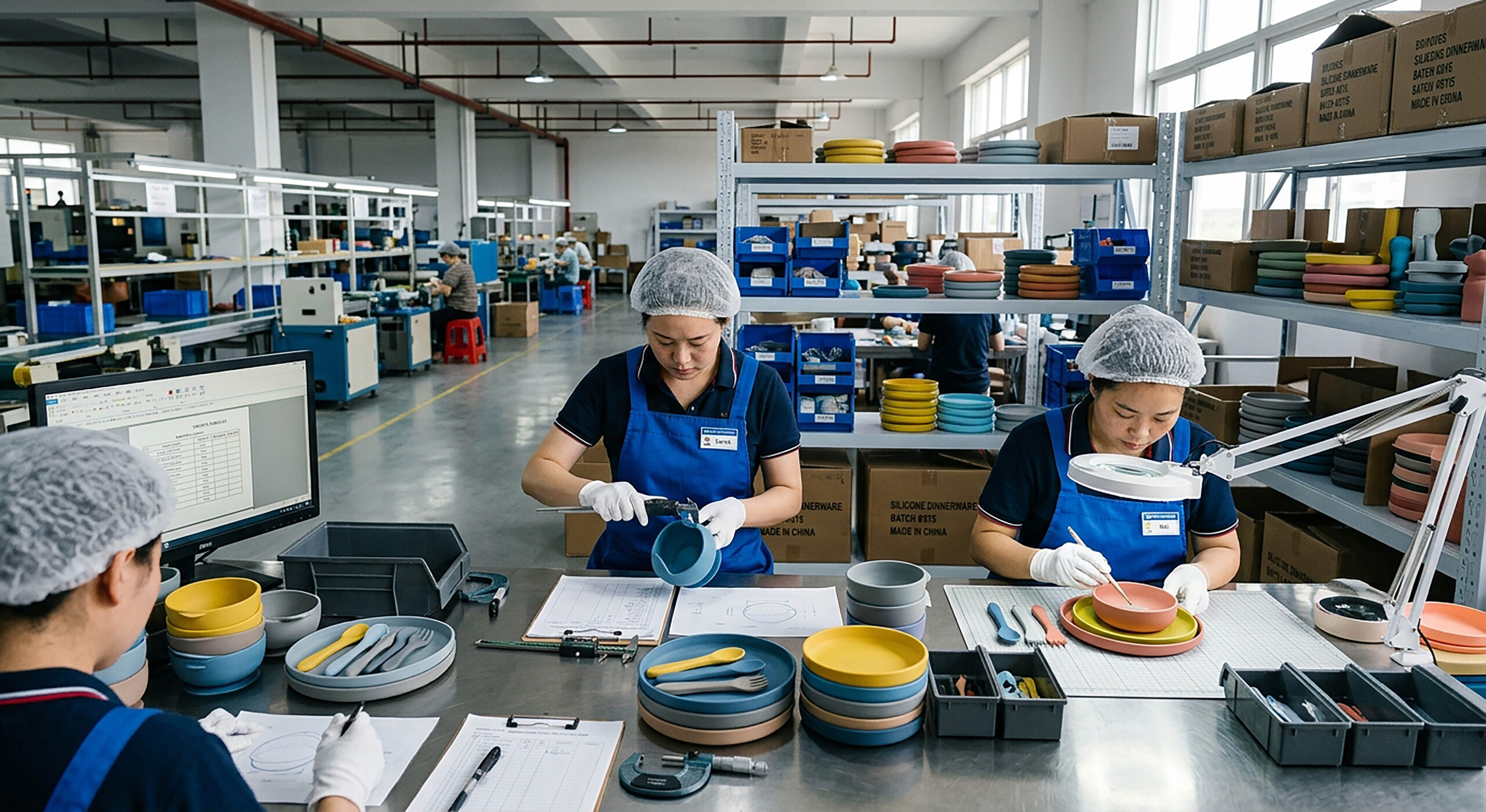
Dimensions, surface and function are checked against the brief.
Buyer FAQ
A precise answer depends on product structure, quantity, destination and customization. These answers explain the usual planning principles.
Timing depends on product complexity, tool material, cavity count and trial revisions. A project schedule is provided after the design and tooling route are reviewed.
We can evaluate reference samples for function and manufacturability, but buyers are responsible for confirming they have the rights to any protected design, brand or intellectual property.
Trial findings are reviewed against the approved design. Tool corrections are planned according to the agreed scope and whether the change is a tooling issue or a new buyer request.
Yes, subject to tool life, maintenance and the agreed ownership terms. Repeat-order planning should include storage and maintenance expectations.
Start a B2B Project
Share your reference, target quantity, market, branding and required delivery window. Our team will review the project and recommend a practical next step.